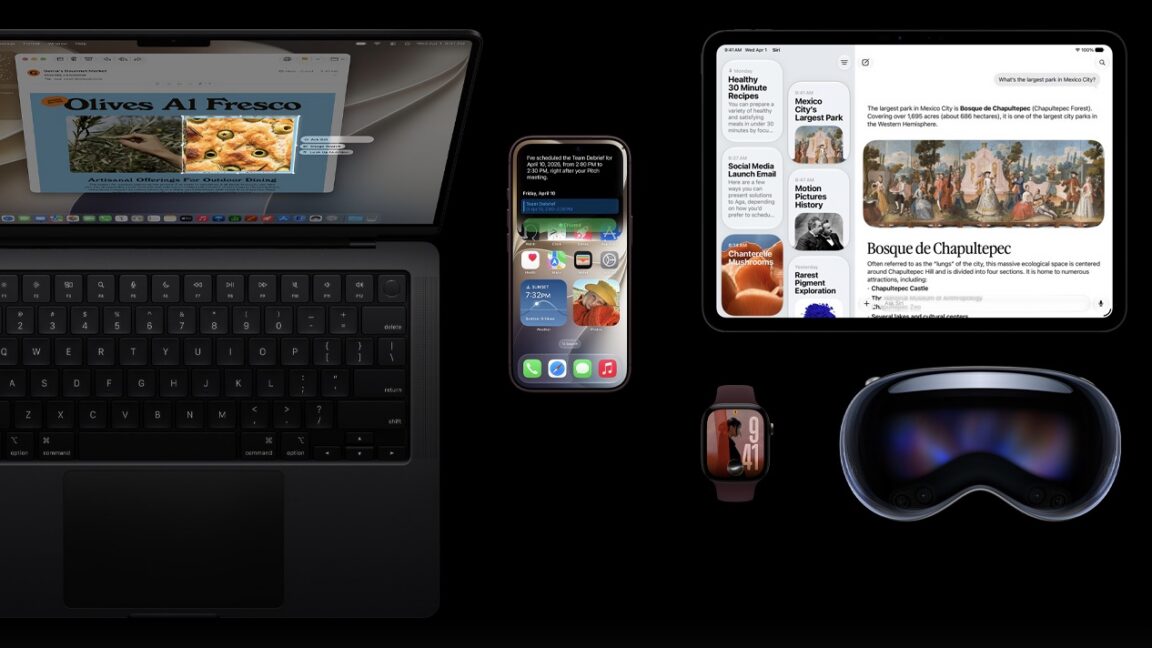
Apple has officially launched its 2026 OS lineup, headlined by iOS 27 and macOS 27 Golden Gate. The updates introduce a revolutionary LLM-powered Siri AI and mark the end of an era for Intel app support via Rosetta.
- Apple released iOS 27, macOS 27 Golden Gate, and other major OS updates.
- Siri AI has been completely overhauled using Large Language Models (LLM).
- macOS 27 is the final version to support Intel-based apps through Rosetta.
In a landmark move for the consumer electronics giant, Apple has officially rolled out its highly anticipated 2026 annual software updates. The release includes iOS 27, macOS 27 Golden Gate, watchOS 27, visionOS 27, and tvOS 27, signaling a massive shift toward integrated artificial intelligence across its entire device ecosystem.
The flagship feature of this release is the revamped Siri AI. Moving away from traditional command-based processing, the new Siri is built upon a sophisticated Large Language Model (LLM), making it context-aware and capable of complex reasoning. This overhaul aims to transform Siri from a simple voice assistant into a deeply intuitive personal intelligence engine. Additionally, the visual language has been updated with 'Liquid Glass' refinements, offering a more fluid and organic UI experience.
Why This Matters
BozokMedia analysis shows that Apple is aggressively pivoting to compete in the generative AI race dominated by OpenAI and Google. By embedding context-aware AI directly into the core operating systems, Apple is leveraging its hardware-software integration to create a seamless, privacy-focused AI experience that competitors struggle to replicate.
The integration of LLMs into the core OS marks Apple's transition from a device-first company to an intelligence-first company.
Beyond the AI revolution, macOS 27 Golden Gate carries significant historical weight. It represents the final chapter for Rosetta, the translation layer that allowed Intel-based applications to run on Apple Silicon. As Apple phases out Rosetta support, the company is finalizing its complete migration to its proprietary M-series architecture, ensuring maximum optimization for future software.
Historical Background
Since the transition began in late 2020, Apple has systematically replaced Intel processors with its own Silicon. The phasing out of Rosetta is a strategic move to eliminate the overhead of software translation, allowing developers to build exclusively for the high-performance, energy-efficient capabilities of Apple's custom chips.
Frequently Asked Questions
1. Will my Intel-based Mac work with macOS 27?
While some older Macs might receive the update, macOS 27 is the final version to provide Rosetta support for Intel apps.
2. Is the new Siri AI available on Apple TV?
No, the flagship Siri AI overhaul is included in all releases except for tvOS 27.