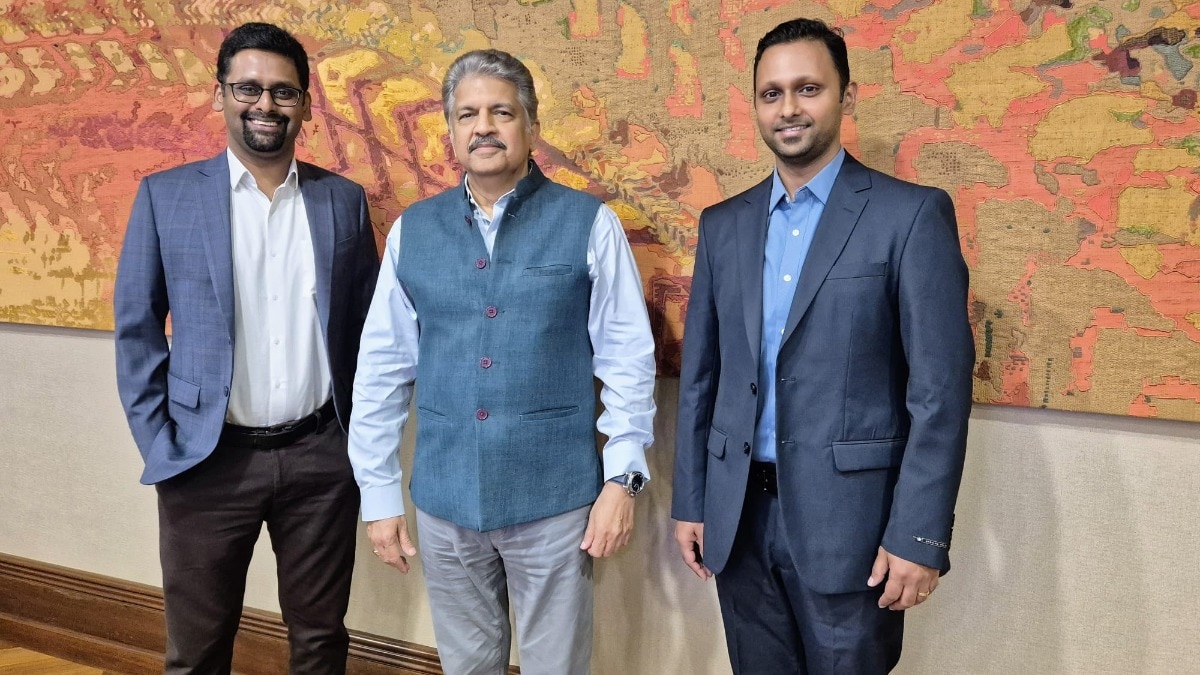
IISc Bengaluru professors Duvvuri Subrahmanyam and Pratikash Panda have captured the attention of industry leader Anand Mahindra for their groundbreaking research in high-speed flight and propulsion.
- IISc Bengaluru scientists are conducting cutting-edge research in high-speed flight and fluid dynamics.
- Industrialist Anand Mahindra lauded their work as vital to India's aerospace future.
- Both researchers returned to India after training at world-class institutions like Caltech, Princeton, and Purdue.
At the Indian Institute of Science (IISc) in Bengaluru, two scientists are quietly revolutionizing the future of aviation. Associate Professor Duvvuri Subrahmanyam and Assistant Professor Pratikash Panda are delving into the complexities of high-speed flight, fluid dynamics, combustion, and propulsion—research that holds the key to the next generation of aerospace technology.
The Mahindra Endorsement
Their scientific rigor recently caught the eye of renowned industrialist Anand Mahindra. Taking to X (formerly Twitter), Mahindra highlighted their work, describing it as "seriously cutting-edge" and "exciting science." This endorsement serves as a significant validation of the high-level research occurring within Indian academic institutions.
This recognition comes at a pivotal moment for India. With private players like Skyroot Aerospace making strides in orbital rocket launches, the synergy between academic research and industrial application is becoming the backbone of India's space and aviation ambitions.
A Journey of Returning Talent
The professional trajectories of these two professors represent a significant shift in India's scientific landscape. Professor Subrahmanyam, an alumnus of IIT Madras, pursued advanced studies at Caltech and completed a postdoctoral stint at Princeton University. Similarly, Professor Panda, a graduate of NIT Rourkela, earned his PhD from Purdue University and worked with Sandia National Laboratories.
Their decision to return to India and contribute to the domestic scientific ecosystem is a powerful counter-narrative to the traditional 'brain drain' phenomenon, signaling a new era of 'brain gain' for the nation.
Why This Matters
BozokMedia analysis shows that the convergence of elite academic research and a burgeoning private space sector is creating a unique ecosystem for technological sovereignty. As India moves toward hypersonic and advanced propulsion capabilities, these laboratory-scale breakthroughs will be essential for national security and commercial aviation.
The return of highly trained researchers from global powerhouses to Indian institutions is a critical catalyst for indigenous aerospace innovation.
Frequently Asked Questions
1. What specific areas are these IISc scientists researching?
They focus on high-speed flight, turbulent shear flow physics, combustion, and advanced propulsion systems.
2. How does their work impact India's aerospace sector?
Their research provides the fundamental science required for developing advanced aircraft, rockets, and hypersonic technologies.