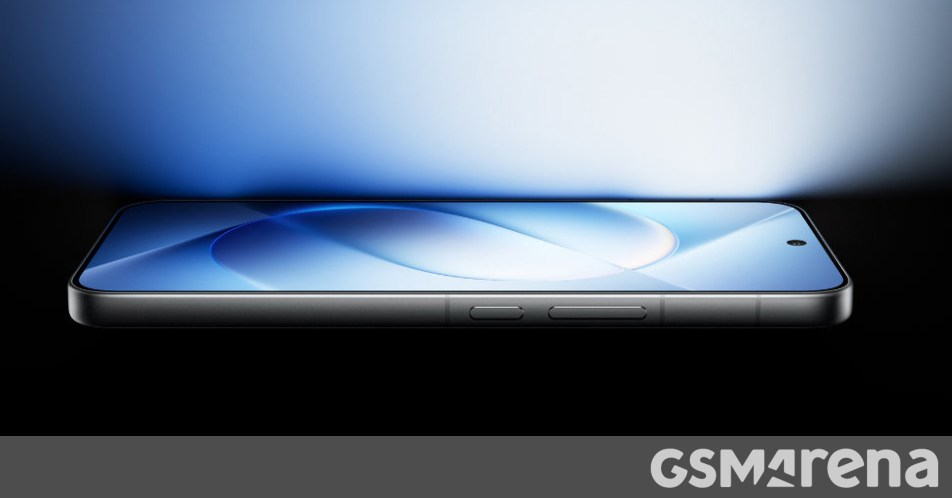
Samsung Display has detailed its groundbreaking M16 LTPO OLED panel, set to debut in the iQOO 16. The panel boasts an industry-leading 10,000 nits peak brightness and 30% better power efficiency.
- Samsung's new M16 OLED panel can reach an incredible 10,000 nits peak brightness.
- The technology will make its first appearance on the iQOO 16 smartphone.
- The panel consumes up to 30% less power compared to the previous M14 generation.
- It features 3,300Hz PWM dimming to reduce eye flicker.
In a massive leap for mobile visual technology, Samsung Display has detailed its latest and brightest smartphone LTPO OLED panel. This cutting-edge hardware is slated to make its debut on the upcoming iQOO 16. Notably, the M16 luminescent material used in this panel is also expected to power the iPhone 18 Pro series and the iPhone Duo, highlighting its industry-wide significance.
The headline feature of this display is its staggering brightness capability. Samsung claims the panel can reach a peak local brightness of 10,000 nits in small, isolated areas for short durations. For sustained usage across the entire panel, the global peak brightness is rated at 2,800 nits, ensuring exceptional visibility even under direct sunlight.
Why This Matters
BozokMedia analysis shows that Samsung is strategically pivoting toward extreme efficiency alongside extreme brightness. By integrating the 'LEAD 2.0' technology, the M16 panel manages to consume 30% less power than its predecessor, the M14, effectively solving the long-standing trade-off between high brightness and battery longevity.
The M16 OLED represents a paradigm shift where peak luminance meets unprecedented energy conservation.
Beyond brightness, the iQOO 16 display will offer a premium WQHD resolution (2,560 x 1,440 px) with a highly adaptive 1-165Hz refresh rate. To cater to gamers, it includes a 5,000Hz touch sampling rate. Samsung has also implemented an anti-reflective coating and a polarizer-free 'on-cell' design, which places RGB color filters directly over the OLED material for purer colors.
Historical Background
The evolution of Samsung's M-series OLED panels has been the backbone of the premium smartphone market. From the early days of standard AMOLED to the current LTPO (Low-Temperature Polycrystalline Oxide) era, Samsung has consistently pushed the boundaries of how much light a handheld device can emit while maintaining color accuracy and eye comfort through high-frequency PWM dimming.
| Feature | M14 OLED (Previous) | M16 OLED (New) |
|---|---|---|
| Power Consumption | Standard | 30% Lower |
| Peak Brightness | Lower | 10,000 Nits (Local) |
| PWM Dimming | Standard | 3,300Hz |
Frequently Asked Questions
Q1: Will this display be used in Samsung Galaxy phones?
Answer: While it is debuting with iQOO, Samsung's Galaxy S27 Pro and Ultra models are also expected to adopt M16 OLEDs.
Q2: What is the benefit of 3,300Hz PWM dimming?
Answer: It reduces screen flicker at low brightness levels, significantly decreasing eye strain for users.