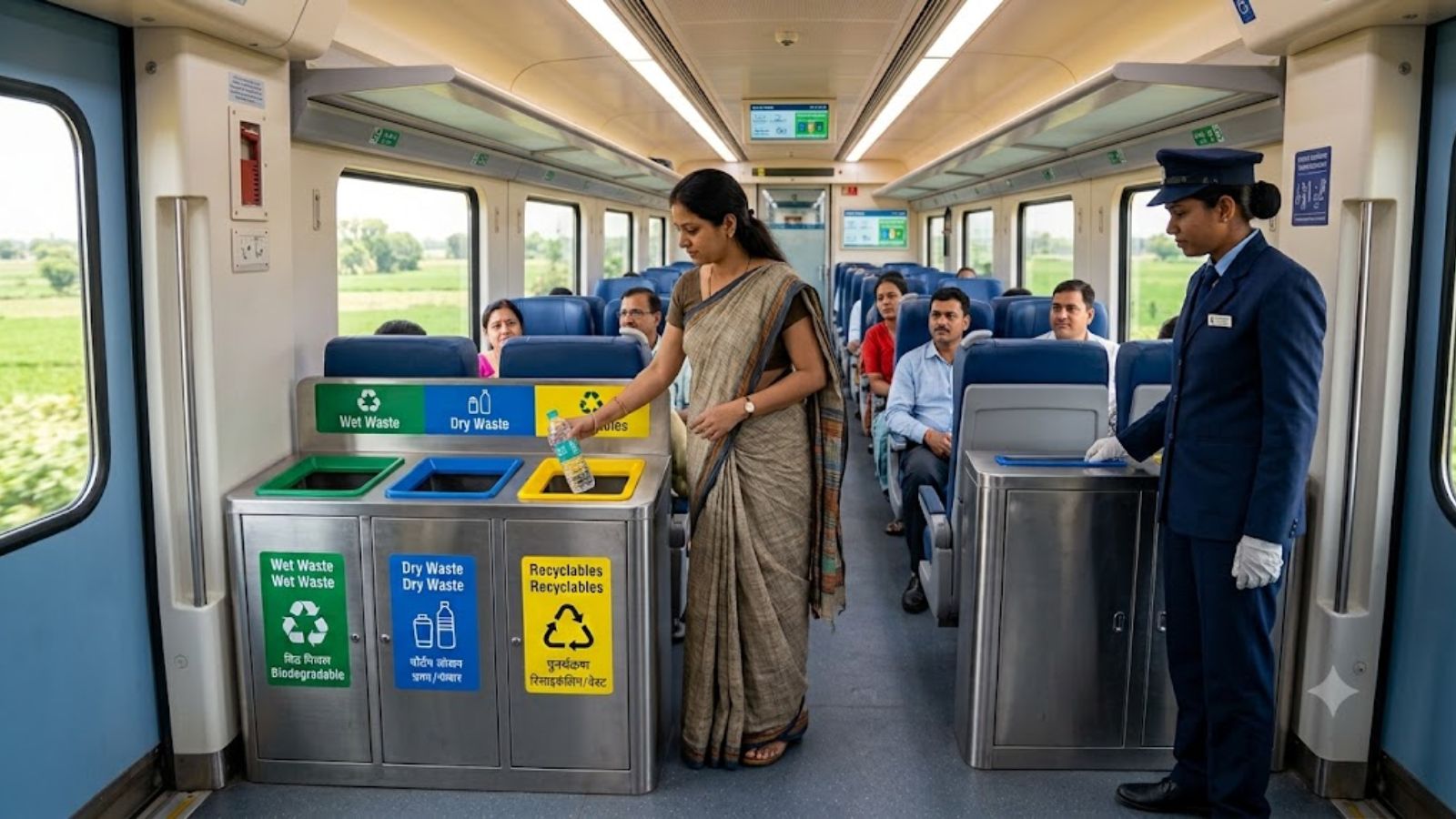
Indian Railways is set to revolutionize onboard cleanliness with a new high-capacity waste disposal prototype. Developed by the Jhansi Workshop, the system increases waste capacity from 20 liters to over 367 liters.
- Jhansi Wagon Repair Workshop has developed a new prototype for onboard waste management.
- Garbage collection capacity will jump from 18-20 liters to 367.4 liters.
- The system uses a gravity-fed mechanism to move waste to an undergear collector.
- Stainless steel construction ensures durability and corrosion resistance.
In a significant move to enhance passenger comfort and environmental hygiene, Indian Railways (IR) is planning to implement a sophisticated onboard waste management system. The initiative aims to address the persistent issue of overflowing dustbins and littering inside train coaches, particularly during long-haul journeys where waste accumulation is rapid.
Currently, standard LHB (Linke Hofmann Busch) coaches are equipped with two small garbage bins, each having a capacity of approximately 15-20 liters. This limited capacity often leads to bins overflowing, causing passengers to discard waste inside the coaches or, more detrimentally, throw it out of the windows onto the railway tracks. To combat this, the Wagon Repair Workshop in Jhansi has engineered a revolutionary prototype.
How the New System Works
The proposed mechanism is a three-part integrated system consisting of a garbage drop box, a connector, and an undergear garbage collector. Passengers will continue to dispose of waste through a drop box installed on the coach floor. However, instead of sitting in a small bin, the waste will travel through a specialized connector via gravity into a massive collector mounted underneath the coach structure.
By shifting the storage from the passenger area to the undergear, Railways is effectively decoupling waste accumulation from passenger experience.
Why This Matters
BozokMedia analysis shows that improving onboard waste management is critical for both operational efficiency and ecological preservation. Overflowing bins create unsanitary conditions and foul odors, while littering on tracks causes environmental pollution and can interfere with track maintenance and safety. This technological intervention addresses both the symptoms and the root cause of the problem.
| Feature | Existing System (LHB) | New Proposed System |
|---|---|---|
| Storage Capacity | 15-20 Liters | 367.4 Liters |
| Material | Standard Plastic/Metal | Corrosion-resistant Stainless Steel |
| Disposal Method | Manual Bin Emptying | Gravity-fed Undergear Collection |
A standout feature of this innovation is its construction from stainless steel, ensuring high structural strength and resistance to the harsh environments found under moving trains. The collector is designed with a unique 3:10 taper, allowing for easy removal and emptying during routine maintenance cycles, thereby streamlining the sanitation process.
Frequently Asked Questions
1. Will this prevent waste from being thrown on tracks?
Yes, by providing a massive, accessible storage capacity, the incentive for passengers to throw waste outside due to full bins is significantly reduced.
2. Is the system easy to clean?
Absolutely. The design allows the drop box and the collector to be cleaned independently, ensuring better odor control and hygiene.

