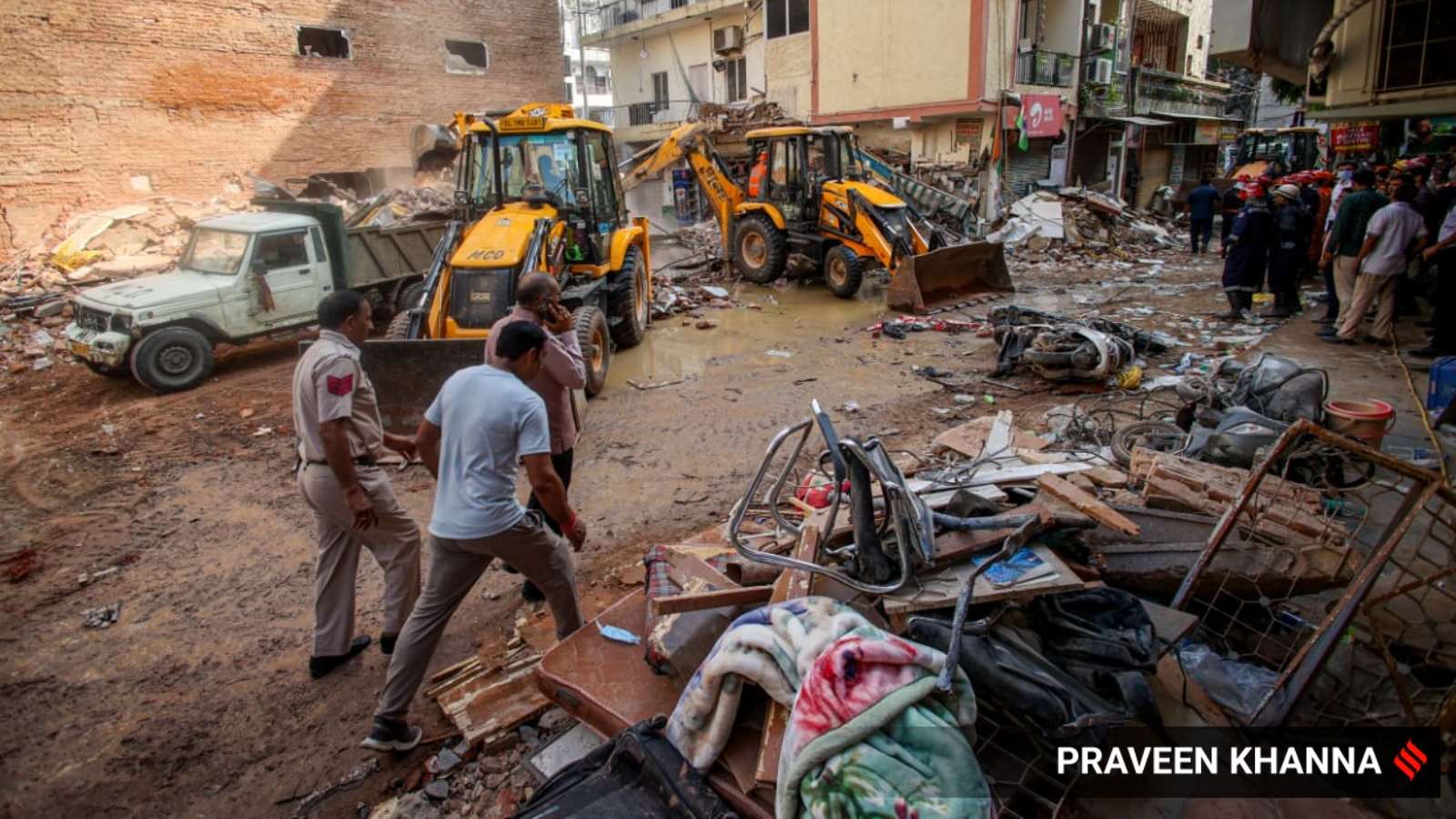
The tragic collapse in Satya Niketan has exposed the lethal flaws in Delhi's urban governance and the perils of unauthorised construction. This deep dive examines the structural and systemic failures threatening the city.
- Nearly 60% of Delhi's population resides in unauthorised structures.
- Misuse of residential buildings for commercial purposes significantly increases structural load.
- Climate change and flash floods are exacerbating foundation failures.
- Strict enforcement and single-entity urban governance are critical solutions.
The recent tragedy at Satya Niketan, where seven students lost their lives due to the collapse of an unauthorised building, serves as a grim reminder of the systemic failures in Delhi's urban landscape. As monsoon rains saturate the city, the buckling walls and collapsing foundations of poorly constructed buildings have become a recurring nightmare. This incident was not an isolated mishap but a predictable consequence of decades of unregulated growth.
The Crisis of Unauthorised Urbanization
A significant portion of Delhi's demographic—nearly 60 percent—lives in 'Lal Dora' areas or unauthorised colonies that evade municipal planning. These high-density, low-rise structures often lack basic safety codes. To prevent future disasters, there is an urgent need for building-by-building documentation using advanced imaging techniques to assess structural integrity before a collapse occurs.
Furthermore, the functional misuse of buildings poses a massive risk. Structures designed for domestic living are being converted into commercial hubs, restaurants, and makeshift hostels. This increases the live load on floors far beyond their original design capacity, leading to catastrophic structural failure.
No occupancy permit should be issued unless authorities strictly approve the designated building function and allocate minimum floor space per person.
Why This Matters: BozokMedia Analysis
BozokMedia analysis shows that the crisis is as much about governance as it is about engineering. The gap between existing bye-laws and their actual enforcement is widened by corruption. When site engineers and inspectors can be compromised, the very fabric of urban safety dissolves. The Bengaluru case, where a newly completed apartment crumbled due to illegal extra floors, serves as a haunting parallel to the current situation in Delhi.
Climate Change and Drainage Infrastructure
The intensifying patterns of climate change, characterized by sudden and extreme rainfall, place immense pressure on urban drainage. In many dense colonies, the lack of permeable ground and inadequate storm drains means water is diverted into basements and foundations, destabilizing the very ground the buildings stand on.
Frequently Asked Questions
Question 1: Why are buildings in Delhi prone to collapsing during monsoons?
Answer: Due to weak foundations, improper drainage, and the weight of water saturating unauthorised structures.
Question 2: How can unauthorized construction be regulated?
Answer: Through rigorous physical mapping, infrared structural assessments, and strict enforcement of occupancy permits.