With 18 out of 28 days in July flagged for severe risks, meteorologists analyze how often these warnings translate into actual storm damage.
Key Takeaways
- 18 out of 28 days this July have carried severe weather outlooks.
- Level 2 risk days have averaged 18 storm damage reports per day.
- Not every warning results in damage; some days see risks 'fizzle out'.
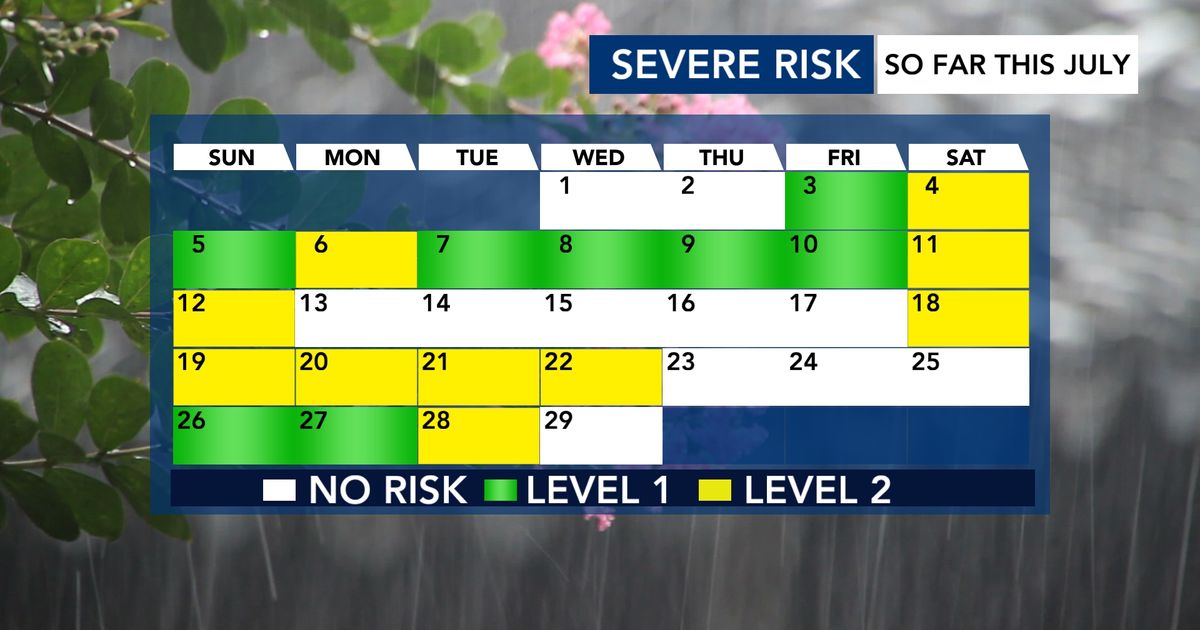
July has emerged as the fourth-wettest month on record for Raleigh, providing much-needed moisture but bringing significant atmospheric instability. According to NOAA's Storm Prediction Center (SPC), 18 of the 28 days so far this month have been flagged for severe weather potential.
Understanding SPC Risk Levels
The Storm Prediction Center issues outlooks up to eight days in advance to diagnose potential damaging thunderstorms. These risks are categorized on a scale from Level 1 (lowest) to Level 5 (highest). This July, the region has primarily dealt with Level 1 and Level 2 risks. While Level 1 implies isolated potential, Level 2 indicates scattered severe storm coverage.
Why This Matters: BozokMedia Analysis
BozokMedia analysis shows that the correlation between a 'risk' and 'actual damage' is highly variable. In July 2026, there have been nine days categorized under Level 2 risk. Across these nine days, nearly 160 reports of storm damage were recorded, averaging roughly 18 reports per Level 2 day. Crucially, however, there were three specific days where high-risk outlooks resulted in zero reported damage.
The complexity of Mesoscale Convective Systems means a storm can either devastate an area or fizzle out harmlessly due to rain-cooled air.
As we track incoming clusters from the Ohio River Valley, the timing of these Mesoscale Convective Systems (MCSs) is critical. If storm clusters arrive midday, the resulting rain-cooled air may actually act as a stabilizer, preventing more severe outbreaks later in the evening.
Frequently Asked Questions
1. What is the difference between Level 1 and Level 2 risk?
Level 1 suggests isolated severe weather, whereas Level 2 suggests more widespread, scattered severe storm potential.
2. Why do some severe weather warnings result in no damage?
Atmospheric factors, such as rain-cooled air or timing, can cause storm systems to weaken or 'fizzle out' before they become destructive.