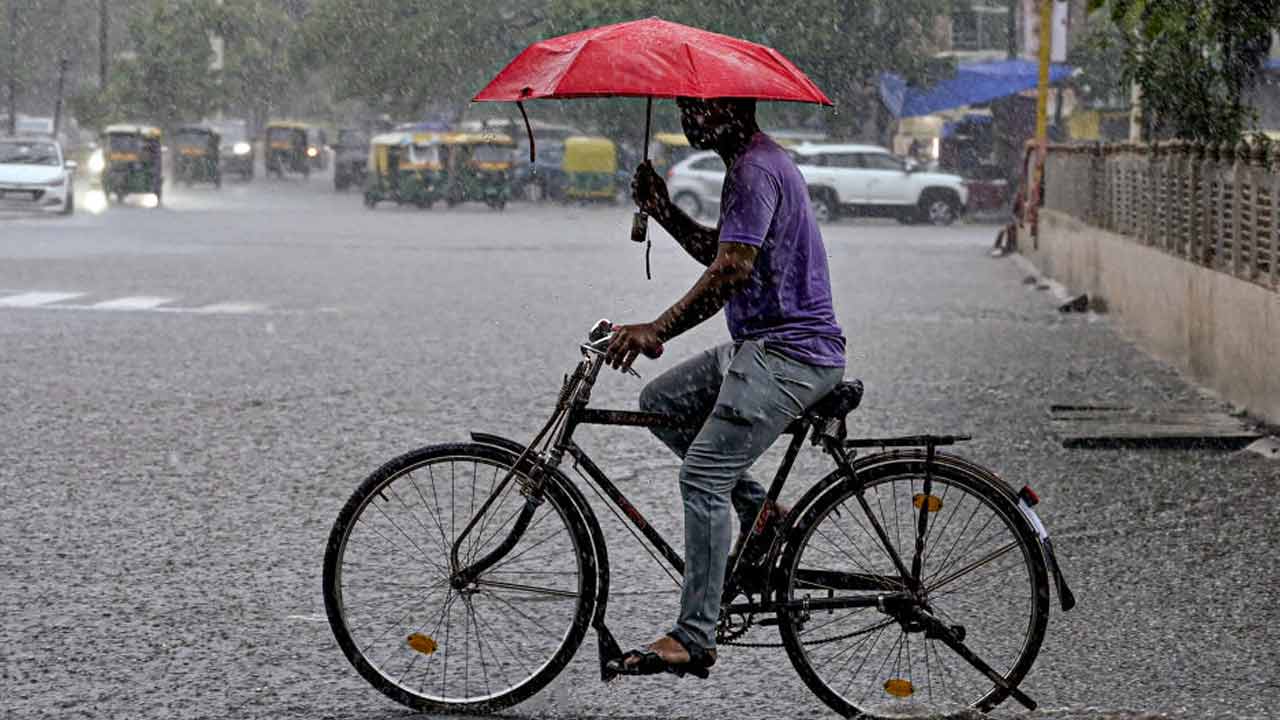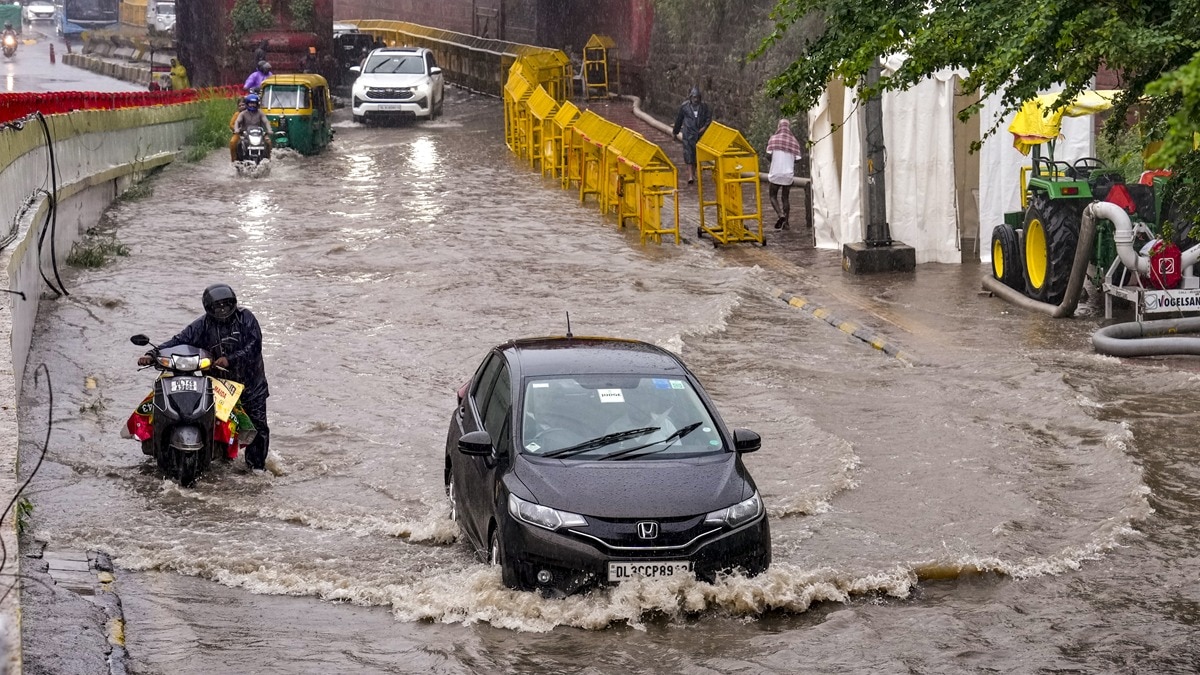
Heavy monsoon rains lashed Delhi-NCR, causing widespread waterlogging, massive traffic snarls, and structural damage. The India Meteorological Department (IMD) has issued a red alert as key cities like Noida and Gurugram grapple with severe urban flooding.
Key Takeaways
- IMD has issued a Red Alert for Delhi-NCR, with heavy rainfall predicted to continue until August 10.
- Gurugram recorded over 100 mm of rain, prompting authorities to advise corporate offices to implement Work From Home (WFH).
- Delhi Fire Service responded to 8 house collapses and 16 incidents of fallen trees across the capital.
A relentless spell of torrential monsoon rain has brought the national capital region (Delhi-NCR) to a grinding halt. Widespread waterlogging, severe traffic congestion, and structural damage have disrupted daily life across Delhi, Noida, and Gurugram. The India Meteorological Department (IMD) has issued a red alert, warning residents that heavy downpours are expected to persist until August 10.
Urban Infrastructure Crumbles Under Heavy Downpour
On August 7, Delhi recorded 59.2 mm of rainfall, making it the wettest day of August so far this year. Major arterial roads, including the Mehrauli-Badarpur Road, ITO, Wazirabad Road, Patel Road, and the Delhi-Jaipur Highway, witnessed bumper-to-bumper traffic jams that lasted for hours. Emergency services were stretched thin as the Delhi Fire Service (DFS) reported eight incidents of house collapses and 16 tree-falling incidents across various parts of the city.
Why This Matters
BozokMedia analysis shows that the recurring urban flooding in Delhi-NCR during monsoons highlights a critical failure in municipal planning and drainage maintenance. Despite yearly warnings, the rapid concrete expansion of the capital region has vastly outpaced its decades-old drainage infrastructure, turning seasonal rains into an annual economic and logistical disaster.
"The rapid urbanization of the NCR region, combined with outdated drainage infrastructure, turns even moderate rainfall into a severe urban crisis." — Environmental Policy Expert
Gurugram and Noida Face Severe Waterlogging
In Gurugram, the situation escalated rapidly as the city recorded over 100 mm of rain within a few hours. Water entered the premises of the Gurugram Civil Hospital, and local police lines were flooded. Given the critical conditions, district administration and police issued an advisory to private companies, urging them to allow employees to work from home to minimize traffic congestion and ensure safety. Meanwhile, in Noida, a submerged underpass in Sector 95 trapped an ambulance, which had to be manually pushed out by locals.
Rainfall Impact Comparison
| City | Rainfall Recorded | Major Impact |
|---|---|---|
| Delhi | 59.2 mm | 8 house collapses, 16 fallen trees, major traffic at ITO |
| Gurugram | >100 mm | Hospital flooding, WFH advisory issued, severe waterlogging |
| Noida | Heavy Rainfall | Underpasses submerged, traffic jams, ambulance trapped |
Frequently Asked Questions
Q1: How long is the rain expected to continue in Delhi-NCR?
A1: According to the India Meteorological Department (IMD), the heavy rainfall in Delhi-NCR is expected to continue with a Red Alert active until August 10.
Q2: Why was a Work From Home advisory issued in Gurugram?
A2: Gurugram received over 100 mm of rain, leading to severe waterlogging on major highways and local streets. The WFH advisory was issued to prevent commuters from getting stranded and to clear roads for emergency operations.