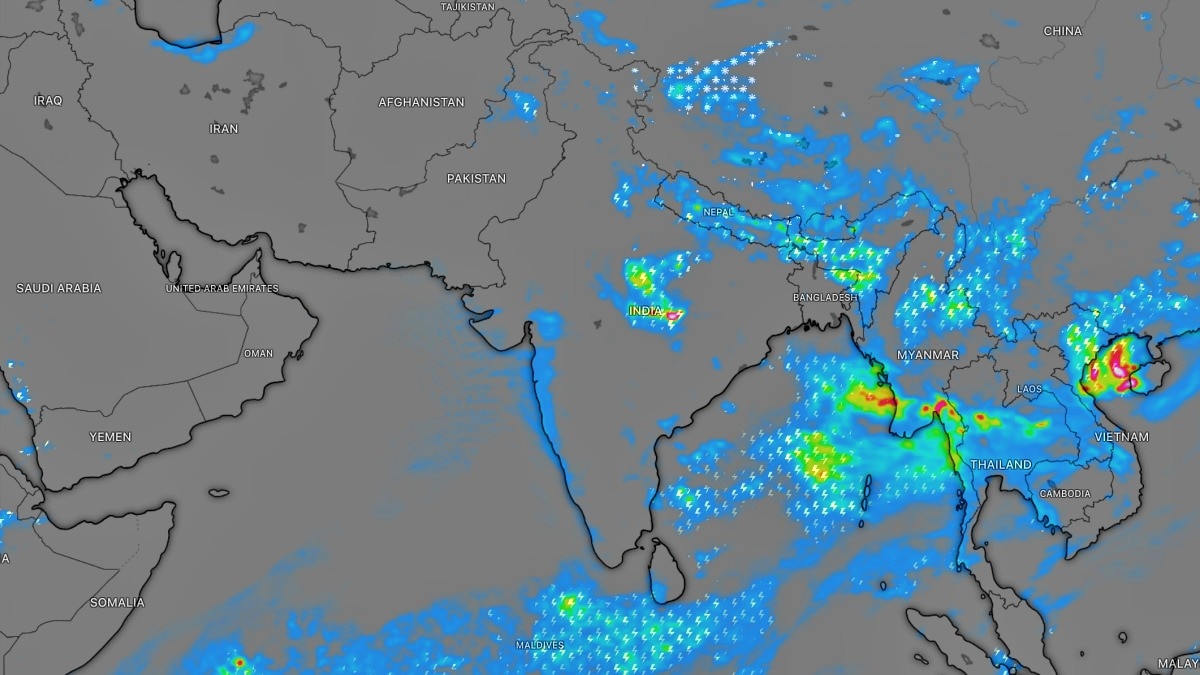
The India Meteorological Department (IMD) has issued a yellow alert for several districts in Karnataka as the Southwest Monsoon gains renewed momentum. Coastal and hilly regions are expected to witness heavy downpours accompanied by strong gusty winds of up to 40 km/h, prompting safety advisories for residents and fishermen.
- Monsoon activity intensifies across Karnataka, prompting yellow alerts in coastal and Malenad districts.
- Strong winds of 30 to 40 km/h are expected to lash Dakshina Kannada, Udupi, and Uttara Kannada.
- Bengaluru and other major cities will experience cooler temperatures and light to moderate showers.
The Southwest Monsoon has once again gained significant momentum across Karnataka. According to the latest reports from the India Meteorological Department (IMD), the state is bracing for a spell of heavy rainfall accompanied by strong, gusty winds over the next few days. Residents in the coastal (Karavali) and hilly (Malenad) regions have been advised to exercise extreme caution as the weather conditions intensify.
A 'Yellow Alert' has been officially sounded for the coastal districts of Dakshina Kannada, Udupi, and Uttara Kannada. These areas are projected to experience heavy precipitation along with surface winds gusting between 30 to 40 km/h. Fishermen have been strongly advised against venturing into the Arabian Sea due to rough sea conditions and high waves.
City-Wise Weather and Temperature Analysis
In the state capital, Bengaluru, the weather remains pleasant with overcast skies. The maximum temperature in the tech hub is expected to hover around 28 degrees Celsius, while the minimum will settle at 21 degrees Celsius. Meanwhile, the picturesque hill station of Madikeri in Kodagu district will witness a cooler climate, with temperatures ranging between a maximum of 24 degrees Celsius and a minimum of 20 degrees Celsius.
The table below provides a detailed comparative overview of the expected temperatures across major cities in Karnataka during this active monsoon phase:
| City | Max Temperature (°C) | Min Temperature (°C) |
|---|---|---|
| Bengaluru | 28 | 21 |
| Mangaluru | 29 | 25 |
| Madikeri | 24 | 20 |
| Mysuru | 29 | 22 |
| Udupi | 30 | 25 |
| Kalaburagi | 33 | 24 |
Historical Background of Karnataka's Monsoon
Karnataka’s geography, particularly the presence of the Western Ghats, plays a defining role in its monsoon dynamics. Historically, the coastal belt and the windward side of the ghats receive some of the highest rainfall in the country during the Southwest Monsoon. A revival of the monsoon in late August is historically crucial for replenishing the state’s major river basins, including the Cauvery and Krishna basins, which support millions of farmers and provide drinking water to massive urban centers.
Why This Matters
BozokMedia analysis shows that the revival of the monsoon is critical for Karnataka's reservoir levels, which feed agricultural belts and supply drinking water to urban hubs like Bengaluru. However, the accompanying strong winds and heavy downpours pose immediate risks to coastal infrastructure, power lines, and transport networks, making disaster preparedness paramount.
"The sudden intensification of monsoon winds over the Arabian Sea is driving heavy precipitation along the Western Ghats, necessitating immediate precautionary measures for coastal communities."
Travelers planning trips to hill stations like Madikeri, Chikmagalur, and Sakleshpur have been urged to monitor weather updates closely, as heavy rains in these terrains often lead to localized landslides and road blockages. State disaster response teams have been put on standby to address any emergencies arising from the inclement weather.
Frequently Asked Questions
Q1: Which regions in Karnataka are currently under a Yellow Alert?
A1: The districts of Dakshina Kannada, Udupi, and Uttara Kannada are under a Yellow Alert due to predicted heavy rains and strong winds.
Q2: What are the safety recommendations for coastal areas?
A2: Residents are advised to stay indoors during heavy downpours, secure loose structures against high winds, and fishermen are strictly warned not to venture into the sea.