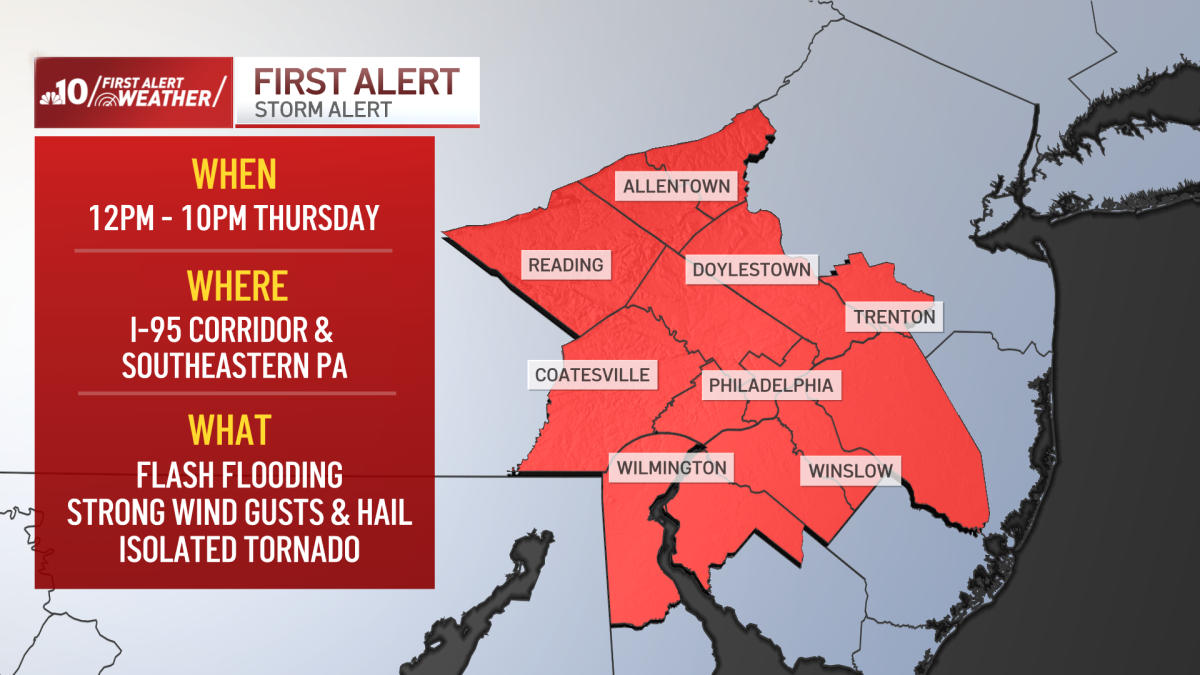
A 'First Alert' has been issued for the Philadelphia region as severe storms, heavy downpours, and gusty winds are expected this Thursday, August 27.
The pleasant weather stretch in the Philadelphia region is set to end abruptly this Thursday, August 27. According to NBC10 First Alert Meteorologists, a warm front lifting north of the region will increase cloud cover and humidity, setting the stage for volatile weather conditions.
While the day may begin with light morning showers, the intensity is expected to ramp up significantly by midday. A formal 'First Alert' has been issued for the period between 12:00 PM and 10:00 PM, specifically targeting areas along and northwest of the Interstate 95 corridor.
Potential Hazards and Risks
The upcoming storm system is not merely a rain event; it carries several severe threats. Forecasters are primarily concerned with flash flooding and damaging straight-line winds. Furthermore, the atmospheric instability is such that hail and even an isolated tornado cannot be entirely ruled out by meteorologists.
The transition from humidity to severe convective activity suggests a high-impact weather window during the afternoon and evening hours.
Why This Matters
BozokMedia analysis shows that sudden severe weather events in highly populated corridors like Interstate 95 can lead to significant logistical disruptions, increased accident rates, and localized property damage due to wind and flooding.
Looking ahead, a trailing cold front will continue to influence the weather, bringing isolated storms to the south and east of Philadelphia through Friday. However, residents can look forward to a reprieve on Saturday, as high pressure is expected to return, bringing bright and comfortable conditions before humidity builds again on Sunday.
Frequently Asked Questions
1. When is the most dangerous time for the storms?
The peak risk period is between 12 PM and 10 PM on Thursday.
2. Will the weather improve by the weekend?
Yes, Saturday is forecasted to be bright and beautiful due to returning high pressure.