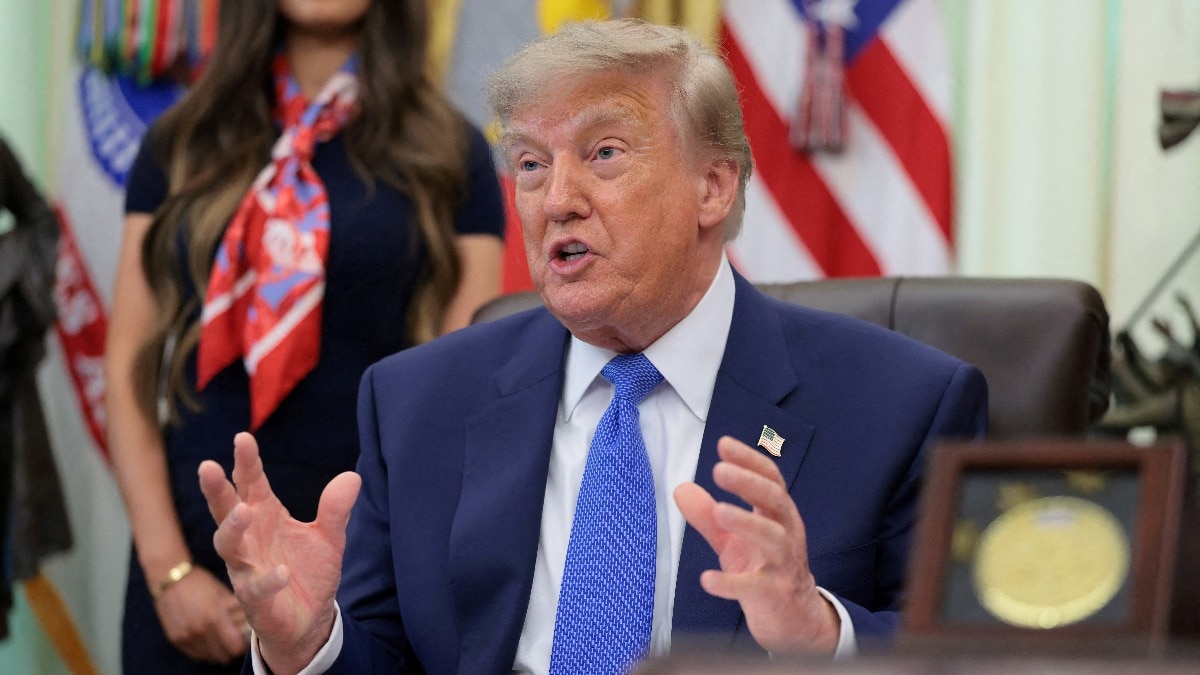
President Donald Trump asserts that the US Navy has secured the strategic Strait of Hormuz and cleared it of Iranian mines, amid escalating tensions and surging global oil prices.
Key Takeaways
- President Trump claims the US Navy has full control and has swept the Strait of Hormuz for mines.
- A new deadlock has emerged over competing demands for compensation between the US and Iran.
- Global oil benchmarks (Brent and WTI) jumped by approximately 5% following the escalation.
- Iran is negotiating alternative shipping lanes with Oman, a move opposed by Washington.
In a high-stakes announcement from the Oval Office, US President Donald Trump declared that the United States has effectively seized control of the Strait of Hormuz. Trump asserted that the US Navy has successfully conducted mine-sweeping operations across the entire strategic waterway, aiming to ensure safe passage for international shipping.
The Compensation Deadlock
The path to reopening the waterway has been complicated by Trump's demand for compensation from Iran for deaths and injuries linked to regional conflicts. Specifically, the President cited the 2000 attack on the USS Cole and fatalities in Lebanon, Syria, Yemen, and Gaza. Conversely, Tehran has demanded the lifting of US sanctions and an end to military threats as prerequisites for any agreement.
Why This Matters
BozokMedia analysis shows that the Strait of Hormuz is the world's most critical energy chokepoint, facilitating roughly 20% of global oil and LNG shipments. The current standoff is not merely military but economic; the US is firmly opposed to any arrangement that allows Iran to levy fees for maritime access, as this would grant Tehran significant geopolitical leverage over global energy markets.
"The battle for the Strait of Hormuz is as much about economic dominance as it is about territorial security, turning energy flow into a political weapon."
While Iranian Foreign Ministry spokesperson Esmaeil Baghaei reports that talks with Oman regarding new shipping routes are progressing smoothly, the lack of direct communication between Washington and Tehran remains a critical barrier. Meanwhile, the regional instability has been exacerbated by Houthi attacks on Saudi energy infrastructure.
| Party | Primary Demand/Claim | Strategic Approach |
|---|---|---|
| USA | War compensation from Iran | Naval dominance & mine sweeping |
| Iran | Lifting of sanctions & compensation | Alternative routes via Oman |
Frequently Asked Questions
1. Why is the Strait of Hormuz so strategically important?
It is the primary artery for the world's oil supply, particularly for exports from the Persian Gulf.
2. How has this conflict affected oil prices?
Uncertainty over the waterway's status caused Brent crude to spike to $87.72 per barrel.