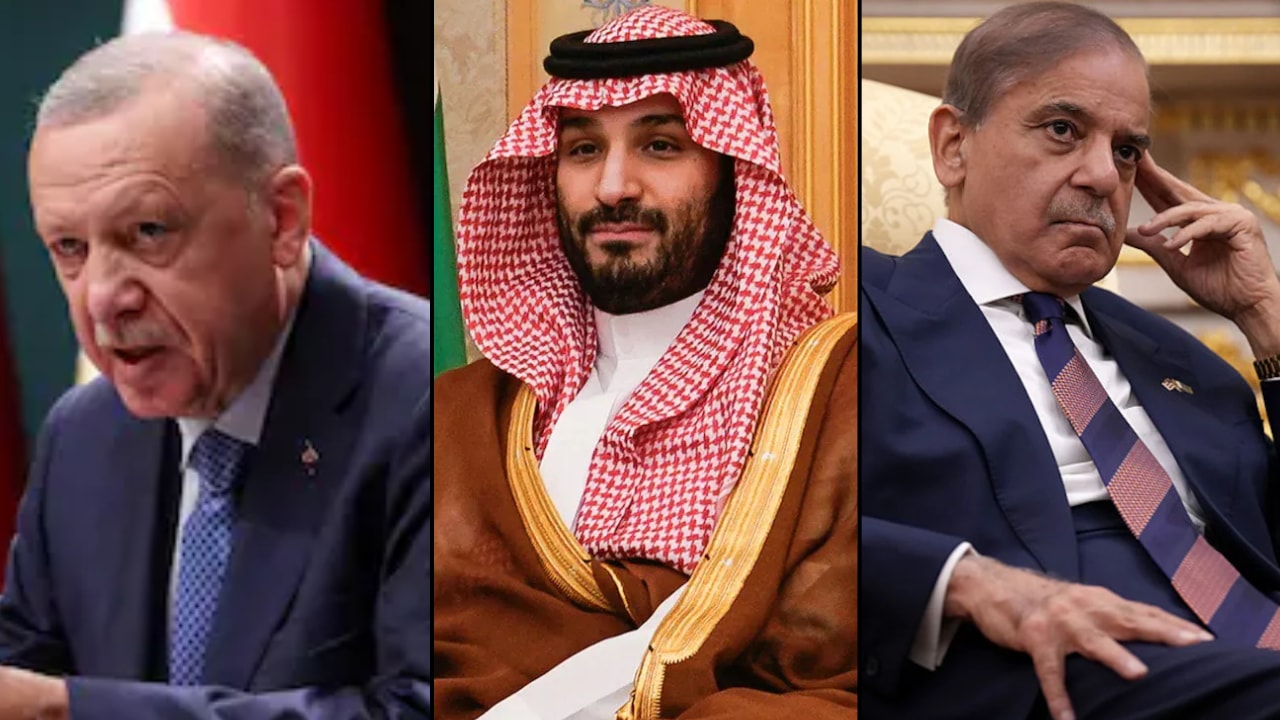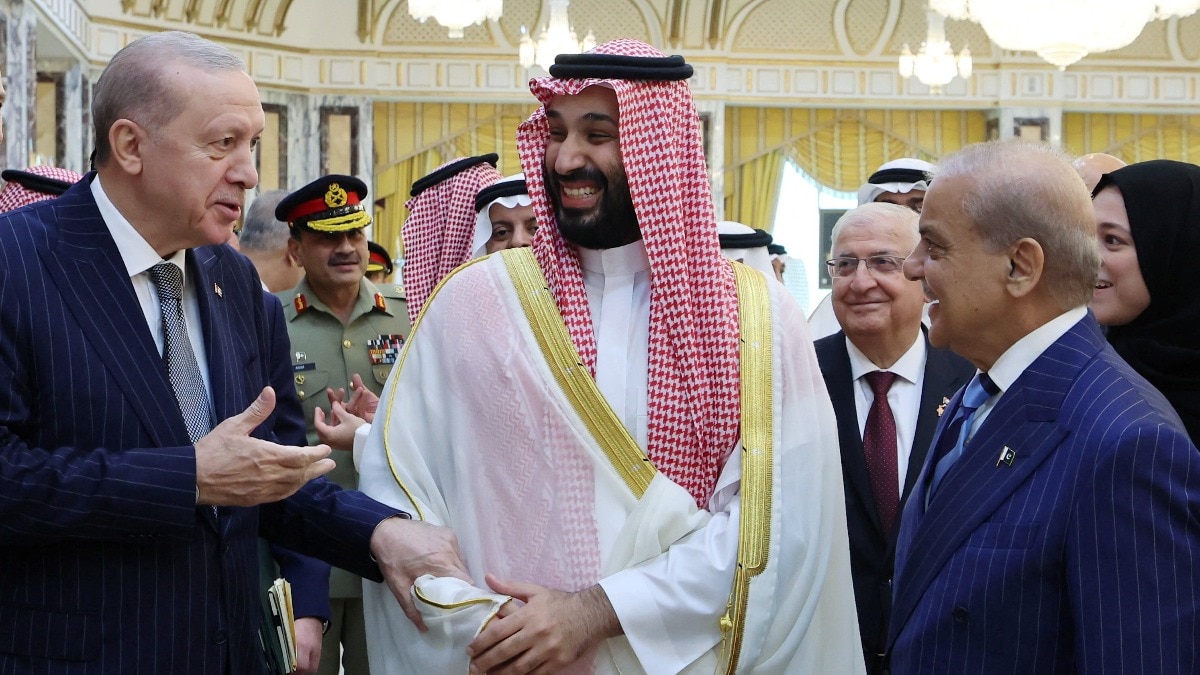
The 'Mecca Joint Defence Agreement' between Saudi Arabia, Turkey, and Pakistan has sent shockwaves through global diplomacy. Modeled after NATO, this alliance has unexpectedly aligned the strategic interests of India, Iran, and Israel.
Key Takeaways
- Saudi Arabia, Turkey, and Pakistan have signed the 'Mecca Joint Defence Agreement', mirroring NATO's Article 5.
- The pact has created an indirect strategic alignment between India, Israel, and Iran.
- India has responded by increasing defense exports to Turkey's rivals, including Greece and Armenia.
- Economic instability in Pakistan and Turkey poses a significant threat to the longevity of this alliance.
The 'Mecca Joint Defence Agreement' signed between Saudi Arabia, Turkey, and Pakistan has triggered a new wave of strategic mobilization in the Middle East and South Asia. The core of this agreement is a collective defense clause: an attack on one member is considered an attack on all three. This move has forced regional powers—Israel, India, and Iran—into a shared strategic boat, despite their differing ideologies.
Israel's Alarm and the Deepening India-Israel Bond
Analysts from the Jerusalem Post suggest that Turkey's involvement and Pakistan's nuclear rhetoric are major red flags for Israel. Given President Erdogan's anti-Israel stance and Pakistan's refusal to recognize the state of Israel, Jerusalem now has a concrete basis to urge Washington for increased security. Furthermore, this pact provides a catalyst for Israel to deepen its defense and technological ties with India, potentially accelerating the transfer of advanced military hardware and cyber-defense capabilities.
Why This Matters
BozokMedia analysis shows that while the pact appears formidable on paper, it is fundamentally a 'Sunni Alliance' designed to curb the influence of Tehran. However, Saudi Arabia's 'Vision 2030' makes it impossible for Riyadh to ignore India, a massive energy consumer and economic powerhouse. This creates a duality where Saudi Arabia maintains a paper alliance with Pakistan while keeping its economic heart tied to New Delhi.
"The Mecca Defence Pact is a house of cards built on geopolitical ambition but lacking the economic foundation required for a sustainable military alliance."
Iran's Skepticism and India's Proactive Strategy
Iran has dismissed the agreement as a 'sealed watermelon'—looking promising on the outside but potentially rotten within. Tehran argues that this 'Islamic NATO' remains silent during Israeli-American strikes on Iran but mobilizes quickly against fellow Muslim neighbors. Consequently, Iran is strengthening its ties with Russia, China, and India through the Chabahar Port and the INSTC corridor.
For India, the move was expected. In response to Turkey's support for Pakistan, New Delhi has aggressively expanded defense supplies to Cyprus, Greece, and Armenia, exporting Pinaka rocket systems and Akash air defense missiles to create a strategic encirclement of Turkey.
| Feature | Mecca Defence Pact (S-T-P) | NATO |
|---|---|---|
| Primary Goal | Regional Security / Islamic Solidarity | Collective Defence |
| Command Structure | Lack of Unified Command | Permanent HQ & Integrated Command |
| Economic Base | Economic Crisis in Pakistan/Turkey | World's Largest Economies |
Frequently Asked Questions
1. What is the Mecca Defence Pact?
It is a mutual defense agreement between Saudi Arabia, Turkey, and Pakistan, where an attack on one is viewed as an attack on all.
2. How is India responding to this alliance?
India is diversifying its strategic partnerships by supplying advanced weaponry to Turkey's regional rivals like Greece and Armenia.