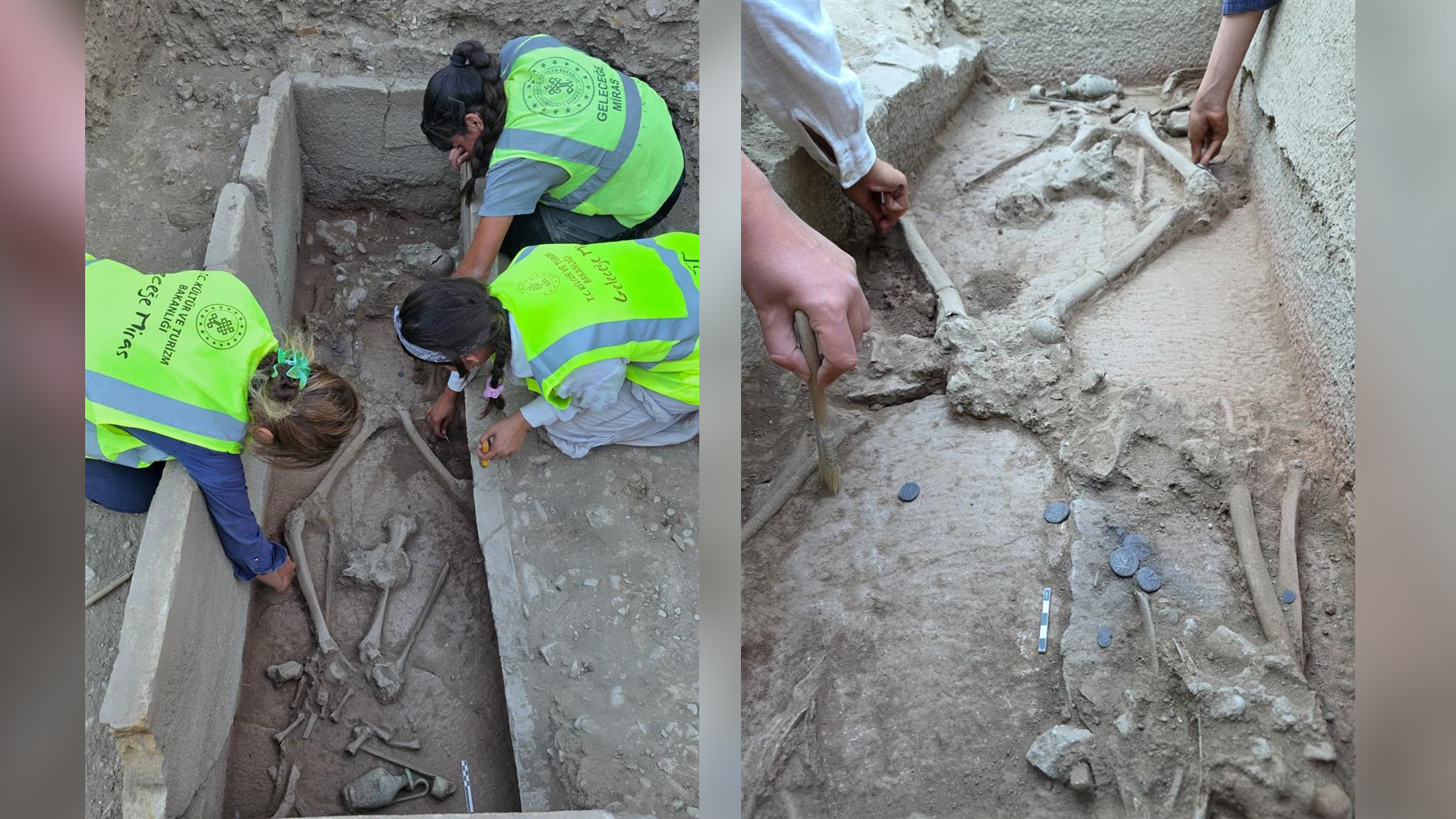
Archaeologists in Aspendos, Turkey, have unearthed a Classical-era tomb containing a skeleton and silver coins depicting wrestlers. The find suggests the deceased may have been a professional athlete from the Greco-Roman period.
Key Takeaways
- A stone sarcophagus dating between 475 and 300 B.C. was discovered in Aspendos, Turkey.
- The grave contained a human skeleton and silver coins featuring images of wrestlers.
- While the coins suggest an athletic connection, skeletal analysis is required for definitive identification.
In a fascinating archaeological breakthrough near the ancient town of Aspendos, Turkey, researchers have discovered the burial site of an individual who may have been a professional athlete over 2,000 years ago. Mehmet Nuri Ersoy, Turkey's Minister of Culture and Tourism, stated that the artifacts found within the tomb, specifically silver coins depicting wrestlers, strongly hint at the deceased's involvement in sports.
The remains were found in a box-style sarcophagus crafted from stone slabs. Experts date the tomb to the Classical period, likely between 475 and 300 B.C. Aspendos was once a thriving Greco-Roman hub, strategically located 10 miles inland from the Mediterranean Sea, serving as a vital trade center for olive oil, salt, and horses.
Why This Matters
BozokMedia analysis shows that this discovery underscores the deep integration of athletics into the civic identity of ancient city-states. The presence of a massive stadium and gymnasium in Aspendos, capable of holding 8,000 spectators, indicates that wrestling was not just a pastime but a structured professional pursuit with significant social prestige.
"Coins alone cannot indicate this was a Classical era Greek wrestler, because these coins were numerous and used as payment by the entire populace, not by wrestlers alone."
Historians point out that the city's coinage, known as 'staters,' frequently featured two wrestlers, suggesting that the sport held immense civic significance for over a century. However, historians like Sarah E. Bond emphasize that biological markers—such as a healed nasal fracture—would be more reliable evidence of a combat athlete than the presence of currency.
Frequently Asked Questions
Q1: Is it confirmed that the body belongs to a wrestler?
Answer: No, it is currently a hypothesis. Further osteological analysis is needed to identify physical trauma consistent with professional wrestling.
Q2: What were 'staters' in ancient Aspendos?
Answer: Staters were silver coins minted by the city, often featuring wrestlers, which served as a common currency for the general population.