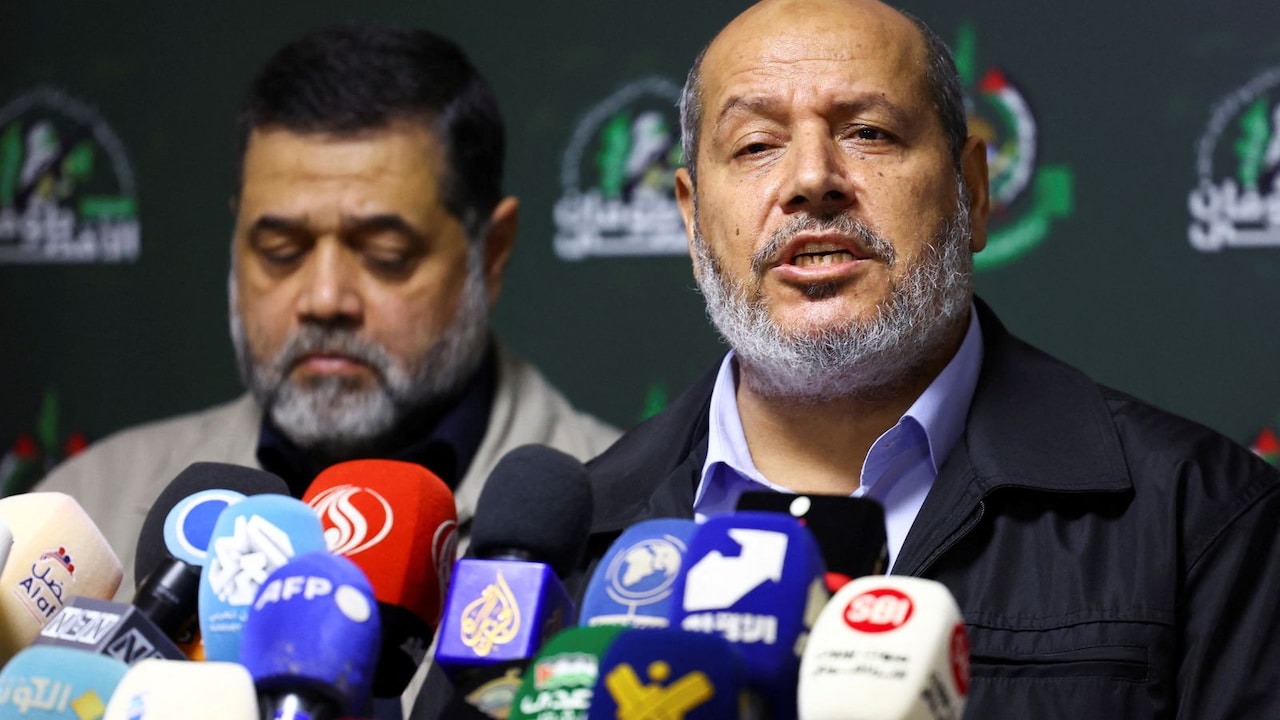
Hamas senior leader Khalil Al-Hayya has sparked global interest following high-stakes meetings in Cairo. Under his guidance, Hamas previously signaled a willingness to disarm.
- Khalil Al-Hayya conducted strategic meetings in Cairo with Trump's son-in-law and US envoy Steve Witkoff.
- Under Al-Hayya's leadership, Hamas agreed to lay down its weapons in July.
- He led a high-level delegation in October 2025 to negotiate a potential political settlement.
Khalil Al-Hayya has emerged as a pivotal figure within the political wing of Hamas, acting as the primary conduit between the organization's militant objectives and the necessities of international diplomacy. Recent revelations regarding his meetings in Cairo with Steve Witkoff, a US envoy and close associate of the Trump family, suggest a significant shift in the geopolitical landscape of the Middle East.
The most striking development occurred in July, when under Al-Hayya's direct supervision, Hamas agreed to the condition of laying down its weapons. This move was seen as a radical departure from the group's traditional stance, indicating a pragmatic realization that political survival may outweigh military persistence in the current global climate.
Why This Matters
BozokMedia analysis shows that the involvement of non-traditional diplomatic intermediaries, such as family members of former US presidents, indicates a desire to bypass rigid bureaucratic hurdles to achieve a breakthrough in the Gaza conflict. This suggests a 'deal-making' approach rather than a strictly 'policy-driven' one.
"The dialogue between Al-Hayya and US intermediaries represents a calculated risk by Hamas to secure political legitimacy in exchange for disarmament."
The trajectory of these negotiations peaked in October 2025, when Al-Hayya led a formal Hamas delegation. The talks focused on the architecture of a post-war Gaza, including governance, security arrangements, and the integration of Hamas into a broader political framework. The presence of Steve Witkoff underscored the strategic importance the US attaches to these clandestine discussions.
However, the path to peace is fraught with internal contradictions. Al-Hayya must balance the expectations of the international community with the ideological rigidity of the Hamas military wing. Any perceived weakness in negotiations could lead to internal fractures within the organization.
Frequently Asked Questions
Q1: Who is Khalil Al-Hayya?
A: He is a top political leader of Hamas responsible for negotiating with international stakeholders.
Q2: What was the significance of the July agreement?
A: It was a landmark moment where Hamas agreed to disarm, signaling a potential transition from a militant group to a political entity.