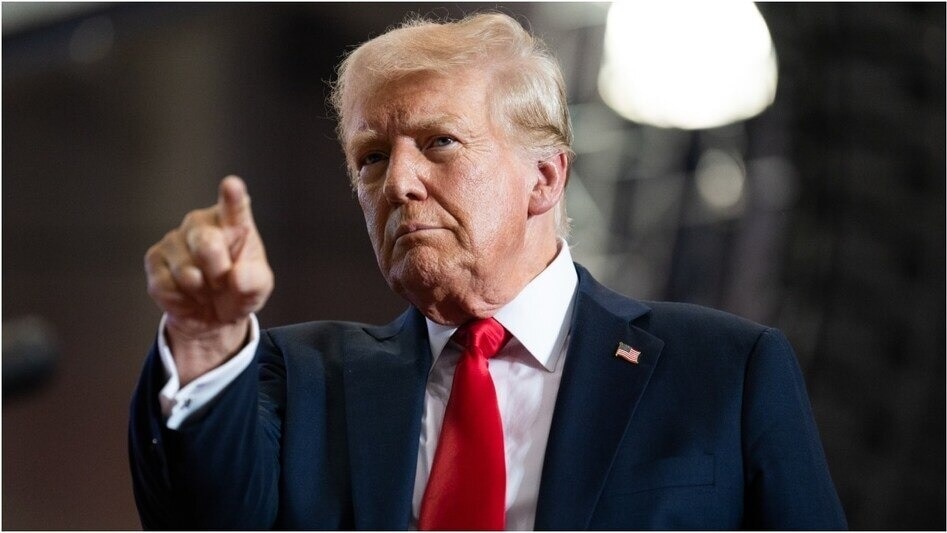
US President Donald Trump has reaffirmed his unwavering commitment to preventing Iran from acquiring nuclear weapons, while threatening to declare the strategic Strait of Hormuz as US territory.
- Donald Trump declares preventing Iranian nuclear weapons as his primary and permanent goal.
- The US considers declaring the Strait of Hormuz—a critical global oil artery—as US territory.
- Existing agreements between the US and Iran have expired, leading to increased naval blockades and economic pressure.
In a decisive move that signals a potential escalation in Middle Eastern tensions, US President Donald Trump has issued a stark warning to the Islamic Republic of Iran. Through a recent social media communication, Trump explicitly stated that his first and most enduring objective remains ensuring that Iran does not acquire nuclear capabilities in any form or manner.
The geopolitical stakes have risen significantly following reports that Trump intends to declare the Strait of Hormuz as US territory. This strategic waterway is of paramount importance to global energy security, as approximately one-fifth of the world's total oil and gas supplies transit through this narrow passage. Any unilateral move by the US to control this region could trigger a global economic shockwave.
Why This Matters
BozokMedia analysis shows that this is not merely a diplomatic spat but a calculated strategy of 'maximum pressure.' By targeting both the nuclear program and the economic lifeline (Hormuz), the US aims to force Iran into a position of total capitulation. The expiration of the June agreement has removed the last remaining diplomatic buffer, leaving both nations on the brink of direct military confrontation.
The shift from diplomatic sanctions to territorial claims over Hormuz represents a dangerous pivot toward direct maritime hegemony.
Iran has dismissed Trump's threats as 'nonsense,' yet the reality on the ground is grim. The US has already implemented a naval blockade near Iranian ports, severely crippling Tehran's economy. Meanwhile, Iran has restricted movement within the Strait, creating a volatile stalemate that mirrors a high-stakes game of chess.
Historically, the tension between the US and Iran has fluctuated between covert operations and failed diplomatic treaties. From the 1953 coup to the JCPOA (Joint Comprehensive Plan of Action) and its subsequent US withdrawal, the relationship has been defined by deep mistrust. Trump's current approach deviates from traditional diplomacy, favoring aggressive public declarations and economic warfare.
Frequently Asked Questions
Q1: Why is the Strait of Hormuz so important?
It is the primary artery for global energy, transporting about 20% of the world's petroleum liquids.
Q2: What is the current status of the US-Iran agreement?
The latest agreement reached in June has officially expired, leaving no formal diplomatic framework to prevent escalation.

