Half a decade after seizing power, the Taliban have consolidated a repressive state. The international community now struggles to balance vital humanitarian aid with the risk of legitimizing a regime that systematically excludes women.
- The Taliban have transitioned from a militant group to a functioning, albeit repressive, state authority.
- Over 2.4 million girls are denied secondary education as of 2026.
- Russia has become the first major power to officially recognize the regime.
- Pragmatic engagement risks evolving into de-facto normalization of gender apartheid.
Five years into their governance, the Taliban hold Afghanistan with a level of confidence that seemed improbable in 2021. They have successfully consolidated power and established a state apparatus that, while functioning, is profoundly repressive. While the regime touts the end of battlefield violence as a victory for peace, the absence of war is not synonymous with actual peace. True peace requires justice, inclusion, and social cohesion—elements entirely missing in a state where half the population is erased from public life.
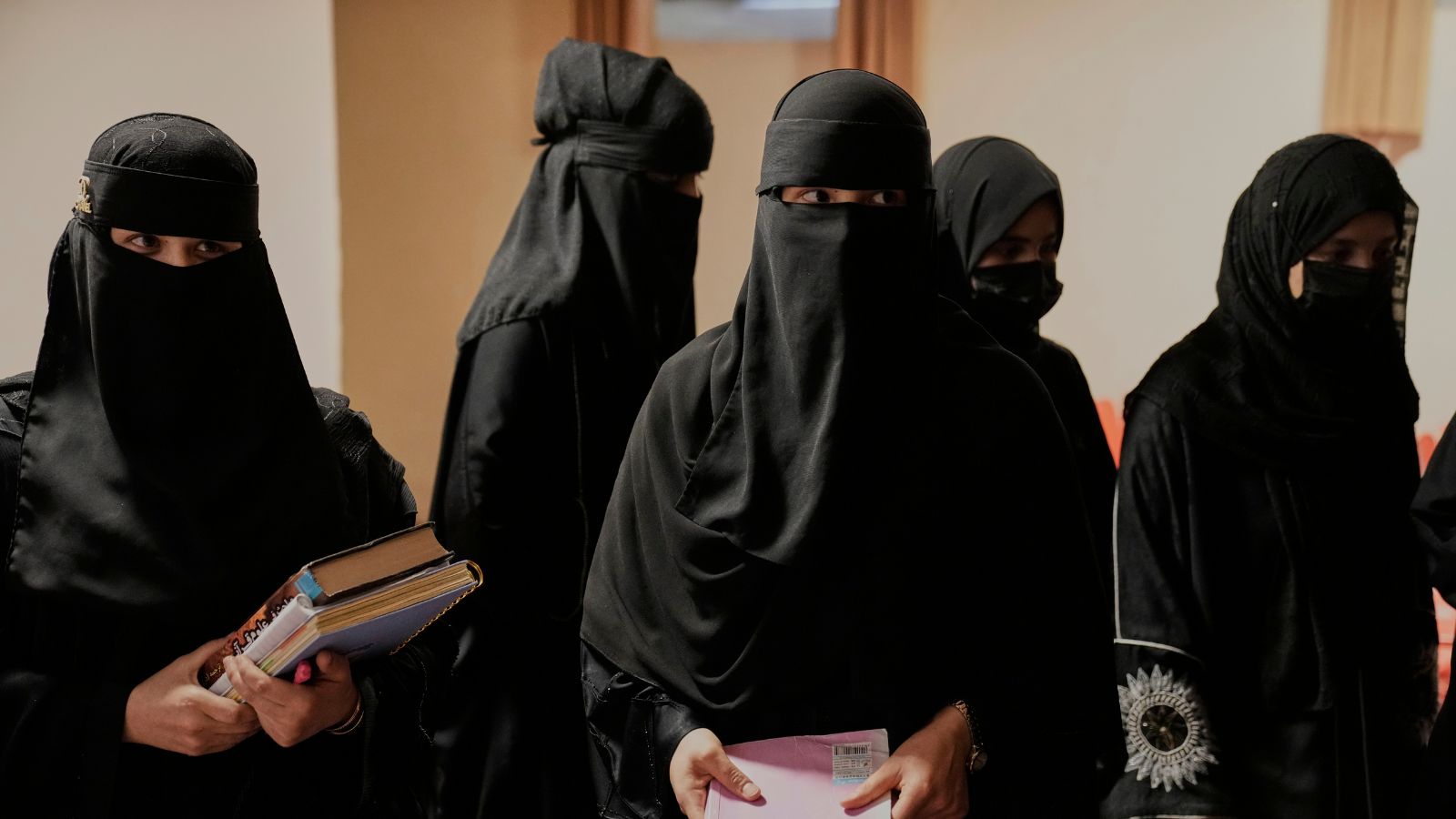
The systematic erasure of women remains the most harrowing aspect of this era. By 2026, an estimated 2.4 million girls are barred from secondary education. Through more than 100 restrictive decrees, the Taliban have institutionalized gender-based exclusion, limiting women's access to healthcare, employment, and freedom of movement. This is not merely a social crisis but an economic catastrophe, as the country is deprived of the human capital essential for its recovery.
Why This Matters
BozokMedia analysis shows that the global community is trapped in a paradox: how to engage a regime for the sake of humanitarian aid and counter-terrorism without legitimizing its atrocities. While countries like India, China, and Pakistan maintain contact for regional security, Russia's recent official recognition of the regime marks a dangerous shift. If the world accepts women's exclusion as a 'permanent background condition,' it signals to the Taliban that repression does not hinder international integration.
A state that treats half its citizens as second-class entities cannot achieve sustainable stability or genuine peace.
The strategic necessity of maintaining channels to Kabul is undeniable. Regional states cannot ignore the implications of a collapsed state, including migration surges and security vacuums. However, the lesson of the last five years is that military victory can be converted into political endurance, but not necessarily into legitimacy. The risk now is that 'pragmatic engagement' becomes a cloak for the normalization of a regressive regime.
| Metric | Taliban Claim | Observed Reality |
|---|---|---|
| Security | End of War/Peace | Stability through Repression |
| Education | Islamic-based learning | 2.4M girls excluded from school |
| Diplomacy | Sovereign State | De-facto authority with limited recognition |
Frequently Asked Questions
Q1: Which countries have recognized the Taliban government?
While most maintain unofficial ties, Russia has officially recognized the regime, while others like China and Pakistan engage for strategic interests.
Q2: How does the exclusion of women affect Afghanistan's economy?
By removing women from the workforce and education, Afghanistan is losing critical human resources, hindering its ability to rebuild its fragile economy.