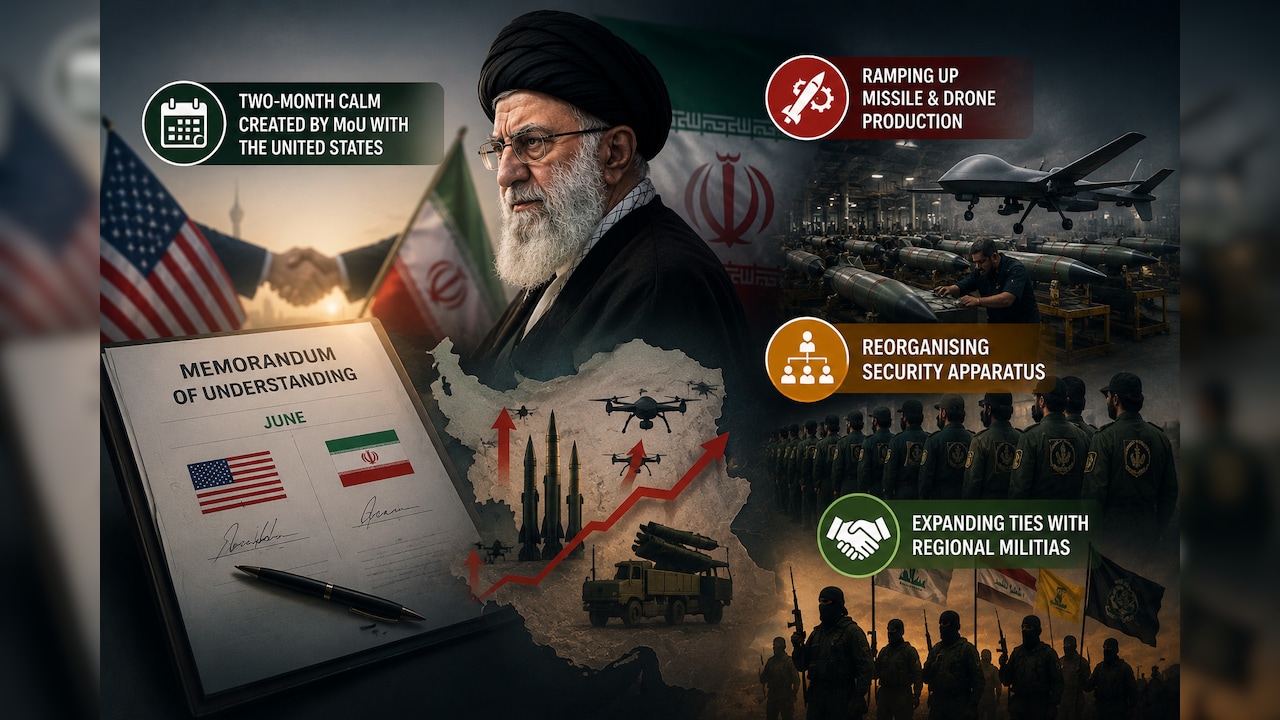
A strategic report reveals that Iran leveraged the period of its Memorandum of Understanding with the US to aggressively ramp up missile and drone capabilities in preparation for a wider regional conflict.
- Iran exploited the US MOU window to modernize its missile and drone programs.
- The IRGC deployed advisors to Iraq, Yemen, and Lebanon for regional coordination.
- Houthi militants were provided with target lists for Saudi energy infrastructure.
Recent intelligence reports suggest that Iran strategically utilized the period of diplomatic engagement and the Memorandum of Understanding (MOU) with the United States to accelerate the production and sophistication of its missile and drone fleets. This expansion is interpreted as a calculated move to prepare for a large-scale regional confrontation.
The Revolutionary Guard (IRGC) has reportedly shifted its focus toward operational readiness. By sending specialized military advisors to Iraq, Yemen, and Lebanon, Tehran has established a coordinated network designed to synchronize attacks and escalate tensions across the Middle East.
Why This Matters
BozokMedia analysis shows that Iran is employing a 'dual-track' strategy: maintaining a facade of diplomacy while simultaneously building a robust military infrastructure. This approach allows them to avoid immediate sanctions or preemptive strikes while strengthening their proxy networks, effectively shifting the regional power dynamic.
"The strategic use of diplomatic windows to bolster asymmetric warfare capabilities is a hallmark of Iran's current regional doctrine."
A critical aspect of this escalation involves the Houthi militants in Yemen. Reports indicate that Iran has supplied these groups with precise target lists focusing on Saudi Arabian ports and critical energy infrastructure. This capability poses a direct threat to global energy markets and maritime security in the Red Sea.
Historically, Iran has viewed its missile program as a non-negotiable deterrent. Over the last decade, the transition from traditional missiles to low-cost, high-impact kamikaze drones has given Iran a versatile tool for regional destabilization without risking direct conventional war.
Frequently Asked Questions
Q1: What is the role of the IRGC in this expansion?
A: The IRGC acts as the operational arm, coordinating with regional proxies and providing the technical expertise to deploy drones and missiles.
Q2: Why are Saudi ports being targeted?
A: By targeting Saudi ports and energy hubs, Iran can exert maximum economic pressure on its regional rival and disrupt global oil supplies.