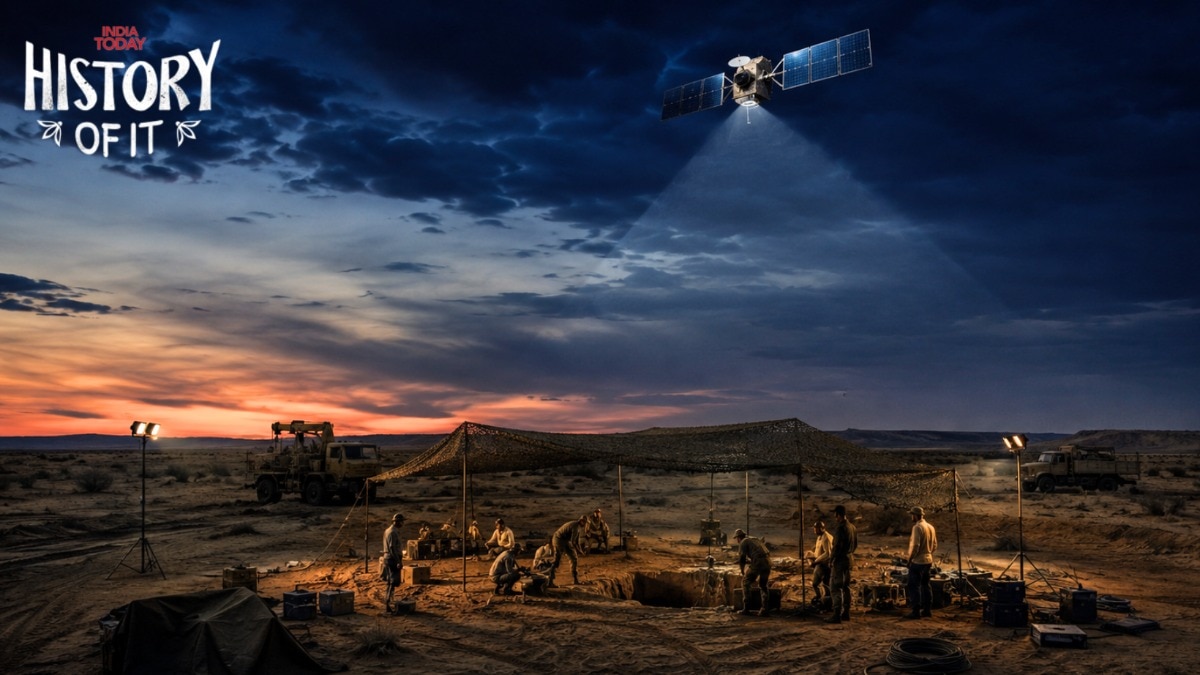
In 1995, India was on the verge of its second nuclear test, but American reconnaissance satellites detected the activity, forcing a strategic abort. This moment redefined India's approach to nuclear secrecy.
Key Takeaways
- India was preparing for a second nuclear test in Pokhran in late 1995.
- US spy satellites detected unusual activity in the Thar Desert.
- PM PV Narasimha Rao halted the test following diplomatic pressure.
- The incident taught India advanced deception techniques used successfully in 1998.
The winter of 1995 marked a critical, yet under-discussed, turning point in India's strategic history. Two decades after the historic Pokhran-I test in 1974, Indian scientists and military personnel had prepared the Rajasthan desert for another breakthrough. However, hundreds of kilometers above the Earth, the watchful eyes of American intelligence were already closing in.
The Intelligence Breach
As scientists from BARC and DRDO, including the late Dr. APJ Abdul Kalam, worked under strict secrecy, American reconnaissance satellites spotted unusual movements in the Thar Desert. Washington quickly confronted New Delhi with the intelligence they had gathered. Faced with the risk of immediate international backlash and sanctions, Prime Minister PV Narasimha Rao made the difficult decision to withhold final clearance, effectively aborting the mission.
Why This Matters
BozokMedia analysis shows that this episode was much more than a failed mission; it was a masterclass in strategic evolution. Had the test proceeded, India might have declared itself a nuclear-weapon state three years earlier than it did in 1998. More importantly, the breach exposed the immense reach of US intelligence, forcing India to rethink its entire operational security protocol.
The 1995 abort was the catalyst that transformed India's nuclear program from a visible endeavor into a master of deep-cover strategic operations.
The lessons learned from this intelligence failure paved the way for the successful Pokhran-II tests in 1998. This time, India utilized advanced deception techniques to ensure that even the most sophisticated spy satellites could not detect the preparations, allowing the nation to achieve its strategic objectives undetected.
Historical Comparison: Pokhran-I vs. Pokhran-II
| Feature | Pokhran-I (1974) | Pokhran-II (1998) |
|---|---|---|
| Codename | Smiling Buddha | Shakti |
| Stated Intent | Peaceful Nuclear Explosion | Nuclear Weapon Capability |
| Global Impact | Led to NSG formation | Triggered sanctions and global debate |
Frequently Asked Questions (FAQs)
1. Why did the US monitor India's nuclear activities in the 90s?
The US was concerned about nuclear proliferation and wanted to prevent non-treaty signatories from acquiring nuclear weapons capabilities.
2. How did the 1995 abort affect the 1998 tests?
It forced Indian scientists to develop superior concealment and deception methods, which were crucial for the success of the 1998 Pokhran-II tests.