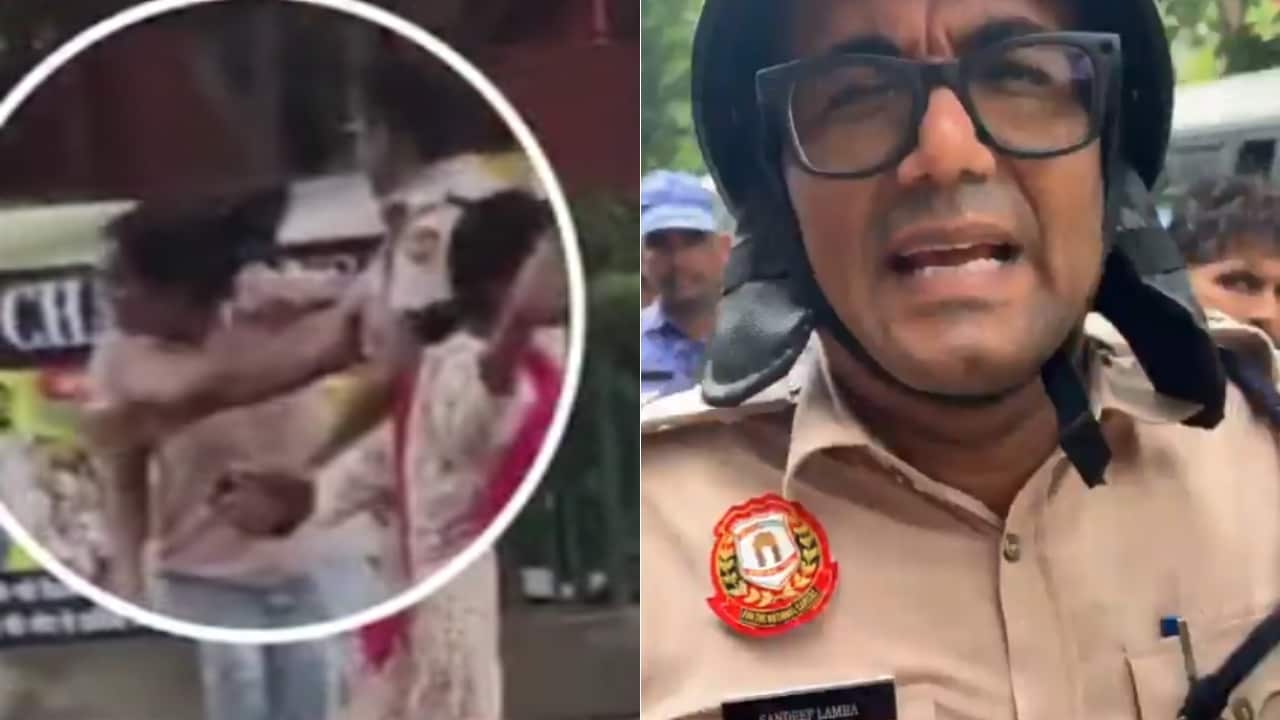
The High Court has declined a petition to remove a police officer accused of slapping a female protester, emphasizing the necessity of a fair trial before assuming guilt.
Key Takeaways
- The High Court denied the petition to dismiss the accused police officer.
- Justice Kathpalia emphasized that guilt cannot be assumed prior to a trial.
- The petitioner alleged a "reasonable apprehension of bias" due to the incident.
In a significant ruling, the High Court has refused to remove a police officer who was involved in an incident where a female protester was allegedly slapped. The court maintained that while any misconduct must be addressed legally, the judiciary cannot preemptively declare an officer guilty before the legal process concludes.
Judicial Observations and Legal Standpoint
During the proceedings, Justice Girish Kathpalia orally remarked that while any wrongdoing by the officer would be dealt with strictly in accordance with the law, it would be inappropriate for the court to assume guilt before a fair trial. This decision underscores the importance of the principle of "innocent until proven guilty."
The petitioner had approached the court seeking the immediate removal of the officer, arguing that the violent encounter had created a "reasonable apprehension of bias" within the community and undermined public trust in the police force.
Why This Matters: BozokMedia Analysis
BozokMedia analysis shows that this case highlights the tension between public accountability and due process. While public outcry often demands immediate administrative action, the judiciary serves as a check to ensure that such actions do not bypass the fundamental rights of the accused.
Pre-empting guilt in administrative actions can set a dangerous precedent for due process in law enforcement.
Frequently Asked Questions
Question 1: Why did the court refuse the removal of the officer?
Answer: The court ruled that guilt must be established through a fair trial rather than being assumed beforehand.
Question 2: What was the petitioner's primary concern?
Answer: The petitioner argued that the incident caused a reasonable apprehension of bias regarding the police.

