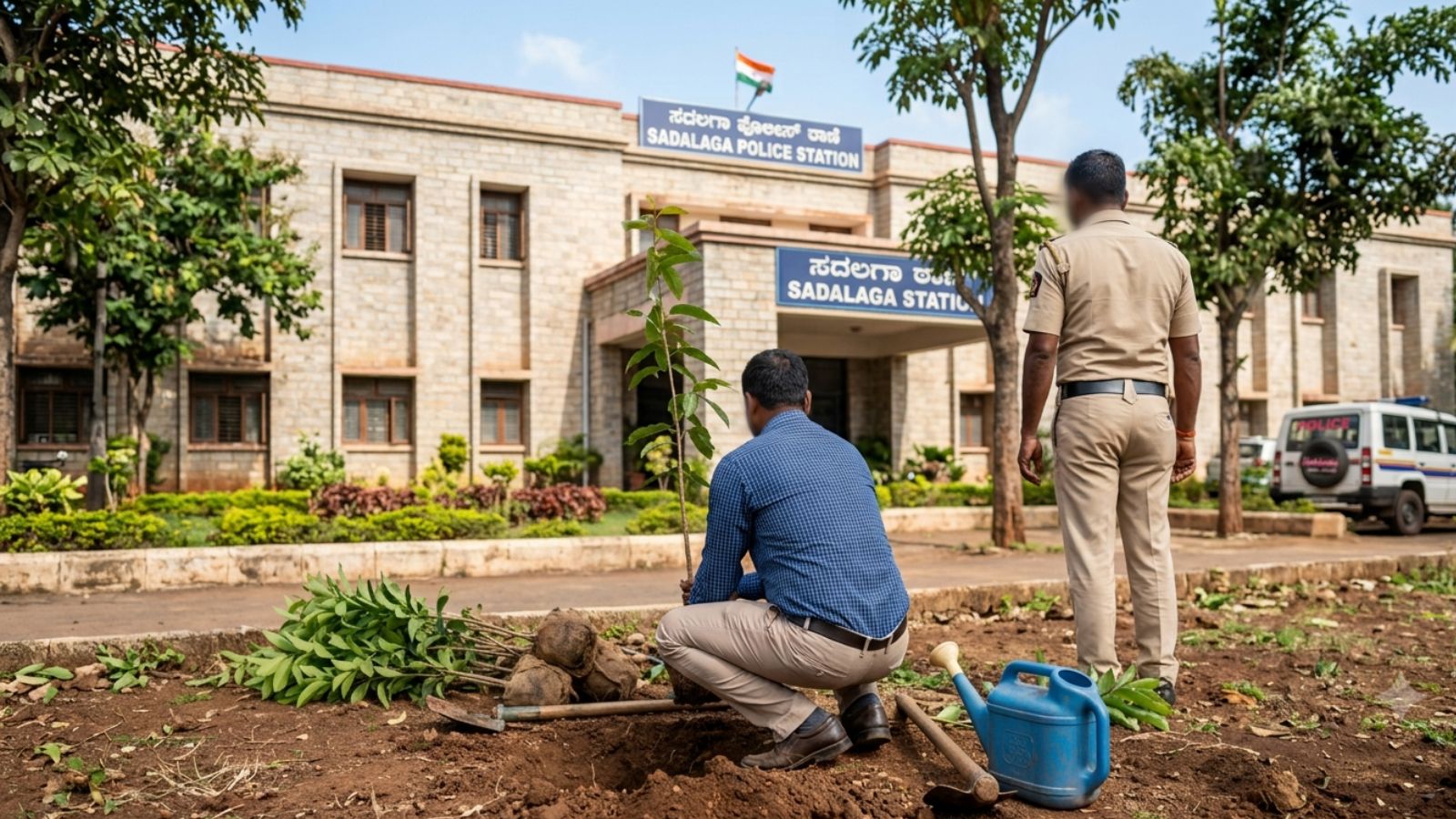
In a landmark move, a Belagavi court has sentenced a man to plant 50 saplings instead of imprisonment for misconduct while intoxicated. The ruling utilizes the new community service provisions under the Bharatiya Nyaya Sanhita (BNS).
In a progressive judicial ruling, a local court in Karnataka’s Belagavi has ordered a man to plant 50 saplings as a form of community service following an incident of public nuisance. The individual, identified as Anil Ningappa Pujari, was found intoxicated and causing a disturbance in public, leading to his conviction under the new legal framework.
According to the court's directive, Pujari is required to plant 25 trees within the court premises and another 25 trees at the Sadalaga police station. In addition to this restorative justice measure, the court also imposed a fine of Rs 1,000. Notably, the accused pleaded guilty to the charges and declined the offer of free legal aid.
Case Background
The incident dates back to March 23, when Sadalaga police head constable Madhusudan GS was on patrol. Acting on a tip-off from a local woman regarding her husband's unruly behavior and assault, the police arrived at the scene to find Pujari heavily under the influence of alcohol. Witnesses reported that he was using filthy language and making obscene gestures in public. While the complainant initially hesitated to file a formal complaint, the police proceeded with charges under the Bharatiya Nyaya Sanhita (BNS) for public misconduct and obscene acts.
Why This Matters
BozokMedia analysis shows that this case marks a significant shift from traditional punitive measures to reformative justice. Under the old Indian Penal Code (IPC), community service was not a formally recognized punishment for such offenses. However, the introduction of the Bharatiya Nyaya Sanhita (BNS) has integrated community service to encourage offenders to contribute positively to society rather than simply occupying prison space.
Legal analysts suggest that the inclusion of community service in the BNS is a strategic move to decongest Indian prisons and promote restorative justice.
This ruling serves as a precedent for how minor offenses can be addressed through actions that benefit the environment and the community, effectively turning a social nuisance into a green initiative.
Frequently Asked Questions
1. What is the specific punishment ordered by the court?
The man was ordered to plant 50 saplings at specific locations and pay a fine of Rs 1,000.
2. How does this differ from previous Indian laws?
Unlike the IPC, the new BNS allows judges to mandate 'community service' as a legitimate form of punishment for specific offenses.