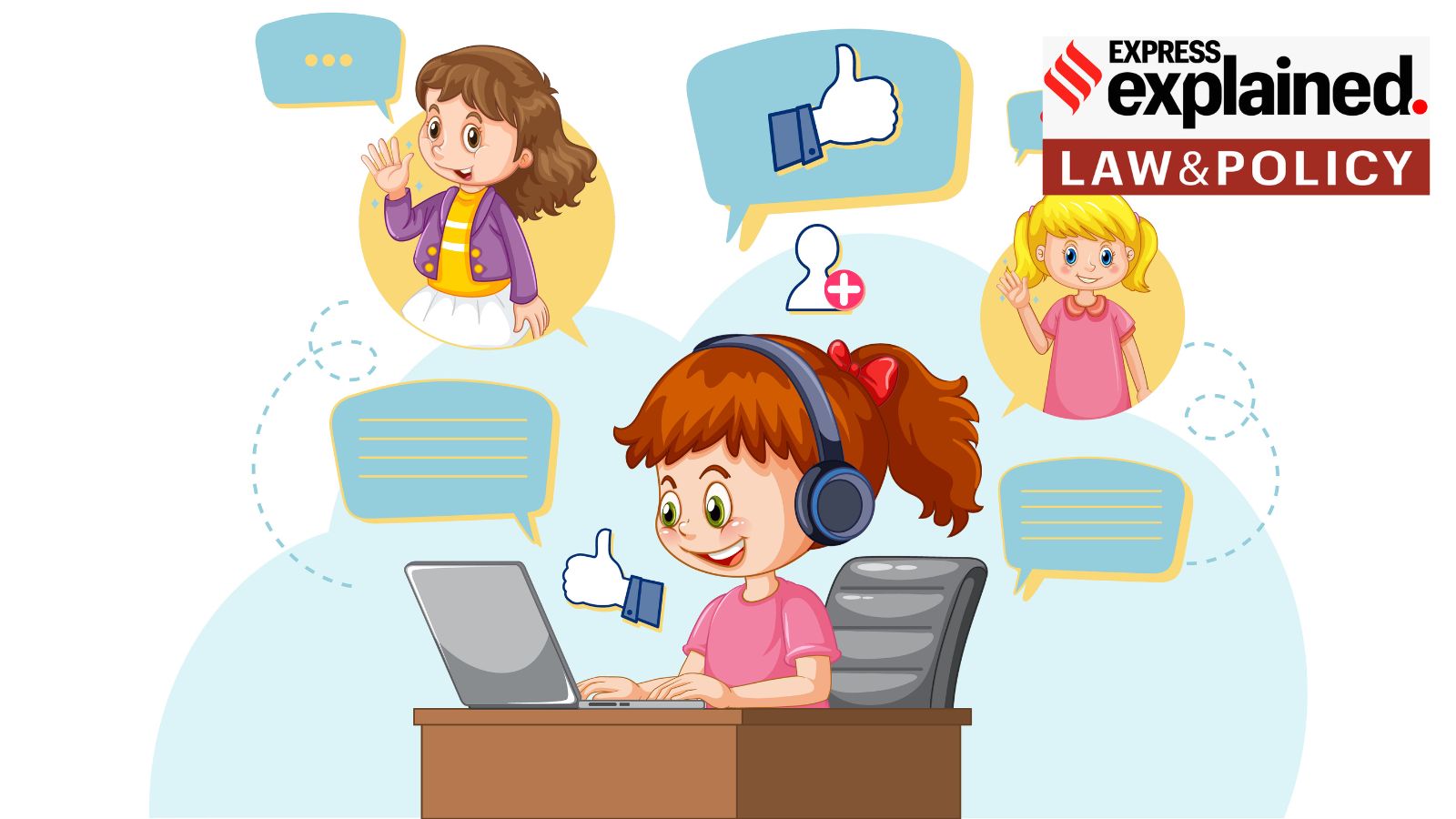
The Supreme Court has issued a notice to the Centre regarding a PIL questioning the legal validity of minors creating independent digital accounts without verified parental consent.
- The Supreme Court has sought the Centre's response on minors' digital autonomy.
- Under the Indian Contract Act, minors lack the legal capacity to enter binding agreements.
- The PIL calls for mandatory verified parental consent to prevent cyber risks.
New Delhi: A Supreme Court bench, led by Chief Justice of India Surya Kant, has issued a notice on a Public Interest Litigation (PIL) that challenges the current digital landscape regarding minors. The core issue is whether children can legally enter into contractual agreements with digital platforms independently.
Filed by the Just Rights for Children Alliance, the petition argues that the current lack of stringent age-verification mechanisms exposes minors to extreme risks, including online grooming, trafficking, cyberbullying, and the unauthorized exploitation of personal data.
The Legal Conflict: Contracts vs. Clicks
The crux of the legal debate lies in Section 11 of the Indian Contract Act, 1872, which stipulates that a person is competent to contract only if they have reached the age of majority. Any agreement entered into by a minor is considered void ab initio (invalid from the beginning).
Despite this, most social media intermediaries allow users as young as 13 to create accounts by simply declaring their age. The PIL contends that clicking 'I Agree' to Terms of Service constitutes a contract, which a minor is legally incapable of forming.
Why This Matters
BozokMedia analysis shows that there is a massive regulatory gap between technological ease and legal protection. While the Information Technology Act, 2000 recognizes electronic contracts, it does not bypass the fundamental incapacity of minors to contract under civil law.
The mere act of entering a date of birth is a 'bare minimum' safeguard that fails to provide real protection against sophisticated digital threats.
Furthermore, the petition points out that the 13-year age threshold commonly used by global platforms is derived from foreign standards rather than Indian legislative requirements, leaving Indian children in a legal gray area.
Historical Background
As India transitioned into one of the world's largest consumer markets for mobile internet, the legal framework struggled to keep pace with the rapid onboarding of young users. The evolution from simple websites to complex, data-driven social ecosystems has made the question of 'contractual competence' more critical than ever before.
Frequently Asked Questions
1. What is the main concern of the PIL?
The primary concern is that minors are creating legally void contracts with platforms, exposing them to data misuse and cybercrime.
2. What solution does the petition propose?
It proposes a 'prevention by design' approach, requiring parental consent through verified e-KYC mechanisms.