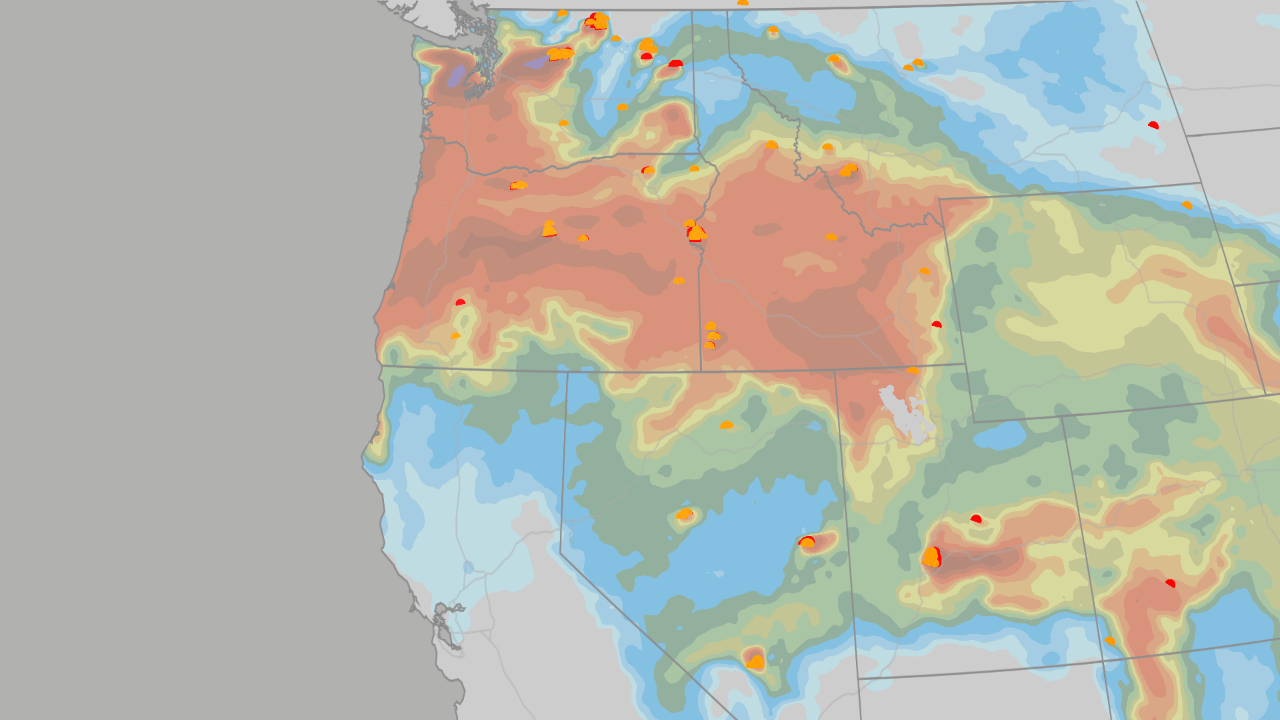
Intense wildfires in Oregon and Washington are driving thick smoke into major metropolitan areas, including Seattle and Portland, threatening air quality and public health.
Key Takeaways
- Massive wildfires are burning across eastern Oregon and Washington.
- Smoke is moving west toward the Interstate 5 corridor, including Seattle and Portland.
- Air quality is expected to reach unhealthy and hazardous levels.
- Extreme heat may accompany the smoke, with temperatures soaring in some areas.
A massive surge of wildfire smoke from the Northwest is forecasted to descend upon western Washington and Oregon. As winds shift, cities such as Seattle, Portland, Tacoma, and Olympia are bracing for significantly degraded air quality. The smoke, generated by weeks of relentless burning in the eastern two-thirds of the region, is expected to persist through Wednesday.
The Scale of the Destruction
The wildfire crisis is concentrated in the eastern regions of Oregon and Washington. In the Spokane, Washington metro area, fires have already caused catastrophic damage, destroying hundreds of homes and businesses. Additionally, approximately 30 large-scale fires are currently active in central and eastern Oregon, with further blazes reported in Idaho, Montana, and Utah.
Why This Matters
BozokMedia analysis shows that this is not merely a visibility issue but a profound public health emergency. The particulate matter within wildfire smoke is microscopic, capable of penetrating deep into lung tissue and entering the bloodstream, which can trigger heart attacks, strokes, and chronic respiratory inflammation.
Wildfire smoke acts as an invisible health hazard, carrying microscopic particles that bypass the body's natural defenses.
Compounding the smoke crisis is a projected heatwave. While dense smoke can sometimes act as a filter to lower daytime highs, temperatures in Portland could still approach the upper 90s, with some neighborhoods potentially topping 100 degrees Fahrenheit. The combination of poor air quality and extreme heat creates a high-risk environment for vulnerable populations.
Frequently Asked Questions
1. How can I check the air quality in my area?
You can monitor real-time data via The Weather Channel app or weather.com by looking for the 'Air Quality' or 'Breathing' index.
2. Who is most at risk from wildfire smoke?
Children, the elderly, pregnant women, and individuals with pre-existing heart or lung conditions are at the highest risk.
