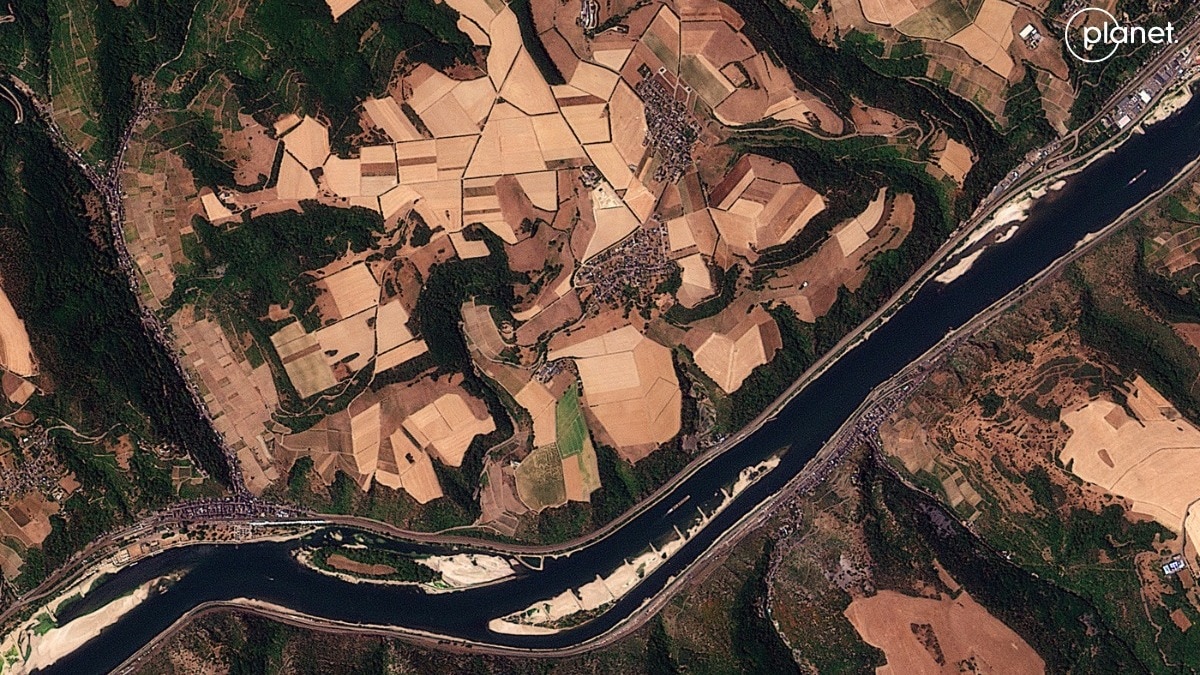
Extreme heatwaves across Europe have pushed major river levels to historic lows. The shortage on the Rhine is leaving cargo ships stranded, threatening the continent's logistics and economy.
Key Takeaways
- European river levels have hit record lows due to persistent heatwaves.
- The Rhine River is facing critical water shortages, leaving large ships stranded.
- The drought is severely impacting shipping, logistics, and industrial supply chains.
Europe is grappling with a severe hydrological crisis as intense heatwaves continue to sweep across the continent. Major waterways, including the vital Rhine River, have seen their water levels drop to unprecedented lows. This has left massive cargo vessels high and dry, unable to navigate the receding waters, which is causing a massive bottleneck in European trade.
Economic and Logistic Disruptions
The impact is being felt most acutely in Germany, where economists note that the low levels of the Rhine are hitting harder than in the Netherlands. As ships are unable to carry full loads due to shallow depths, the cost of transporting goods via water is skyrocketing. This forced shift to road and rail transport is not only more expensive but also significantly increases carbon emissions.
Why This Matters
BozokMedia analysis shows that this is not merely a seasonal fluctuation but a structural threat to the European economy. The reliance on river transport for fuel, raw materials, and agricultural products means that drying rivers can lead to energy shortages and food price inflation across the EU.
The drying of Europe's arteries is a stark reminder that climate change is no longer a future threat, but a present economic reality.
Historical Background
While Europe has faced droughts in the past, the combination of record-breaking temperatures and the rapid depletion of river basins is unprecedented in modern recorded history. There is now an urgent call for the maritime industry to invest in specialized shallow-water vessels to adapt to this 'new normal.'
Frequently Asked Questions
Question 1: How does low river water affect the economy?
Answer: It disrupts the transport of essential goods, increases shipping costs, and can lead to industrial slowdowns.
Question 2: Is this a recurring trend?
Answer: Yes, climate models suggest that extreme heat and drought cycles will become more frequent and intense in Europe.