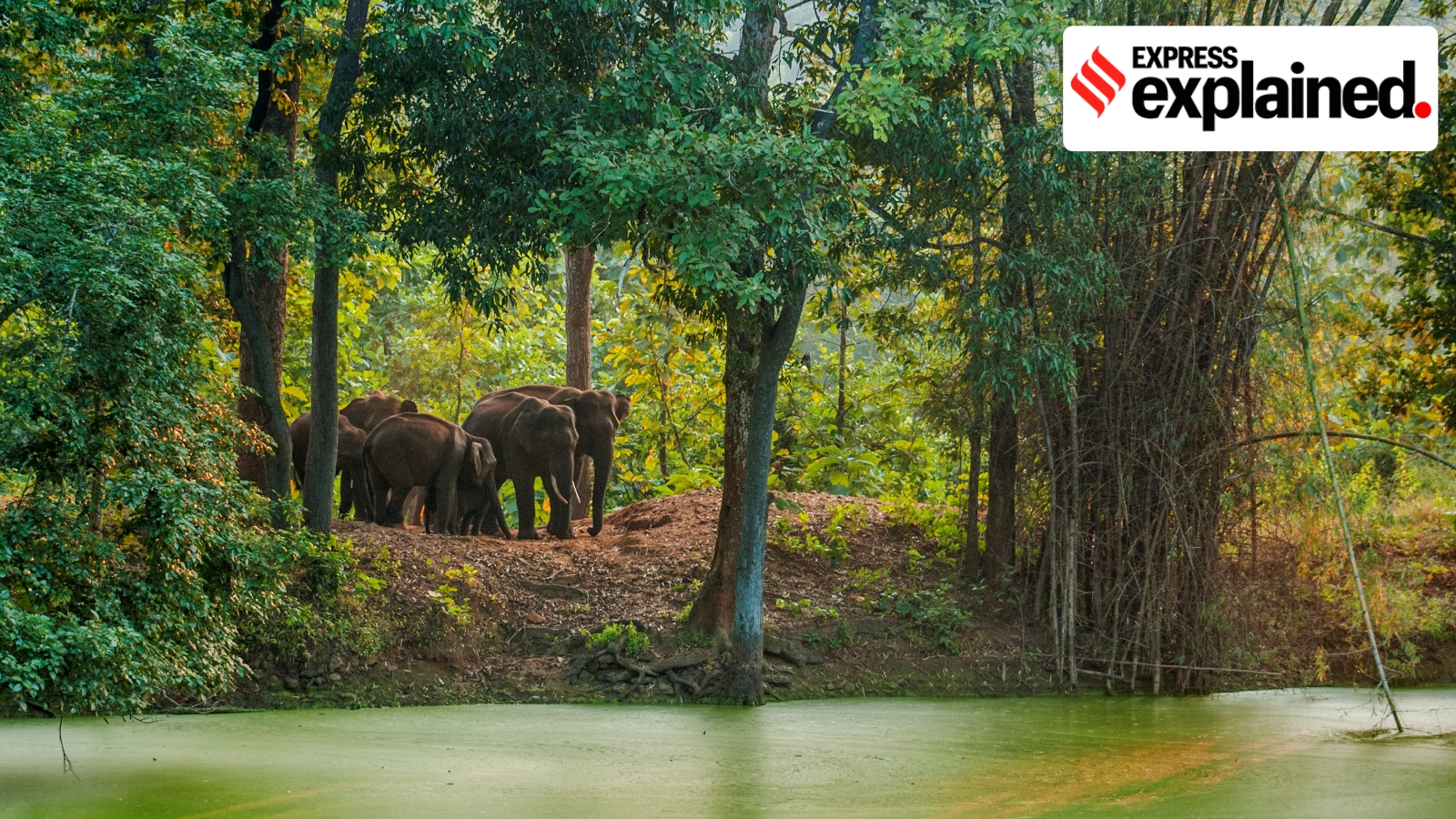
The Supreme Court has ordered a fresh survey of elephant corridors to prevent habitat fragmentation. As infrastructure and mining disrupt these vital pathways, the risk of human-elephant conflict reaches a breaking point.
- The Supreme Court has mandated a fresh survey of elephant corridors across India.
- Infrastructure like railways, highways, and mining are fragmenting natural habitats.
- Disrupted corridors lead to increased human-elephant conflict and loss of genetic diversity.
In a landmark move, a Supreme Court bench presided over by Chief Justice of India Surya Kant has directed the Union government to conduct a comprehensive fresh survey of elephant corridors. The court emphasized that these vital pathways cannot be blocked under the pretext of preventing crop damage, noting that long-distance movement is intrinsic to elephant biology. This directive comes amidst rising tensions in managing human-elephant conflict across the country.
Asian elephants are highly mobile and social mammals. A single male elephant may require a home range spanning 50 to 300 square kilometers, depending on resource availability. To navigate these vast landscapes, elephants rely on 'corridors'—natural pathways that connect fragmented habitats. These corridors are essential for seasonal migrations, food security, and maintaining the genetic health of the species.
Why This Matters
BozokMedia analysis shows that the fragmentation of these corridors is not just a biological issue but a socio-economic crisis. When linear infrastructure such as railway lines, canals, and power grids bisects a corridor, elephants are forced into human settlements and agricultural lands, leading to tragic encounters and loss of livelihood.
Protecting elephant corridors is not just about saving a species; it is about preserving the ecological integrity that sustains human communities as well.
India’s elephant population is distributed across four major landscapes: the Western Ghats, North-Eastern Hills, Shivalik Hills, and Central India. Notably, over 50% of India’s 22,446 elephants reside in the Western Ghats. However, this region is facing rapid fragmentation due to tea and coffee plantations, invasive plant species, and agricultural fencing.
The crisis is equally acute in the Central India and Eastern Ghats landscape. Decades of iron ore mining in Jharkhand and Odisha have pushed elephant herds toward Chhattisgarh, Madhya Pradesh, and Maharashtra. This forced migration, driven by industrial pressure, highlights the direct link between resource extraction and wildlife displacement.
| Region | Primary Driver of Disruption | Consequence |
|---|---|---|
| Western Ghats | Plantations & Fencing | Habitat Fragmentation |
| Central India | Iron Ore Mining | Mass Displacement |
| Shivalik/Brahmaputra | Railways & Highways | High Conflict Zones |
Frequently Asked Questions
1. What is an elephant corridor?
It is a narrow strip of land that connects two larger habitats, allowing elephants to move safely between them.
2. How does mining affect elephants?
Mining destroys their traditional foraging grounds and forces them to migrate through human-populated areas.