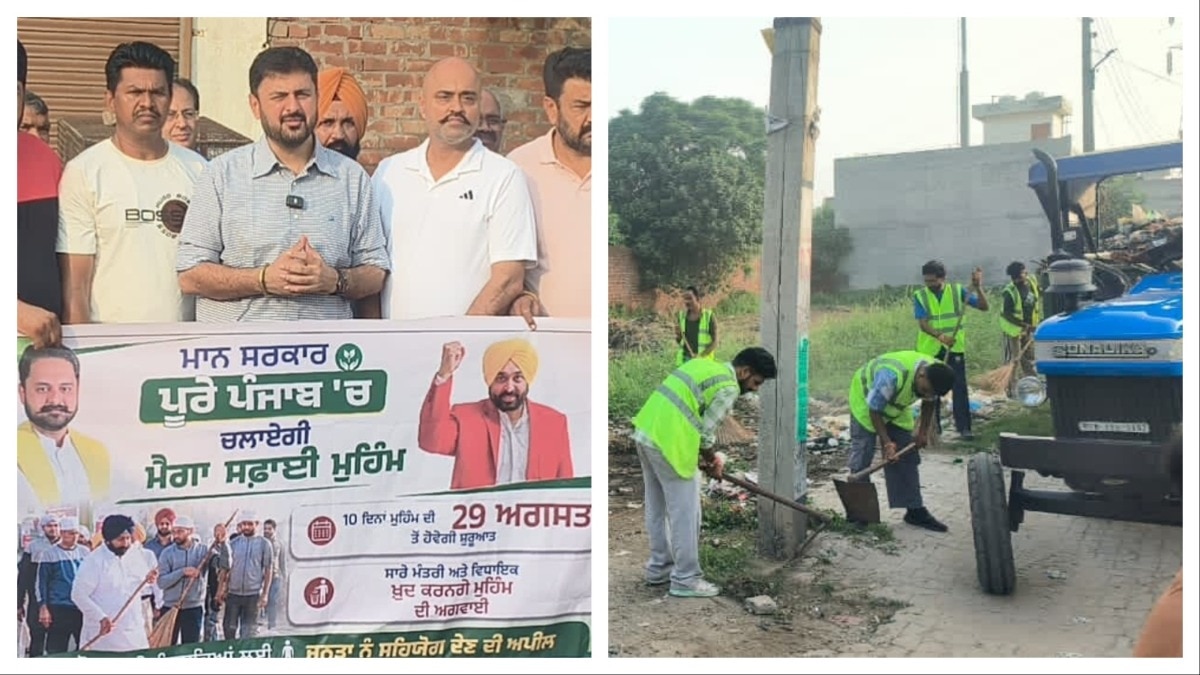
Punjab Local Government Minister Harjot Singh Bains has kicked off a massive 10-day sanitation campaign to clear illegal dumping sites across the state. The initiative aims to foster public participation and leverage digital tools for better waste management.
- Minister Harjot Singh Bains launched the 10-day campaign from Nangal.
- The drive aims to eliminate open garbage dumping sites across Punjab.
- Citizens can report garbage sites via the M-Seva app for real-time tracking.
- The campaign involves MLAs, NGOs, civic bodies, and local councillors.
In a significant move to enhance urban sanitation, Punjab Local Government Minister Harjot Singh Bains launched a comprehensive 10-day statewide cleanliness drive on Saturday. Commencing from Nangal, the campaign is specifically designed to identify and clear 'garbage-vulnerable points' or hotspots that have become persistent issues for local residents. The intensive drive is scheduled to run until September 7.
During the launch event, Minister Bains joined Safai Sewaks and local councillors to emphasize the importance of grassroots action. He highlighted that Punjab, being a land of spiritual significance and home to many gurus and saints, deserves to be kept pristine. The Minister stressed that the campaign is not merely a government initiative but a call for collective social responsibility.
Why This Matters
BozokMedia analysis shows that unplanned urban growth and inadequate waste disposal mechanisms have led to the emergence of numerous illegal dumping sites in Punjab. By targeting these specific 'hotspots' through a time-bound campaign, the state government aims to disrupt the cycle of environmental degradation and public health risks associated with open waste.
It is our collective responsibility to keep the sacred land of Punjab clean and beautiful.
To ensure accountability and transparency, the Punjab government has integrated technology into this mission. Citizens are encouraged to use the M-Seva app to upload photographs of garbage hotspots in their localities. Upon submission, a unique ID is generated for each complaint, allowing residents to track the status of the cleanup in real-time, thereby bridging the gap between the administration and the public.
The campaign has seen widespread political and administrative mobilization. In Hoshiarpur, MLA Bram Shanker Jimpa and Mayor Praveen Saini led efforts from Fatehgarh Chungi. Jimpa reiterated the vision of Chief Minister Bhagwant Mann to create pollution-free cities and villages, noting that maintaining cleanliness is a shared duty between the municipal corporations and the residents themselves.
Historical Background
Historically, waste management in Punjab has faced challenges related to resource allocation and public awareness. While municipal bodies have made strides in door-to-door collection, the issue of 'hotspots'—areas where waste is dumped illegally in public spaces—remains a hurdle. This structured 10-day intervention seeks to provide the necessary momentum to clear these accumulated sites.
Frequently Asked Questions
Question 1: How can citizens participate in this cleanliness drive?
Answer: Citizens can participate by using the M-Seva app to report garbage sites and by ensuring they do not dump waste in public areas.
Question 2: Who is involved in the execution of this campaign?
Answer: The drive involves MLAs, Deputy Commissioners, Municipal Corporation officials, NGOs, and local councillors.


