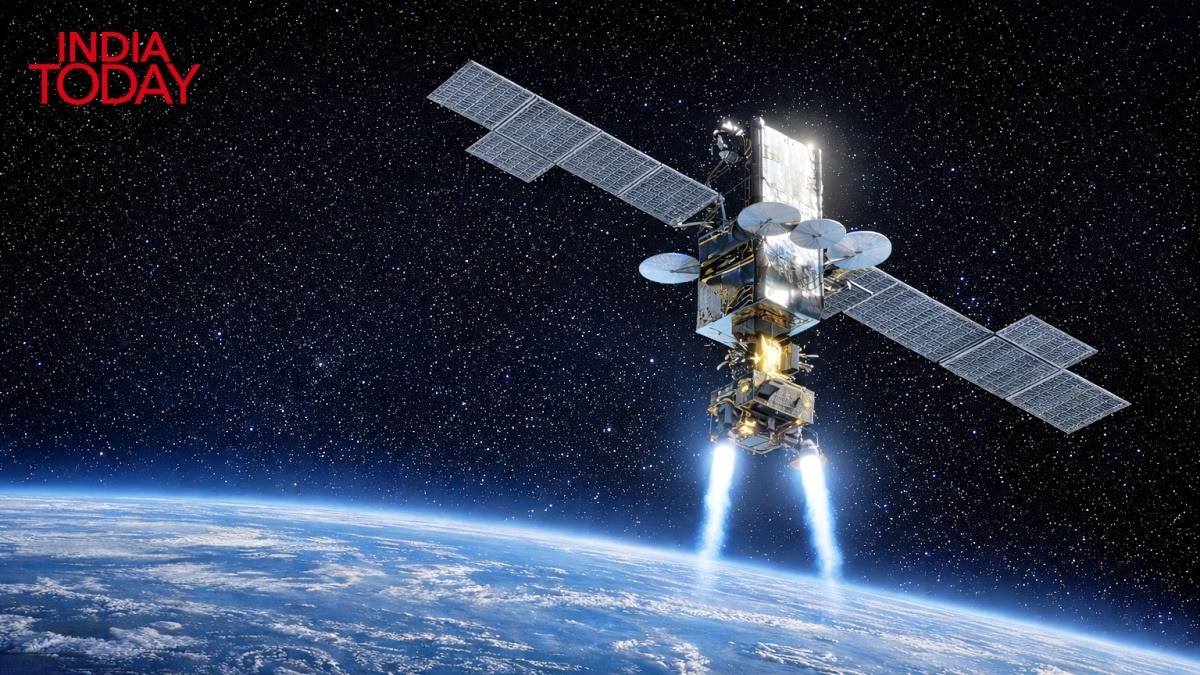
Bengaluru-based startup Aule Space has achieved a major milestone by testing its autonomous satellite docking technology at ISRO. This innovation aims to service failing satellites and manage space debris.
Key Takeaways
- Bengaluru-based Aule Space successfully tested its GNC technology at ISRO's RSL.
- The startup achieved Technology Readiness Level 6 (TRL-6).
- The technology acts as a 'space tow truck' for non-responsive satellites.
- The company has secured $2 million in pre-seed funding for development.
In a massive leap for India's private space sector, Bengaluru-based deep-tech startup Aule Space has successfully demonstrated its relative guidance, navigation, and control (GNC) technology at ISRO's Rendezvous Simulation Laboratory (RSL). By reaching Technology Readiness Level 6 (TRL-6), the startup has proven its capability to navigate and dock with objects in simulated space environments.
The Concept of a 'Space Tow Truck'
Low Earth Orbit (LEO) is crowded with satellites traveling at staggering speeds of nearly 28,000 kmph. These assets, vital for defense, communication, and navigation, often become useless due to fuel depletion or mechanical failure. Aule Space is developing autonomous spacecraft designed to function as 'tow trucks.' These vehicles will approach non-cooperative, tumbling, or non-responsive satellites to extend their life or move them out of operational lanes.
Why This Matters
BozokMedia analysis shows that the growing problem of space debris poses a significant threat to the global orbital economy. As more nations launch satellites, the risk of collisions increases. Aule Space's ability to service satellites in-orbit rather than abandoning them represents a shift toward a sustainable and circular space economy, reducing the accumulation of lethal space junk.
Successfully docking with a tumbling satellite at 28,000 kmph without GPS is one of the most complex engineering feats in modern aerospace.
Overcoming Orbital Challenges
The technical hurdles are immense. Unlike terrestrial docking, space servicing requires computer vision and autonomous navigation to determine a target's position and rotation in total darkness. Aule Space's in-house technology stack is specifically being built to handle these 'non-cooperative' targets, ensuring safe proximity operations even when the target is spinning uncontrollably.
Frequently Asked Questions
1. What is the purpose of Aule Space's technology?
It is designed for orbital servicing, which includes refueling, repairing, or moving failed satellites to prevent them from becoming space debris.
2. How does this help India's space ambitions?
It moves India beyond just launching satellites into the high-value domain of orbital maintenance and space logistics.