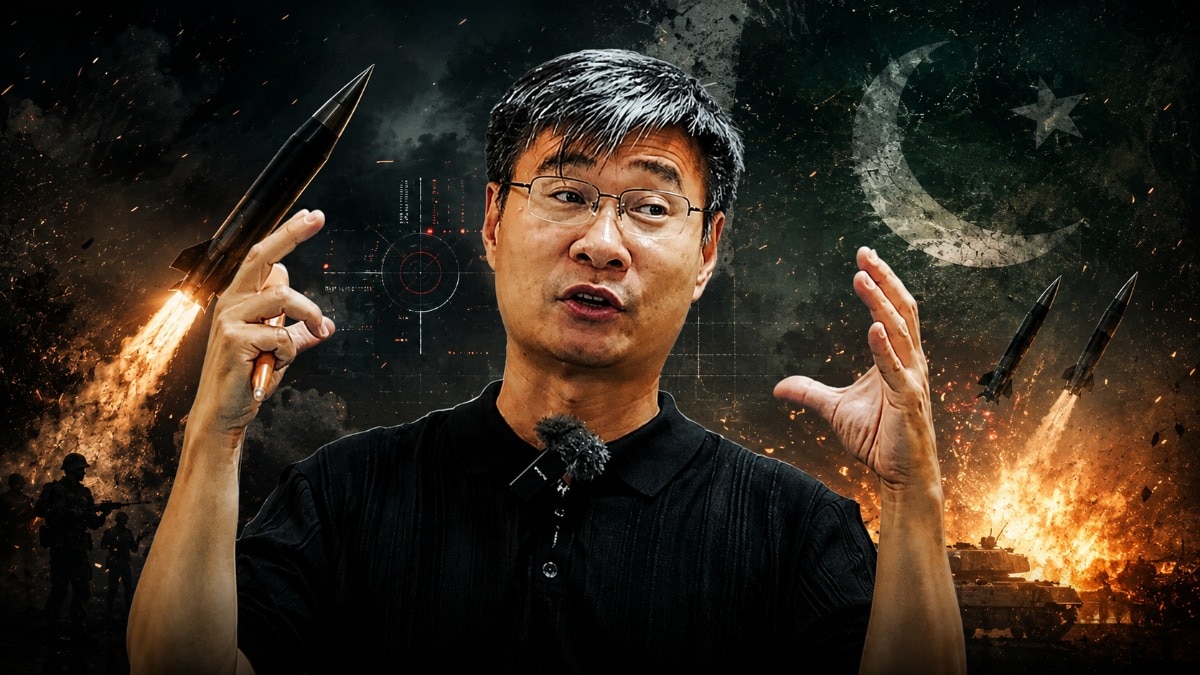
Geopolitical commentator Professor Jiang Xueqin suggests that Pakistan's internal instability and weak command structures make it a high-risk candidate for the first nuclear use in a conflict.
Key Takeaways
- Professor Jiang Xueqin predicts Pakistan is the most likely first nuclear user due to internal vulnerabilities.
- The core issue is not just military intent, but the country's "weak and disorganized" governance.
- India maintains a 'No First Use' policy, unlike Pakistan's strategic ambiguity.
In a chilling assessment of global security, Chinese-born Canadian educator and geopolitical analyst Professor Jiang Xueqin has raised alarms regarding the future of nuclear warfare. Known for his accurate predictions regarding Donald Trump and Middle Eastern tensions, Jiang suggested in a recent podcast that if nuclear weapons were ever deployed in a conflict, Pakistan would be the most likely nation to use them first.
Crucially, Jiang clarified that he does not believe a nuclear war is imminent due to the global nuclear taboo. However, he highlighted a terrifying loophole: the internal stability of nuclear-armed states. He described Pakistan as a "very, very weak, disorganized and corrupt nation," suggesting that its command-and-control systems might fail to restrain nuclear use during an emergency.
Why This Matters
BozokMedia analysis shows that the nuclear standoff in South Asia is fundamentally asymmetrical. While India has traditionally maintained a declared No First Use (NFU) posture, Pakistan has intentionally embraced strategic ambiguity. This means Pakistan keeps the nuclear option on the table to deter India's superior conventional military capabilities.
"Pakistan is a very, very weak, disorganized and corrupt nation with nuclear weapons. Its control systems may not be in place to restrain itself in an emergency." — Professor Jiang Xueqin
Historical Context and Nuclear Arsenals
The history of Indo-Pak tensions is punctuated by nuclear rhetoric. From Pervez Musharraf's warnings in 2002 to Imran Khan's statements following the 2019 Balakot strikes, Islamabad has frequently linked its survival to its nuclear arsenal. According to SIPRI data, India possesses approximately 190 warheads, while Pakistan holds around 170. A key difference remains in deployment: India has begun deploying warheads, whereas Pakistan has not yet done so.
| Feature | India | Pakistan |
|---|---|---|
| Estimated Warheads | 190 | 170 |
| Nuclear Doctrine | No First Use (NFU) | Strategic Ambiguity |
| State Stability | Stable/Organized | Vulnerable/Disorganized |
Frequently Asked Questions
1. What is the difference between India and Pakistan's nuclear policies?
India follows a 'No First Use' policy, whereas Pakistan maintains ambiguity to deter conventional military threats.
2. Why does Professor Jiang target Pakistan specifically?
He cites Pakistan's economic corruption and political disorganization as risks to its nuclear command-and-control integrity.