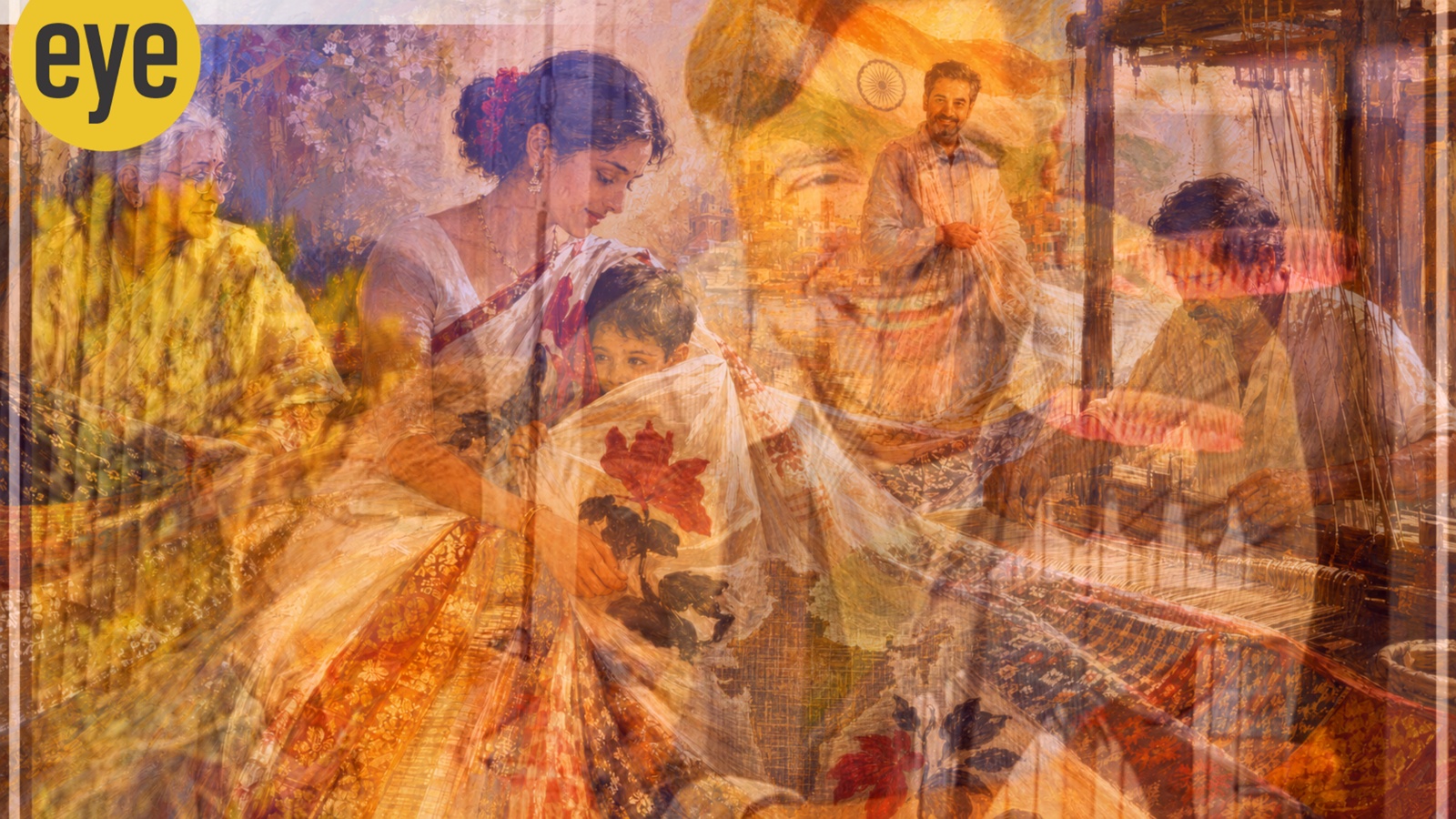
Suvir Saran explores the profound connection between the Indian sari and the nation's identity, tracing its journey from childhood memories to a symbol of democracy and dignity.
Key Takeaways
- The sari is more than a garment; it is a living map of India's geography and history.
- True Indian beauty is rooted in patience and handmade craftsmanship.
- Saris enhance individuality rather than erasing it.
- The sustainability of the sari lies in its ability to be repurposed endlessly.
Long before understanding the intricacies of the Constitution, I understood India through six yards of cloth. My education did not begin in classrooms, but in the rustle of cotton and the fragrance of freshly ironed silk within my mother's wardrobe. Every sari carried an address; every border held a history; every motif carried a memory. To follow the pleats of the women around me was to travel across the diverse landscapes of India.
The Art of Patience and Simplicity
Reflecting on childhood, the most impactful garment wasn't the most expensive, but a simple white cotton sari adorned with crimson and black appliqué. The ritual of preparing it—using rice water as starch and drying it in the blistering Delhi heat—taught a fundamental truth: Beauty in India has always been made with patience. It was a lesson in design, color theory, and anthropology, all wrapped in fabric.
Why This Matters: BozokMedia Analysis
BozokMedia analysis shows that the sari serves as a powerful tool of visual language that bridges the gap between tradition and modernity. From high-ranking medical professionals in Manhattan to leading journalists in India, the sari has allowed women to command authority and elegance without sacrificing their cultural identity. It is a garment that does not erase individuality but reveals it with profound clarity.
"You cannot hurry beauty that is made by hand."
However, a critical tension exists within this heritage. While we celebrate the grandeur of Patola, Jamdani, or Kanchipuram silk, our civilization often struggles to compensate the master weavers whose genius sustains these traditions. The survival of these endangered handlooms is central to preserving India's democratic fabric.
A Philosophy of Continuity
The sari embodies a unique philosophy of sustainability. Nothing is wasted, and nothing is truly finished. A sari eventually transforms into curtains, quilts, or wall art, ensuring that the thread of memory remains unbroken across generations.
Frequently Asked Questions
1. How does the sari represent India's diversity?
Through distinct regional weaving styles, motifs, and fabrics like Maheshwari, Banarasi, and Paithani, each sari reflects a specific local heritage.
2. Why is the handloom industry considered endangered?
Due to the rise of fast fashion and the lack of fair economic returns for traditional weavers, many ancient weaving techniques are at risk of disappearing.