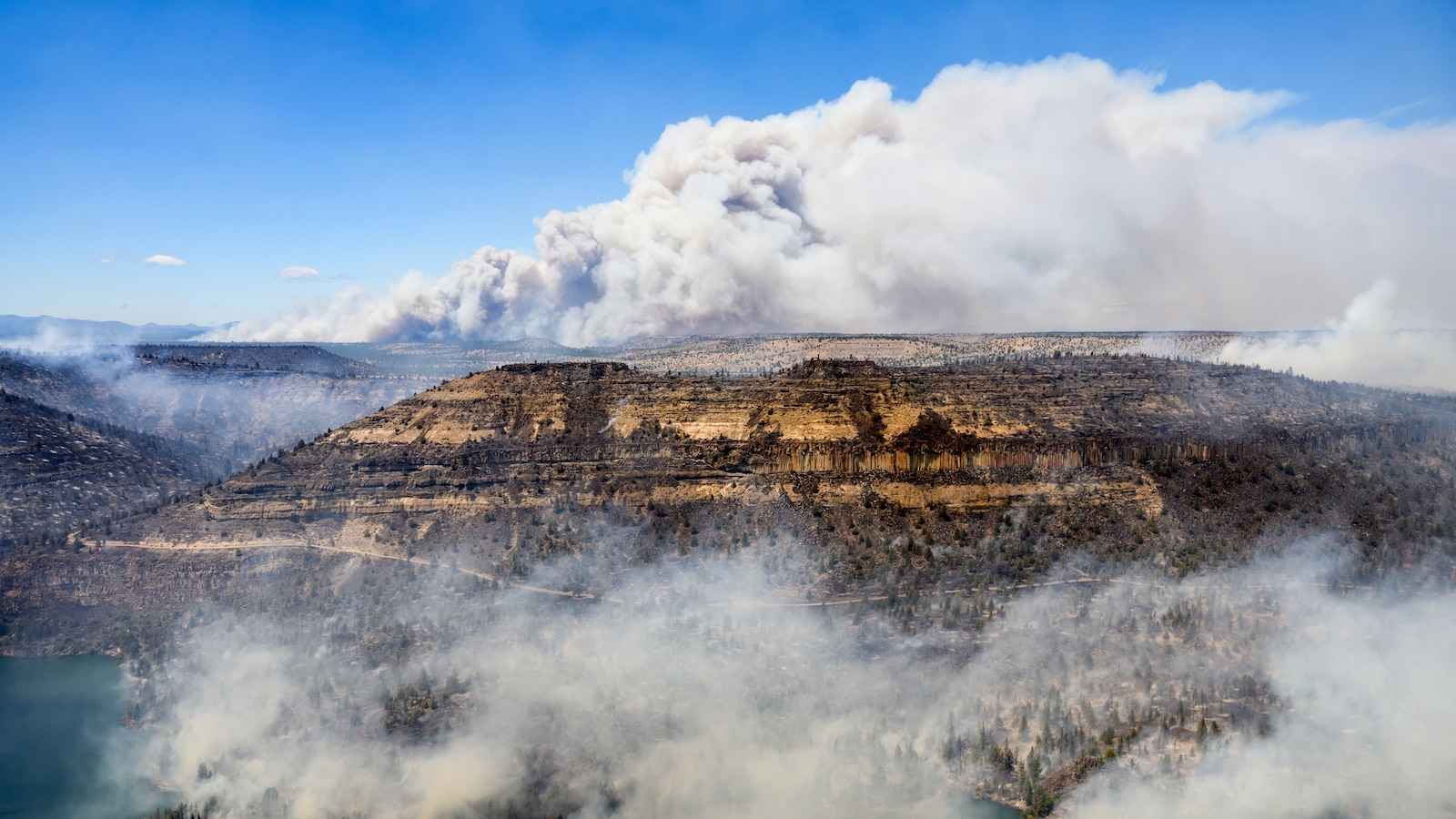
As massive wildfires threaten the town of Sisters, Oregon, authorities confirm the death of a fourth firefighter linked to a recent blaze near the Colorado-Utah border. Extreme weather continues to fuel devastating fires across the Western U.S.
Key Takeaways
- Massive wildfire near Sisters, Oregon, poses a threat to local residents.
- Fourth firefighter, Nathan Matthews, dies following the Colorado-Utah border blaze.
- Extreme heat, drought, and high winds are driving wildfires across North America.
A massive wildfire is currently threatening the community of Sisters, Oregon, driven by dry conditions and gusting winds of up to 30 mph. While officials remain optimistic about containment, the fire has already scorched approximately 105 square kilometers. Local authorities have evacuated several residents to nearby shelters as the situation remains volatile.
In a heartbreaking development, the federal Interior Department confirmed the death of 43-year-old firefighter Nathan Matthews. Matthews was part of a group of responders who were overtaken by a fast-moving wildfire near the Colorado-Utah border last month. His passing brings the death toll from that specific incident to four, following the loss of Emily Barker, Nick Hutcherson, and Sydney Watson.
Why This Matters
BozokMedia analysis shows that the increasing frequency and intensity of these wildfires are direct consequences of prolonged droughts and record-low snowpacks in the Western United States. The combination of erratic wind patterns and extreme heat creates 'perfect storm' conditions that make traditional firefighting methods increasingly dangerous and less effective.
The escalating scale of these wildfires represents a fundamental shift in environmental risk, placing frontline responders in unprecedented peril.
The scale of the crisis extends beyond the U.S. borders; in Canada, hundreds of fires are currently burning, with dozens deemed out of control. The logistical challenge is immense, involving thousands of personnel and hundreds of aircraft to combat blazes that can span thousands of square miles.
Historical Background
The Western United States has long been prone to seasonal wildfires, but the modern era of 'megafires' is fueled by a changing climate. Decades of forest management challenges combined with increasingly severe drought cycles have turned many forest ecosystems into highly flammable landscapes, leading to more frequent and lethal fire seasons.
Frequently Asked Questions
Question 1: Is the town of Sisters in immediate danger?
Answer: While the fire is nearby, the Mayor stated the city is currently safe, though containment efforts are ongoing.
Question 2: What caused the recent increase in wildfires?
Answer: A combination of months of dry weather, record lack of snow, and erratic, high-speed winds.