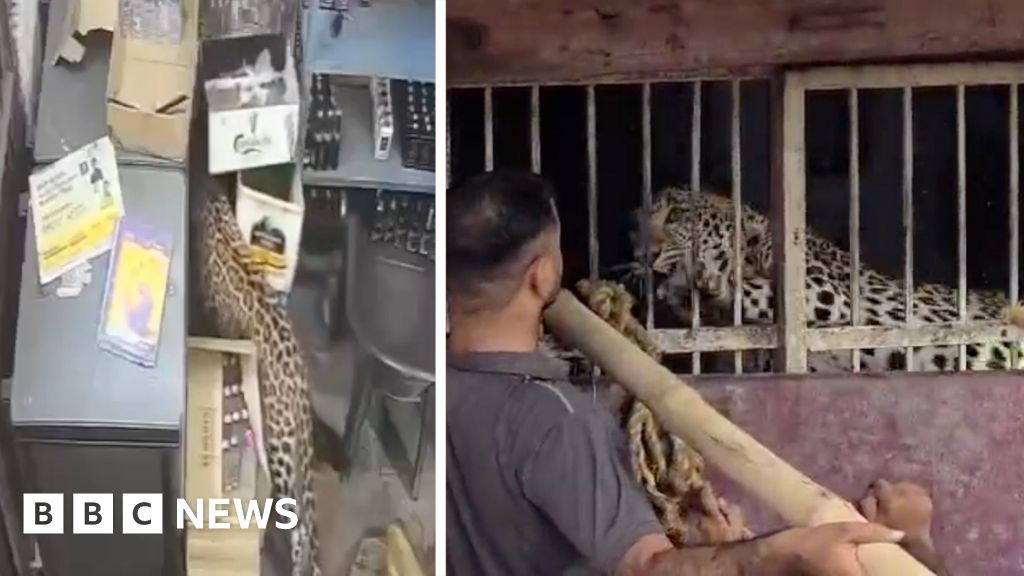
A leopard entered a liquor shop in north‑western India, attacking a sales clerk after previously assaulting a cleaner. After a tense five‑hour operation, wildlife officials tranquilised and captured the animal before releasing it back into the wild.
Key Takeaways
- A leopard broke into a liquor store in Rajasthan.
- Two employees were attacked but managed to escape unharmed.
- Officials tranquilised and captured the animal after nearly five hours and released it.
CCTV footage from July 20 shows the moment a leopard slipped into a liquor store in north‑western Rajasthan and lunged at a salesman, after previously assaulting a cleaning worker inside the premises.
The predator hid near the counter, allowing both employees to flee. Bystanders quickly shut the shop, effectively trapping the leopard inside while waiting for authorities.
For almost five hours, wildlife officials worked to sedate the animal. They succeeded, captured the leopard, and later released it back into its natural habitat, as confirmed by local authorities.
Historical Background
Human‑wildlife conflict in Rajasthan has risen sharply over the past two decades, with leopards increasingly venturing into villages due to habitat loss and prey scarcity. Such incidents highlight the delicate balance between conservation efforts and rural safety.
Why This Matters
BozokMedia analysis shows that expanding urban fringes and shrinking wildlife corridors are accelerating human‑leopard encounters. These events not only threaten public safety but also test the effectiveness of current wildlife protection policies.
"Large predators like leopards are forced into human settlements when their natural habitats fragment, leading to more frequent conflicts."
Frequently Asked Questions
Q1: What steps are taken after a leopard enters a building?
A: Local police and wildlife officials secure the area, use tranquilizers to subdue the animal, capture it safely, and then release it back into the wild.
Q2: How long does a tranquilizer remain effective on a leopard?
A: Effects typically begin within 30‑45 minutes, with full sedation achieved in about 1‑2 hours.