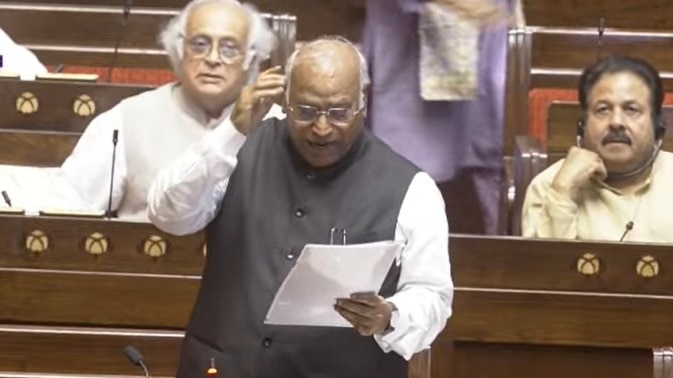
During the fourth day of the monsoon session, Congress leader Mallikarjun Kharge read a defiant poem in the Rajya Sabha, provoking a sharp reaction from Parliamentary Affairs Minister Kiren Rijiju. The incident added to repeated disruptions that have stalled proceedings in both houses of Parliament.
Key Takeaways
- Kharge used a poem to protest government policies
- Rijiju labeled the act as disorderly
- Parliamentary business was halted multiple times
On Thursday, the fourth day of the monsoon session, Congress stalwart Mallikarjun Kharge took the floor in the Rajya Sabha and recited a poem that declared, “We will die to keep truth alive… we will clash with every challenge to eradicate injustice.” The verses immediately drew a heated response from Parliamentary Affairs Minister Kiren Rijiju, who accused Kharge of breaching parliamentary decorum and called for the session to be adjourned.
The day saw both houses of Parliament suspended repeatedly. In the Lok Sabha, proceedings were halted at 12 pm and again at 2 pm, while the Rajya Sabha experienced similar interruptions, leaving legislative business in limbo. Opposition members also shouted slogans demanding the resignation of Education Minister Dharmendra Pradhan, further inflaming the atmosphere.
Historical Background
Parliamentary protests have a long history in India, dating back to the freedom struggle, but the use of poetry as a tool of dissent in the modern monsoon session is unprecedented. Since the economic reforms of 1998, opposition tactics have largely been confined to formal debates and walk‑outs; a poetic protest marks a novel escalation, highlighting tensions between expressive freedom and procedural order.
Why This Matters
BozokMedia analysis shows that such displays widen the gap between the ruling and opposition benches, raising questions about the efficiency of law‑making. If incidents like this become routine, legislative delays could hamper policy implementation and erode public trust in democratic institutions.
"Using poetry in Parliament can enrich democratic discourse, but it must be balanced against the need for procedural discipline," noted political analyst Dr. Ajay Singh.
Frequently Asked Questions
Q1: Did Kharge’s poem violate parliamentary rules?
A: While the rules do not forbid poetic language, it was deemed disorderly by the minister.
Q2: Could this lead to more such protests in the future?
A: Heightened political tensions suggest a higher likelihood of similar demonstrations, especially on contentious policy issues.