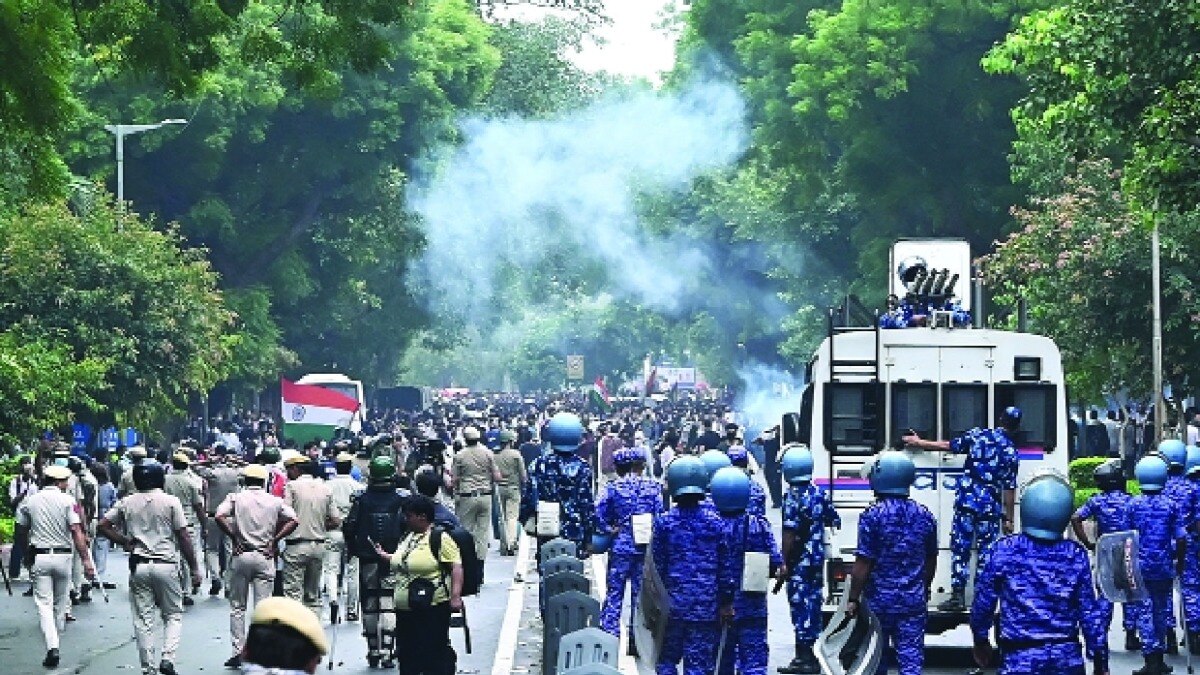
The Supreme Court directed Delhi Police to formally document its graded use‑of‑force standing order amid the Jantar Mantar pellet‑gun controversy, challenging the legality of such force in protests.
Key Takeaways
- SC instructed Delhi Police to file a graded use‑of‑force order
- Petitioners contested the legality of pellet‑gun deployment
- Lady Hardinge Medical College tasked with treating injured protesters
Supreme Court Directive
The Supreme Court on Thursday ordered the Delhi Police to place on record a standing order that outlines a graded use‑of‑force protocol for crowd‑control situations, specifically in the Jantar Mantar pellet‑gun case.
Petitioners' Arguments
Petitioners argued that existing orders do not authorize the use of metallic pellet guns during demonstrations and sought judicial scrutiny. They claimed the force used was disproportionate and violated constitutional rights.
Why This Matters
BozokMedia analysis shows that this ruling will push law‑enforcement agencies toward greater transparency and accountability, reinforcing civil liberties in protest management.
"A clear graded‑force framework can rebuild trust between police and the public," says security analyst Ravi Shankar.
Related Medical Order
The bench also directed Lady Hardinge Medical College and Hospital to ensure comprehensive medical care for the petitioner injured by pellet fire and any other protester casualties.
Frequently Asked Questions
Question 1: What is a graded use‑of‑force standing order?
Answer: It is an official directive that defines the levels of force police may employ under varying circumstances, aimed at preventing excessive force.
Question 2: How long will this order remain in effect?
Answer: The police must continuously record and apply the rule unless the Court issues further directives.