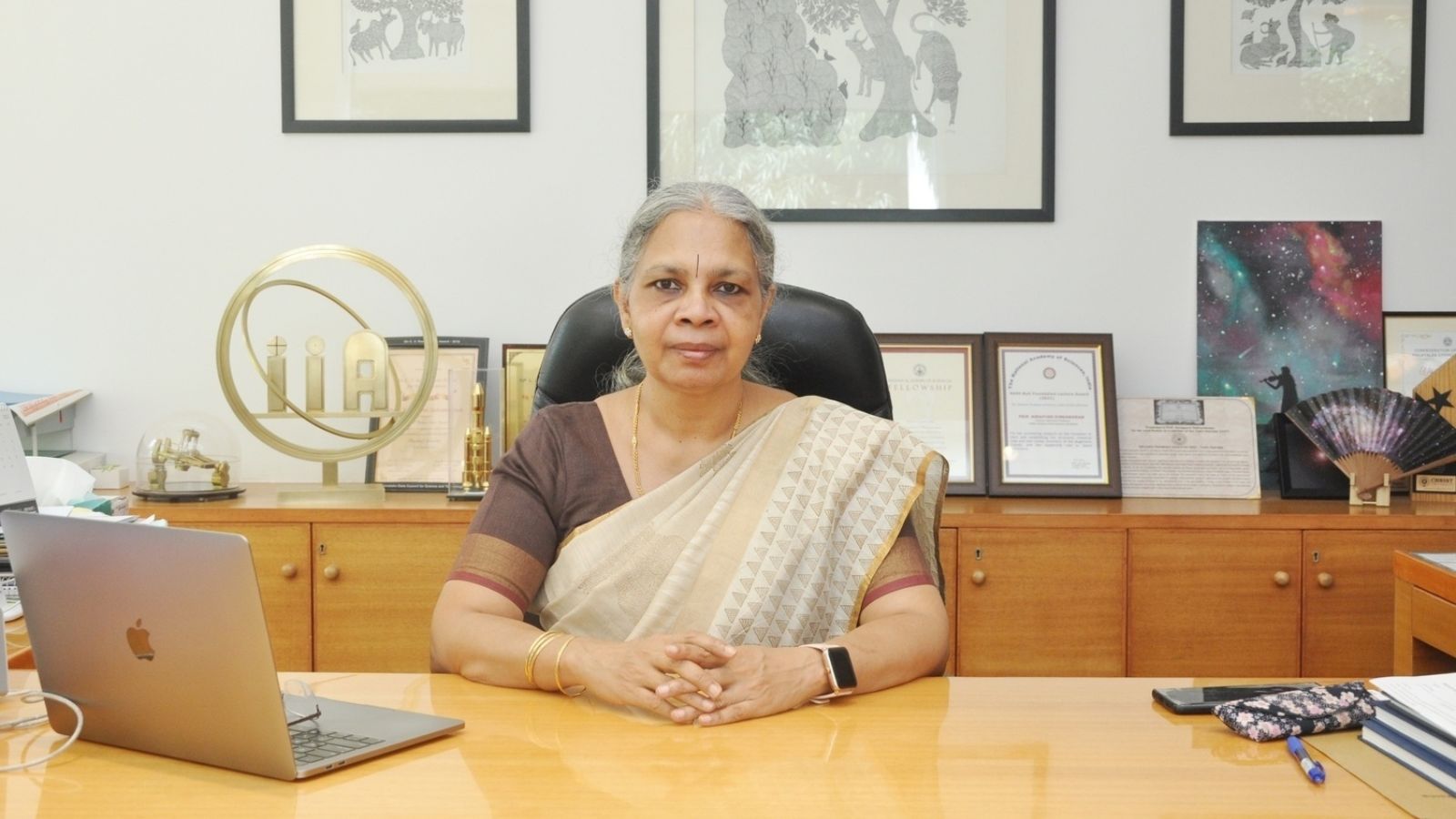
Professor Annapurni Subramaniam, director of the Indian Institute of Astrophysics, has been honored with the 2026 COSPAR Vikram Sarabhai Medal. The award recognizes outstanding contributions to space research by scientists from developing nations.
Key Takeaways
- Annapurni Subramaniam awarded the 2026 Vikram Sarabhai Medal
- She leads the Indian Institute of Astrophysics (IIA) in Bengaluru
- Only the fourth Indian and first Indian woman to receive this honor
During the 46th COSPAR Scientific Assembly in Florence, Italy, Professor Annapurni Subramaniam received the COSPAR Vikram Sarabhai Medal for 2026. The medal celebrates exceptional space‑research contributions from scientists belonging to developing countries.
Background of the Award
Established in 1990 in memory of India’s space pioneer Vikram Sarabhai, the medal is jointly presented by COSPAR, the International Science Council, the United Nations (through UN‑COPUS) and the Indian Space Research Organisation (ISRO). It honors scientists who have made landmark advances in space science.
Subramaniam’s Scientific Contributions
Specialising in stellar physics, star clusters, and nearby galaxies, Subramaniam has also played a pivotal role in developing space‑ and ground‑based astronomical instruments. She served as the calibration scientist for the Ultra‑Violet Imaging Telescope (UVIT) aboard India’s first space telescope, ASTROSAT, launched in 2015. Additionally, she is involved in the Thirty Metre Telescope (TMT) project, where India is a key consortium member.
Why This Matters
BozokMedia analysis shows that Subramaniam’s international recognition strengthens India’s stature in global space science and provides a powerful role‑model for emerging researchers.
This accolade underscores India’s growing leadership in astrophysical research.
Frequently Asked Questions
- Who jointly awards the Vikram Sarabhai Medal? It is co‑presented by COSPAR, UN‑COPUS and ISRO.
- What are Subramaniam’s most notable projects? She led the UVIT calibration for ASTROSAT, contributed to the TMT initiative, and conducts extensive research on star clusters and galaxies.