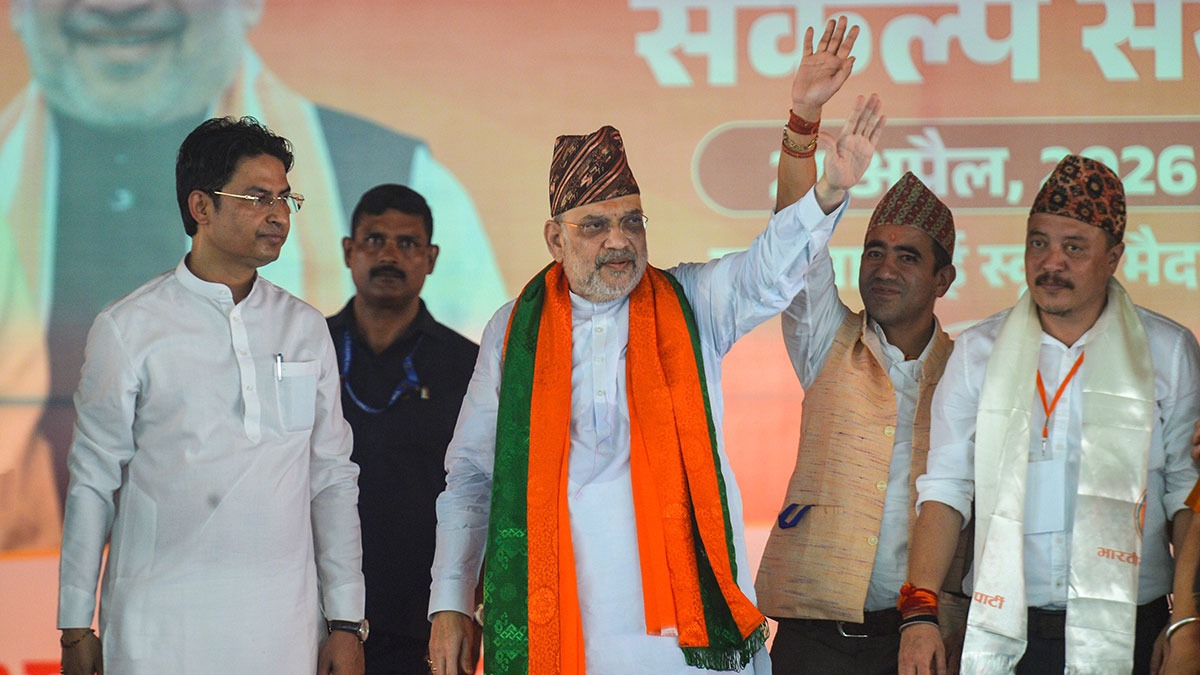
The Centre has set up a new committee to craft a permanent political solution for the Gorkha demand in Darjeeling. Amit Shah pledged a constitution‑based settlement, and analysts view the move as a potential turning point for lasting peace in the hills.
- The Centre has formed a committee to deliver a permanent solution for the Gorkha issue.
- Amit Shah assured that any settlement will be within the framework of the Indian Constitution.
- Retired IPS officer Pankaj Kumar Singh will lead the committee to draft the final agreement.
On August 22, a tripartite meeting in Sukna, at the foothills of Darjeeling, brought together the Union government, West Bengal leadership and Gorkha representatives to discuss a "permanent political solution". The meeting, chaired by Union Home Minister Amit Shah, featured West Bengal Chief Minister Suvendu Adhikari, GJM chief Bimal Gurung, senior Gorkha leader Roshan Giri, and several BJP MPs and MLAs.
The Ministry of Home Affairs said the dialogue covered the hill population’s demand for a distinct identity, constitutional recognition, and a lasting political settlement. Shah reiterated that the Centre would work toward a solution "under the umbrella of the Constitution of India".
A committee headed by Pankaj Kumar Singh, the Centre’s interlocutor for Darjeeling, Dooars and Terai and former Deputy National Security Advisor, will now draft the framework and modalities of the proposed final agreement. Singh, a retired IPS officer and former Director General of the Border Security Force, was appointed interlocutor in October 2025.
Historical Background
The Gorkha agitation in Darjeeling spans more than four decades. The 1988 Gorkha Accord created the Darjeeling Gorkha Hill Council (DGHC), while the 2011 Gorkhaland Territorial Administration (GTA) was later established after renewed protests. Both bodies have been criticised for limited powers, inadequate financial autonomy, and lack of constitutional safeguards.
The BJP promised during the Bengal assembly campaign to resolve the Gorkha issue within six months of forming the state government. While the August 22 meeting stopped short of defining the exact shape of the settlement, possibilities range from greater administrative autonomy within West Bengal to a new constitutional arrangement for the hills.
Why This Matters
BozokMedia analysis shows that a constitution‑based settlement could end decades‑long unrest, unlock federal funding for infrastructure, and set a precedent for other hill‑region agitations across India.
"A constitutional settlement is the only viable path to lasting peace in Darjeeling," said a senior political analyst.
Shah also assured hill representatives that central funding would be made available to address pending developmental and infrastructural challenges, ranging from road connectivity to healthcare and education. If successful, the move could reshape the political landscape of the Northeast and provide a template for resolving other identity‑based movements.
Frequently Asked Questions
Q1: What could the permanent political solution entail?
A: The solution may include enhanced administrative autonomy, constitutional recognition of Gorkha identity, and special economic provisions, all framed within the existing Indian Constitution.
Q2: How will the new committee affect the existing DGHC and GTA?
A: The committee is tasked with redefining the powers and financial mechanisms of these bodies, potentially strengthening them to prevent future interim arrangements.