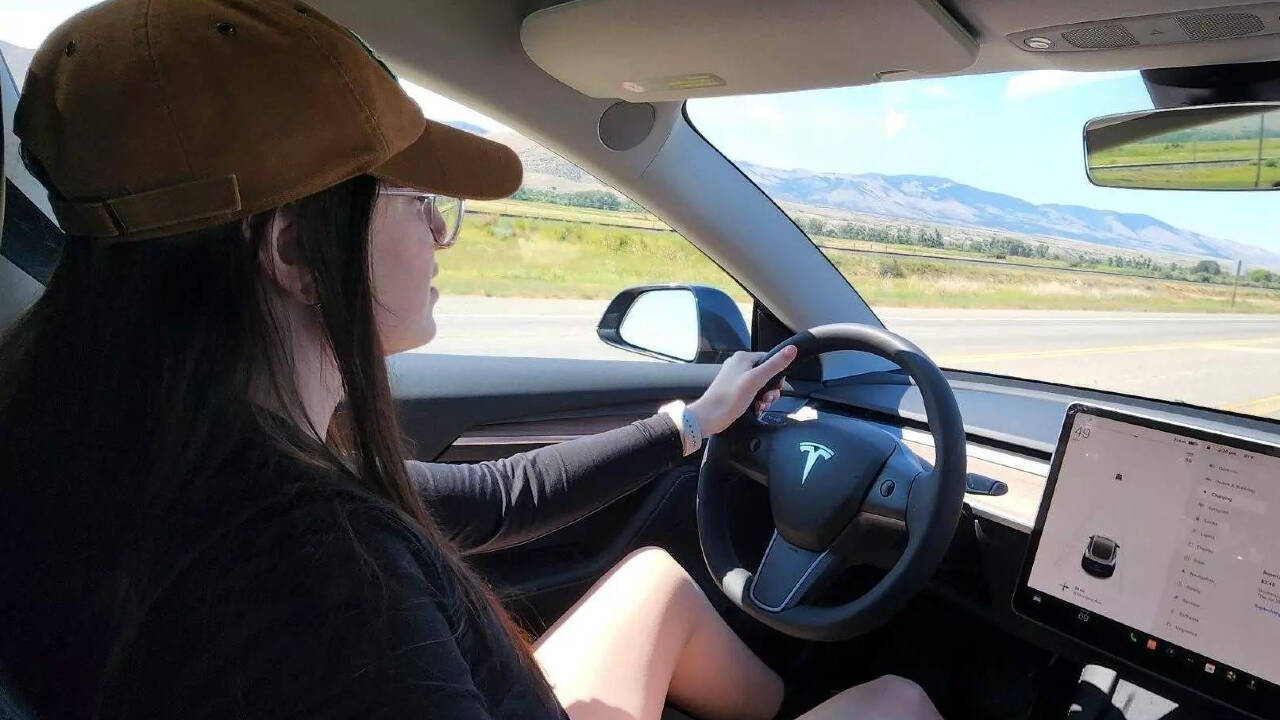
A Tesla driver was filmed dozing off while the car raced at 100 km/h with two young children aboard. Large sunglasses blocked the vehicle’s eye‑tracking driver monitoring, exposing a critical safety gap in Tesla’s autonomous design.
A viral video has spotlighted a glaring flaw in Tesla’s advanced Driver Monitoring System (DMS). The footage shows a Tesla driver drifting off to sleep at a steady 100 km/h, while two small children sit in the back seat. The car’s onboard cameras, which normally keep a constant eye on the driver, failed to issue any warning.
Incident Overview
The incident was captured by Tesla’s internal camera suite, which relies on infrared sensors and visual tracking to detect driver attention. In this case, the driver was wearing oversized sunglasses that obscured the eyes, rendering the system blind to the driver’s lack of focus. Consequently, the vehicle did not intervene, allowing the driver’s sleep to continue unchecked.
Technical Failure Explained
Tesla’s DMS is built around eye‑tracking technology that assumes an unobstructed view of the driver’s pupils. Sunglasses, especially dark or polarized ones, interfere with infrared illumination, causing the system to misinterpret the driver as attentive. This oversight highlights a design blind spot: everyday accessories that many drivers routinely use.
Safety and Regulatory Implications
When a vehicle carrying children exhibits such a lapse, the stakes rise dramatically. Both the Indian Central Motor Vehicle Rules (CMVR) and the European Union’s forthcoming autonomous‑driving regulations are tightening requirements for real‑time driver engagement monitoring. The incident could accelerate formal investigations and push regulators to demand multi‑modal safety checks.
Expert Opinions
Automotive safety analysts argue that relying solely on eye‑tracking is insufficient. They recommend integrating additional data streams—such as heart‑rate sensors, facial expression analysis, and seat‑belt tension monitors—to create a layered safety net that can compensate when one sensor is compromised.
Looking Ahead
Tesla now faces pressure to redesign its DMS to handle common obstructions like sunglasses, hats, or even reflective surfaces. Failure to address this vulnerability could erode consumer confidence and invite stricter oversight. The episode serves as a cautionary tale for all manufacturers pursuing semi‑autonomous technology without robust redundancy.