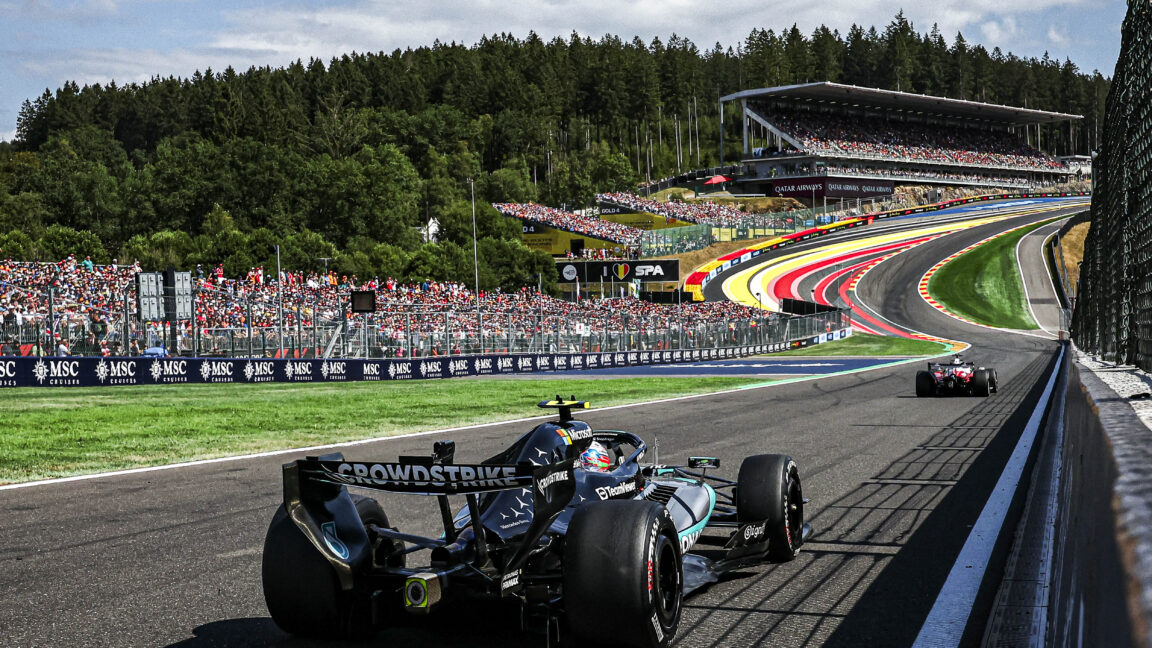
The legendary Spa-Francorchamps circuit faces a crisis as modern hybrid technology struggles to match the historical demands of racing.
Key Takeaways
- Spa-Francorchamps is one of F1's most iconic and challenging historical venues.
- Modern hybrid power units struggle with energy depletion during long laps.
- There is a growing concern that algorithmic management is overshadowing driver skill.
Formula 1 returned to the legendary Spa-Francorchamps circuit for the Belgium Grand Prix this weekend. Nestled in the Ardennes forest, this ribbon of tarmac is a cornerstone of motorsport history, dating back to the very first F1 season in 1950. However, the recent performances have sparked a heated debate: is the current machinery, governed by complex machine learning and hybrid constraints, fundamentally ill-suited for this dramatic venue?
The core of the issue lies in the energy management of modern power units. As observed earlier this year at Suzuka, Japan, the current trajectory of F1 battery technology presents a significant hurdle. For much of a lap, these high-tech machines suffer from 'energy starvation.' The power delivered to the rear wheels during these periods can actually fall below the levels seen in the F2 feeder series, stripping the cars of the raw aggression that fans expect from the pinnacle of racing.
Why This Matters (इसके मायने क्या हैं)
BozokMedia analysis shows that this technological shift creates a disconnect between the sport's heritage and its future. When cars are forced to manage energy via complex algorithms rather than pure mechanical grip and driver instinct, the 'spectacle' of racing diminishes. This affects the global viewership and the very essence of why people tune in—to see the fastest machines on earth push the limits.
Furthermore, from a competitive standpoint, the reliance on software-driven energy deployment means that races are often won in the data center rather than on the asphalt. This shift risks alienating traditional fans and could impact the long-term commercial viability of the sport if the 'human element' continues to be sidelined by technical limitations.
"If algorithms begin to dictate the pace of the race more than the driver's right foot, Formula 1 risks transitioning from a sport into a high-speed simulation."
Historical Background
The Spa-Francorchamps circuit predates the F1 World Championship itself, with its inaugural race held way back in 1922. In its early days, the circuit was a massive 9-mile loop consisting of public roads that wound through the towns of Malmedy and Stavelot. Post-war, the layout was refined to 14.1 km. The vintage era of Spa was defined by ferocious speeds and minimal safety concessions, where drivers relied on sheer bravery to navigate the high-speed sweeps.
| Feature | Classic Era | Modern Hybrid Era |
|---|---|---|
| Primary Focus | Raw Power & Bravery | Energy Efficiency & Algorithms |
| Power Delivery | Consistent Mechanical Output | Intermittent (Battery Dependent) |
| Driver Input | Direct Control | Software-Mediated Management |
Frequently Asked Questions (अक्सर पूछे जाने वाले प्रश्न)
Question 1: Why are modern F1 cars losing power on track?
Answer: Due to the hybrid nature of the power units, batteries can only provide maximum electrical deployment for a few seconds per lap.
Question 2: Is Spa still the best track?
Answer: While the layout remains legendary, many drivers feel the current car technology fails to exploit the track's unique characteristics.