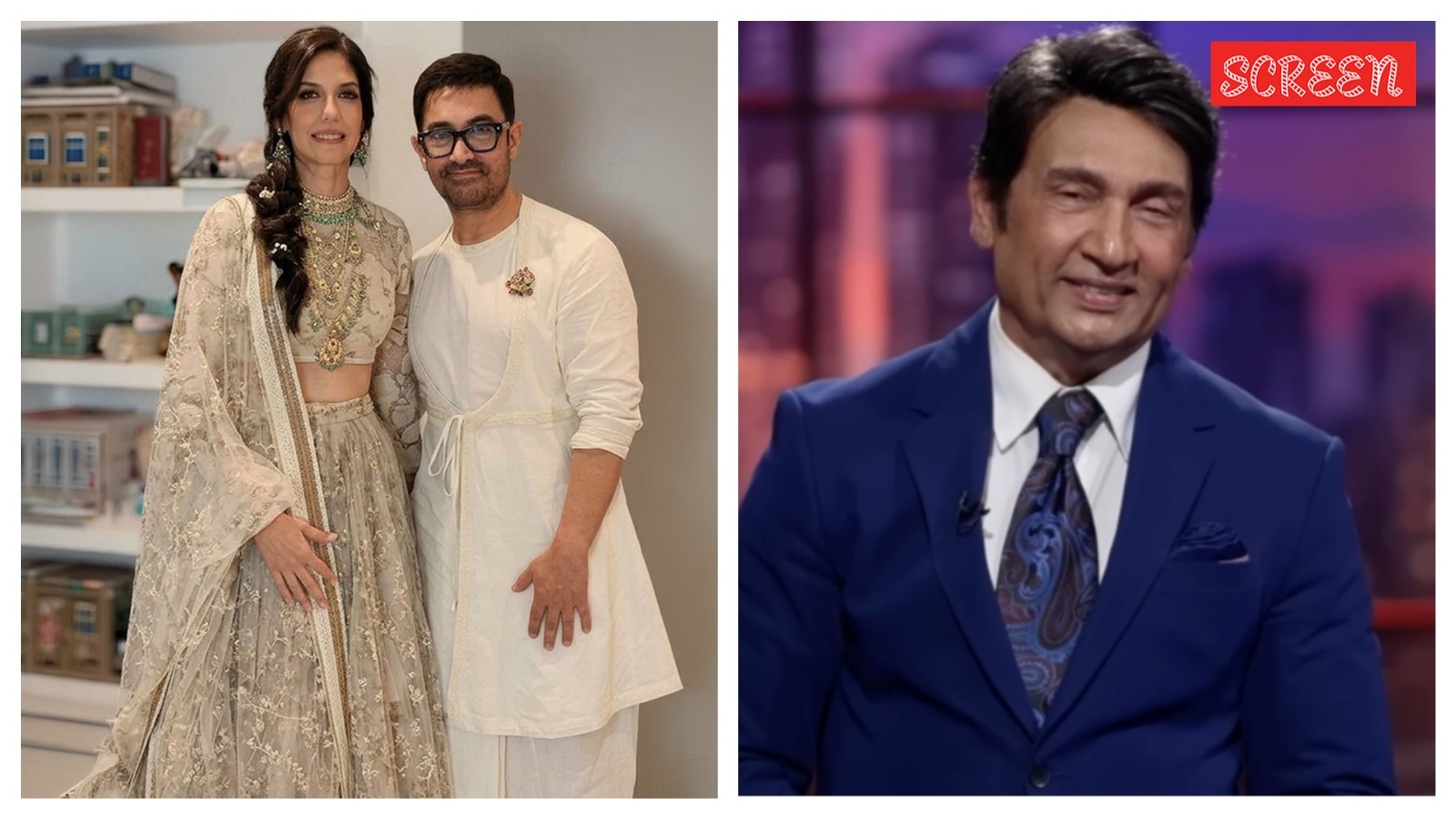
On his satirical YouTube talk show ‘Shekhar Tonite’, Shekhar Suman likened Aamir Khan’s third wedding to a grand political coalition, dubbing it a ‘triple‑engine’ partnership. The monologue blends Bollywood gossip with political analogy, suggesting personal unions can mirror public power structures.
Key Takeaways (मुख्य बिंदु)
- Suman brands Aamir Khan’s third marriage as a ‘grand alliance’
- He draws a parallel between Bollywood partnerships and political coalitions
- The ceremony included both former wives and their children, highlighting a ‘one‑family’ narrative
Shekhar Suman, host of the popular YouTube talk show Shekhar Tonite, used his latest episode to turn Aamir Khan’s July 5 wedding into a satirical case study of power dynamics. Referring to the union with Gauri Spratt as a “mahagathbandhan” (grand alliance), Suman quipped that while the government struggles with a “double engine”, Khan is now running a “triple engine”. The comment is more than a punchline; it reframes a celebrity’s personal life as a blueprint for political maneuvering.
Historical Context
Aamir Khan’s marital timeline reads like a modern Indian saga: first married to Reena Dutta in 1986 (divorced 2002), then to filmmaker Kiran Rao in 2005 (separated 2021), and finally to Gauri Spratt in 2026. Each marriage has been public, but the third ceremony was notably intimate, held at the couple’s Bandra residence with only close family and friends. Uniquely, both former spouses and their children—Reena’s son Ira, Kiran’s son Azad, and Gauri’s son—were present, turning the event into a living illustration of “vasudhaiva kutumbakam” (the world is one family).
Suman’s Satirical Lens
In true satirical fashion, Suman described Khan as an engine that blends petrol, ethanol, and isobutanol—an “unimaginable talent” that keeps running smoothly despite added weight. He suggested politicians should study Khan’s ability to “form alliances” better than they study traditional coalition‑building. By labeling the marriage a “triple‑engine”, Suman implied that personal resilience and adaptability can outpace even the most seasoned political strategists.
Family Dynamics and Social Messaging
The presence of all children and ex‑partners sent a powerful visual message about inclusive family structures in contemporary India. Suman highlighted this as a real‑world embodiment of the ancient Indian maxim, reinforcing the idea that personal relationships can serve as micro‑cosms of societal harmony. The ceremony also underscored Khan’s continued involvement with his children’s NGOs, such as the Paani Foundation, further blurring the line between private life and public activism.
Broader Implications for Politics
Suman extended his analogy to the INDIA alliance—a coalition of opposition parties—including Congress, SP, DMK, TMC, AAP, and NCP. He urged these parties to “learn from Aamir how to take former allies into a new coalition”. If Khan’s “triple‑engine” model is perceived as successful, it could inspire political leaders to adopt more fluid, personality‑driven coalition tactics, where personal brand equity becomes a decisive factor in electoral calculations.