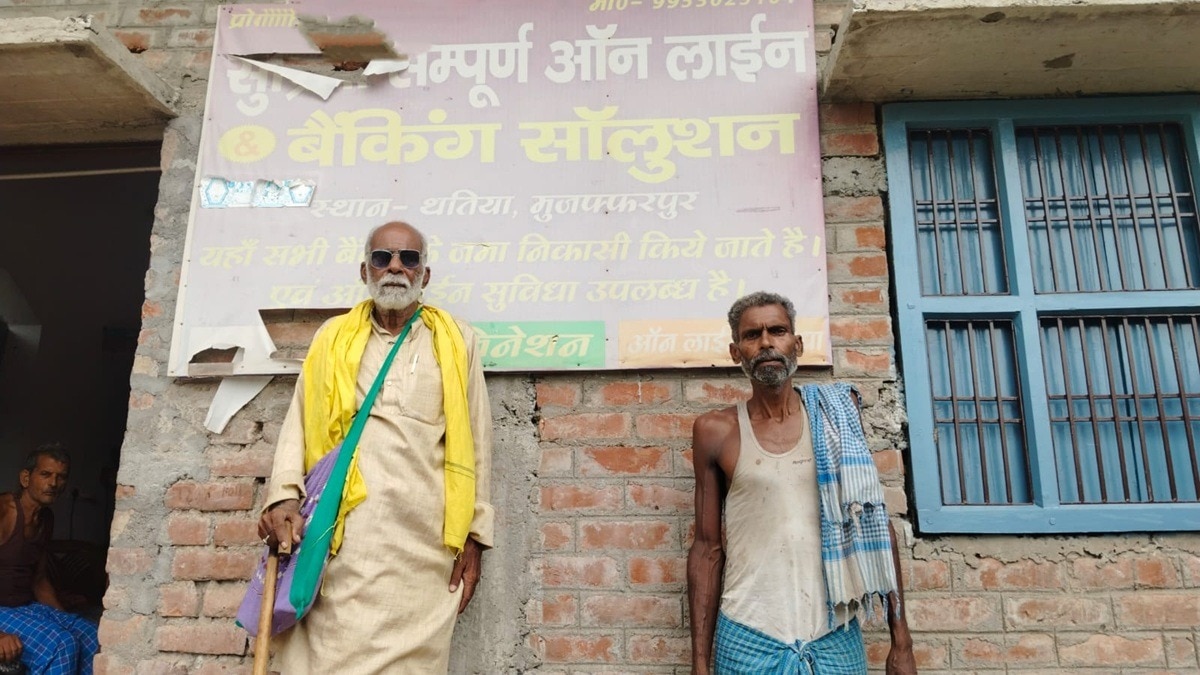
In Muzaffarpur, Bihar, 70‑year‑old Kamleshwar Mishra and his disabled son discovered nearly ₹15 billion in their pension accounts while withdrawing cash. Authorities have launched an investigation into a possible banking system glitch.
मुख्य बिंदु (Key Takeaways)
- Father‑son pension accounts showed ₹7.59 billion each
- Total unexplained balance approached ₹15 billion
- Bank has not issued an official statement; investigation underway
On July 13, 2026, Kamleshwar Mishra, a 70‑year‑old resident of Thatiya Siho village in Muzaffarpur district, Bihar, went to the local CSC centre to collect his old‑age pension. Accompanying him was his disabled son, who also receives a disability pension. After the cash withdrawal, Mishra checked his account balance and was stunned to see ₹7,59,69,51,951 (about ₹7.59 billion). An identical amount appeared in his son’s account, bringing the combined “mystery” balance to roughly ₹15 billion.
Background and Technical Possibilities
Both the old‑age and disability pensions are core components of India’s social‑security framework, typically disbursed through banks and CSC (Common Service Centre) points. Financial analysts suggest that a software bug, data‑synchronisation error, or a mis‑routed batch transaction could have caused the erroneous display. While minor balance mismatches have been reported in India’s vast banking network, a figure of this magnitude is virtually unprecedented.
Local Reaction and Immediate Actions
Alarmed, Mishra approached the bank’s branch manager demanding an accurate statement and a formal inquiry. He has formally requested that the bank correct the balance and explain how such a colossal amount could appear in two modest pension accounts. The bank, meanwhile, has refrained from issuing a public comment, though a regional manager assured that “the matter is being escalated for a thorough technical audit.”
Potential Implications at the National Level
If the investigation confirms a systemic glitch, it could trigger a nationwide review of banking software integrity and the safeguards surrounding government‑funded pension disbursements. Such a breach, even if purely technical, may erode public confidence in digital finance and open avenues for financial fraud. The Reserve Bank of India (RBI) and the Ministry of Finance have previously launched initiatives to harden digital transaction security; this incident may compel them to accelerate those reforms.
Conclusion
While the exact cause of the ₹1,500‑crore illusion remains unclear, the case highlights the fragile interplay between technology, regulation, and citizen welfare. Stakeholders await the outcome of the bank’s audit, which could set a precedent for handling similar anomalies across the country.