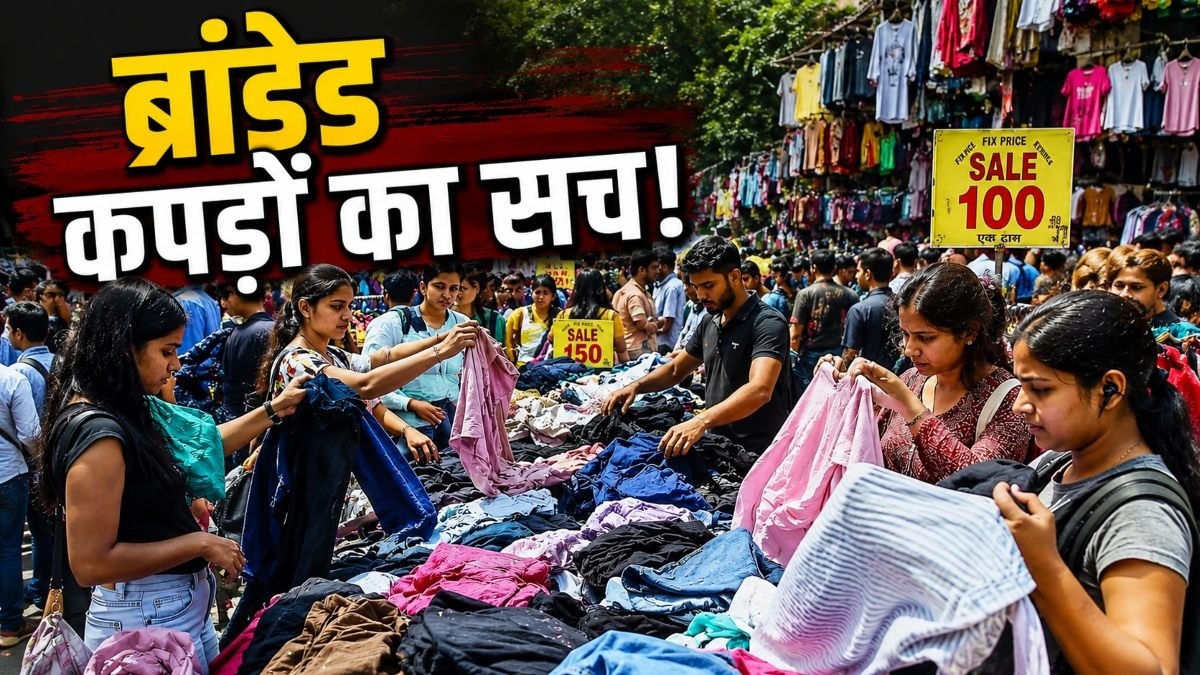
Delhi's Sarojini Nagar market is famed for ultra‑cheap branded apparel, but the reality reveals a supply chain built on imported used clothing. This report examines the sourcing, quality gap, and economic‑environmental impact of the trade.
मुख्य बिंदु (Key Takeaways)
- Branded‑look garments sold in Sarojini Nagar are largely made from imported used clothing.
- They are priced as low as ₹60 per kilogram, yet their fabric quality differs sharply from authentic branded items.
- India imports hundreds of millions of kilograms of second‑hand clothes annually, influencing both the economy and the environment.
Delhi’s Sarojini Nagar bazaar has become synonymous with ultra‑affordable “branded” apparel, drawing bargain‑hunters from across the country. The allure, however, masks a sophisticated supply chain that primarily hinges on second‑hand garments sourced from abroad. These items, often labeled as “first‑copy” apparel, carry authentic brand tags but fall short in material strength, stitching, and durability when compared with genuine branded clothing.
Import Flow and Categorisation
According to international trade statistics, India imports roughly 150‑200 million kg of used garments each year. Upon arrival, the cargo undergoes a rigorous sorting process: high‑grade textiles are earmarked for resale, while lower‑grade pieces are sent to yarn‑spinning mills. The remaining garments are classified by size, season, colour, and gender before being bundled into kilogram‑based packages for wholesale distribution. Small retailers in Sarojani Nagar typically purchase these bundles at rates ranging from ₹60 to ₹120 per kilogram.
Quality vs. Price Gap
Visually, first‑copy garments mimic the appearance of genuine brands, yet the underlying fabric—often thinner and less tightly woven—fails to match the original’s comfort and longevity. Consumers attracted by the label often experience rapid wear and tear, leading many to classify these items as “low‑quality” despite their attractive price point.
Economic and Social Implications
The massive influx of used clothing fuels a thriving micro‑economy for countless small traders and retailers. Conversely, the environmental footprint of shipping, processing, and disposing of such textiles is substantial. While the practice diverts waste from landfills, the associated carbon emissions and resource consumption raise sustainability concerns. Experts argue that stricter standards and transparent grading could empower buyers with clearer expectations.
Future Outlook
To transform Sarojini Nagar’s market from a price‑driven haven into a model of responsible trade, regulators need to enforce robust labelling norms, while NGOs can spearhead consumer‑awareness campaigns. Investment in advanced recycling technologies could also upgrade low‑grade fibers into higher‑value fabrics, aligning the sector with India’s broader sustainable‑manufacturing goals.