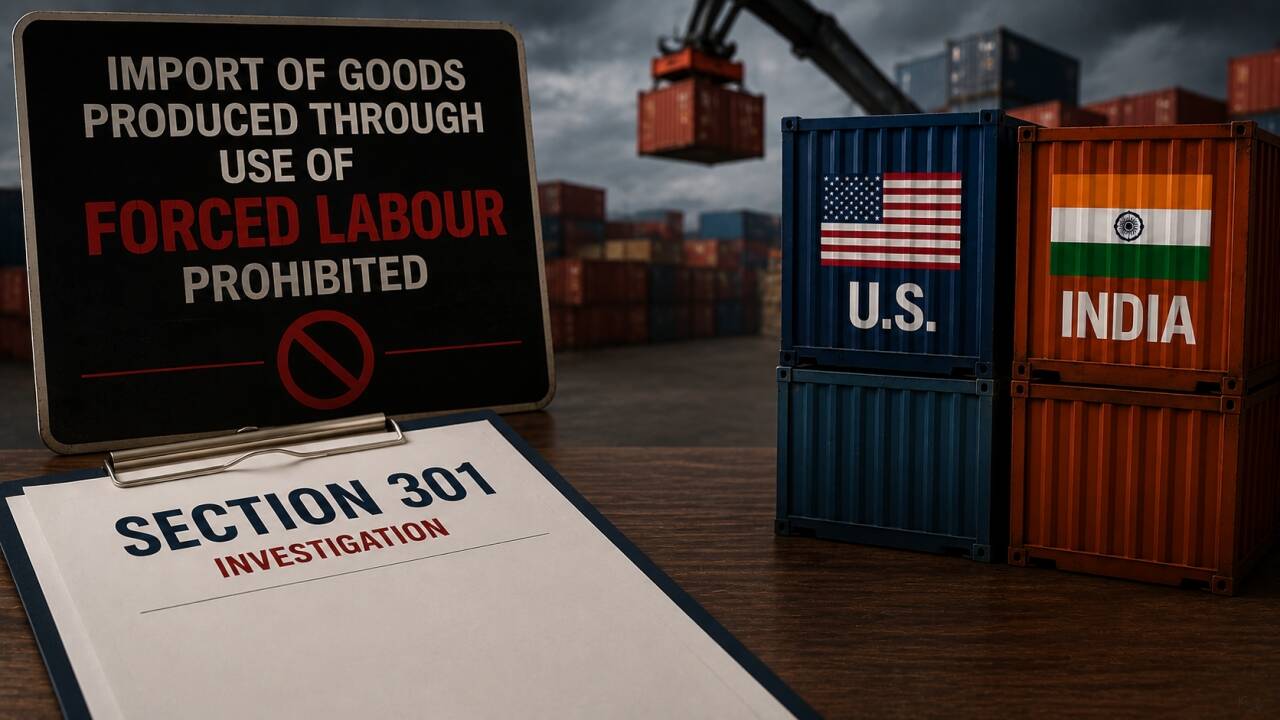
India's foreign trade policy now includes a clause to block imports produced using forced labour, aligning with the International Labour Organisation's definition. The move comes as the USTR's Section‑301 investigation targets countries that fail to curb such imports.
Key Takeaways
- India inserts a new clause in its Foreign Trade Policy to prohibit imports made with forced labour.
- The definition follows the International Labour Organisation (ILO) standards.
- The measure strengthens India's stance amid the USTR Section‑301 probe.
Under the revised Foreign Trade Policy, the Indian government has proposed a specific provision that empowers the Directorate General of Foreign Trade (DGFT) to block the entry of goods partially or wholly produced through forced labour. The clause will enable DGFT to publish a list of prohibited items, effectively barring their import.
Background and International Context
The United States Trade Representative (USTR) launched a Section‑301 investigation into 60 countries, including India, to assess whether they are adequately preventing forced‑labour‑linked imports. The probe aims to enforce human‑rights standards across global supply chains and to impose additional tariffs on nations that fall short of these benchmarks.
ILO Definition and Legal Fortification
India has adopted the International Labour Organisation’s definition from the 1930 Forced Labour Convention, which describes forced labour as work extracted from a person “under the menace of any penalty” and which the individual “has not offered himself voluntarily.” By embedding this definition verbatim, India signals a firm commitment to international labour norms.
Trade Implications and Potential Outcomes
The notification becomes effective after a 30‑day period, coinciding with the expected rollout of USTR’s recommendations. If the clause is enforced effectively, India could avoid the proposed 12.5% additional tariff that USTR suggested for over 50 countries, including India. Moreover, the move equips India with a stronger negotiating lever in future trade talks, showcasing its ability to police forced‑labour practices within its supply chains.
Impact on Industries and the Road Ahead
Sectors traditionally linked to forced‑labour concerns—such as textiles, raw‑material extraction, and electronics—will face heightened scrutiny and new compliance requirements. Analysts contend that while short‑term adjustments may be costly, the long‑term benefits include greater supply‑chain transparency, enhanced sustainability, and improved competitiveness in international markets.