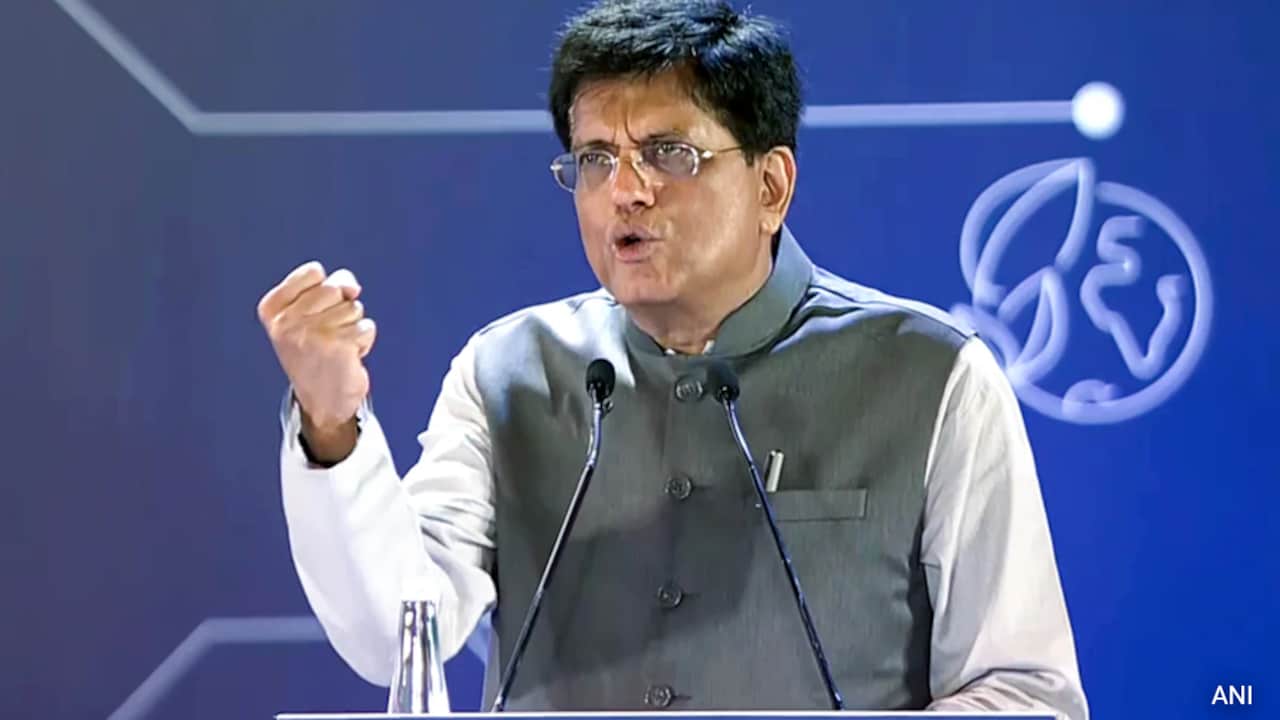
Union Minister Piyush Goyal emphasized that the proposed Free Trade Agreement with the European Union will establish a robust framework for enhanced commerce. His remarks followed productive discussions in Brussels, reinforcing the strategic economic partnership between India and the EU.
Key Takeaways
- Piyush Goyal describes the India-EU FTA as fair, equitable, and balanced.
- Discussions in Brussels reaffirmed the shared economic direction of both regions.
- The agreement aims to create a comprehensive framework for boosting bilateral trade.
During pivotal discussions held in Brussels, Union Minister Piyush Goyal expressed optimism regarding the ongoing negotiations for the Free Trade Agreement (FTA) between India and the European Union. Goyal highlighted that the proposed deal is designed to be a fair, equitable, and balanced partnership, moving beyond mere tariff reductions to create a sustainable ecosystem for business. He stated that the dialogue in Brussels has successfully reaffirmed the shared direction and mutual commitment of both India and the EU towards deepening their economic ties.
A Strategic Economic Shift
The India-EU relationship has historically been complex, but recent geopolitical shifts have necessitated a stronger alliance. Goyal’s comments come at a time when both regions are looking to diversify their supply chains and reduce dependency on singular markets. The Minister noted that the FTA would not only facilitate trade in goods but also address services, investment flows, and geographical indications, ensuring a holistic economic integration. This framework is expected to provide Indian businesses with unprecedented access to the European single market, which is among the wealthiest in the world.
Implications for Global Trade
Experts suggest that a finalized FTA could significantly boost bilateral trade, potentially doubling it in the next few years. For India, this means greater opportunities for key sectors such as pharmaceuticals, textiles, and information technology. Conversely, the EU stands to gain from a vast, rapidly growing market for its machinery, chemicals, and high-tech products. Furthermore, this deal is seen as a counterweight to rising protectionism and economic volatility elsewhere in the world, signaling a joint commitment to rules-based international trade and sustainable development.