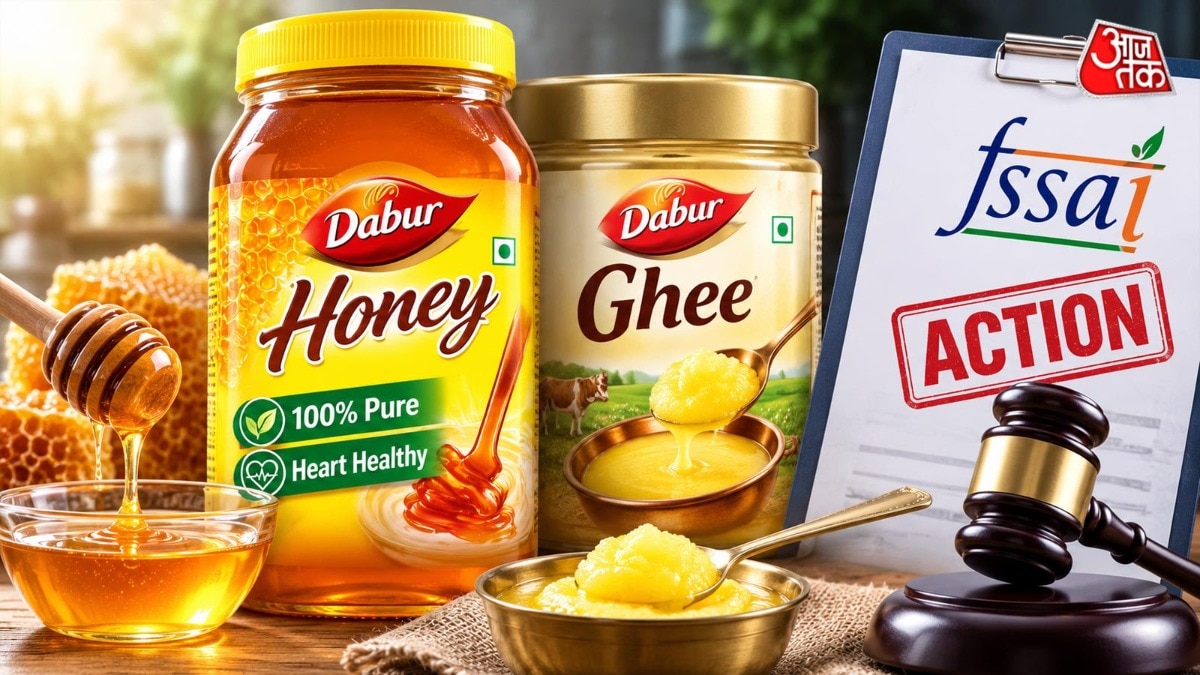
FSSAI has issued a notice to Dabur India regarding misleading claims of '100% Pure' and '100% Natural' on products like honey, ghee, and oil, effectively halting such labeling.
Key Takeaways
- FSSAI issued a notice to Dabur India for misleading advertisements.
- Claims like '100% Pure' on honey, ghee, and oil are now restricted.
- FSSAI licensing does not validate every marketing claim made by a brand.
- Action taken under the Food Safety and Standards Act, 2006.
The Food Safety and Standards Authority of India (FSSAI) has taken significant action against Dabur India by issuing a notice regarding misleading claims on its product range. The regulator has prohibited the use of terms like '100% Pure' and '100% Natural' on products including honey, ghee, and edible oils, citing consumer deception.
Crackdown on Misleading Advertisements
Many consumers rely on bold labels like '100% Pure' to make purchasing decisions. However, FSSAI officials have clarified that under the Advertising and Claims Regulations, food businesses are not permitted to make claims that could mislead the public. Using absolute terms like '100% Pure' is legally risky unless backed by rigorous scientific and medical evidence, which is rarely feasible in mass-produced food items.
Why This Matters: BozokMedia Analysis
BozokMedia analysis shows that the food industry frequently uses 'purity' as a psychological trigger to build trust. FSSAI's intervention is a crucial step in regulating the 'purity marketing' trend, ensuring that brand reputation is built on actual compliance rather than hyperbolic labeling. It serves as a reminder that an FSSAI license is a permission to operate, not a certificate of absolute purity for every marketing slogan.
'100% Pure' claims directly influence consumer behavior, and the law ensures companies do not exploit this through exaggerated or deceptive labeling.
The Difference Between Safety Tests and Purity Claims
Addressing the technical aspect, Professor Dr. Jugal Kishore, Director of the Medicine Department at Safdarjung Hospital, explained the distinction between food safety tests and purity claims. While lab tests verify if a product is safe for consumption (free from harmful bacteria or excessive chemicals), they do not scientifically validate the claim of being '100% pure' in a biological or absolute sense.
Frequently Asked Questions
1. Does an FSSAI license guarantee that all claims on a package are true?
No. An FSSAI license means the company is authorized to conduct food business under the 2006 Act, but specific claims are subject to separate advertising regulations.
2. Why did FSSAI target Dabur specifically?
Dabur used '100% Pure' for honey and ghee, which the regulator deemed misleading as such absolute claims are difficult to substantiate scientifically.