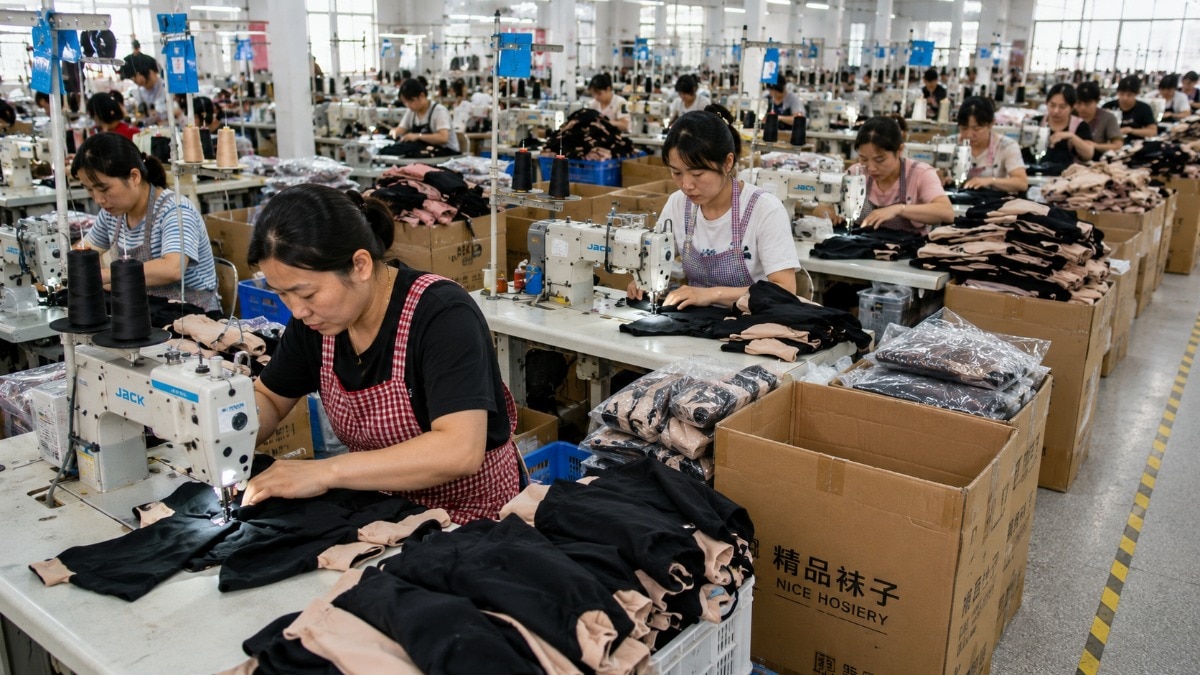
Explore the fascinating story of Guarao, China, a city where the entire economic engine is driven by lingerie and underwear manufacturing. Learn about its rise and the modern challenges it faces.
Key Takeaways
- Guarao is widely known as China's 'Underwear City'.
- Lingerie production accounts for nearly 80% of the city's industrial output.
- The city produces approximately 350 million bras and 430 million undergarments annually.
- Increasing competition from Thailand and Vietnam poses a significant threat to its dominance.
Walking through the streets of Guarao, China, the rhythmic sound of sewing machines and the sight of massive fabric piles are omnipresent. This is not just any manufacturing hub; it is a specialized industrial powerhouse known globally as the 'Underwear City'. Here, the local economy, employment, and even the landscape are shaped by the production of intimate apparel.
A Massive Manufacturing Engine
The scale of production in Guarao is staggering. In a single factory, workers produce between 30,000 to 40,000 bras and underwear units daily through highly specialized assembly lines. According to industrial data, the city produces an incredible 350 million bras and 430 million undergarments every year, serving both the massive Chinese domestic market and international buyers.
Why This Matters
BozokMedia analysis shows that Guarao is a prime example of a 'one-industry town.' While such specialization allowed China to become a global manufacturing titan, it also creates a high-risk economic environment. When 80% of a city's industrial output relies on a single product category, any shift in global fashion trends or trade policies can have devastating local consequences.
The Guarao model demonstrates how hyper-specialization can build a regional empire, but it also highlights the fragility of a non-diversified economy.
The Threat of Global Competition
The industry, which saw explosive growth between 1995 and 2005 due to investments from Hong Kong and Taiwan, is now facing a crisis. Countries like Thailand and Vietnam are emerging as formidable competitors, offering lower manufacturing costs and more attractive tax incentives. This shift has caused many mid-to-low-end orders to move away from China, putting immense pressure on Guarao's local factories.
Frequently Asked Questions
Question 1: Why is Guarao called the Underwear City?
Answer: Because nearly 80% of its industrial production is dedicated to manufacturing bras, panties, and other undergarments.
Question 2: What are the main challenges facing this city?
Answer: Rising production costs and intense competition from Southeast Asian nations like Vietnam and Thailand.