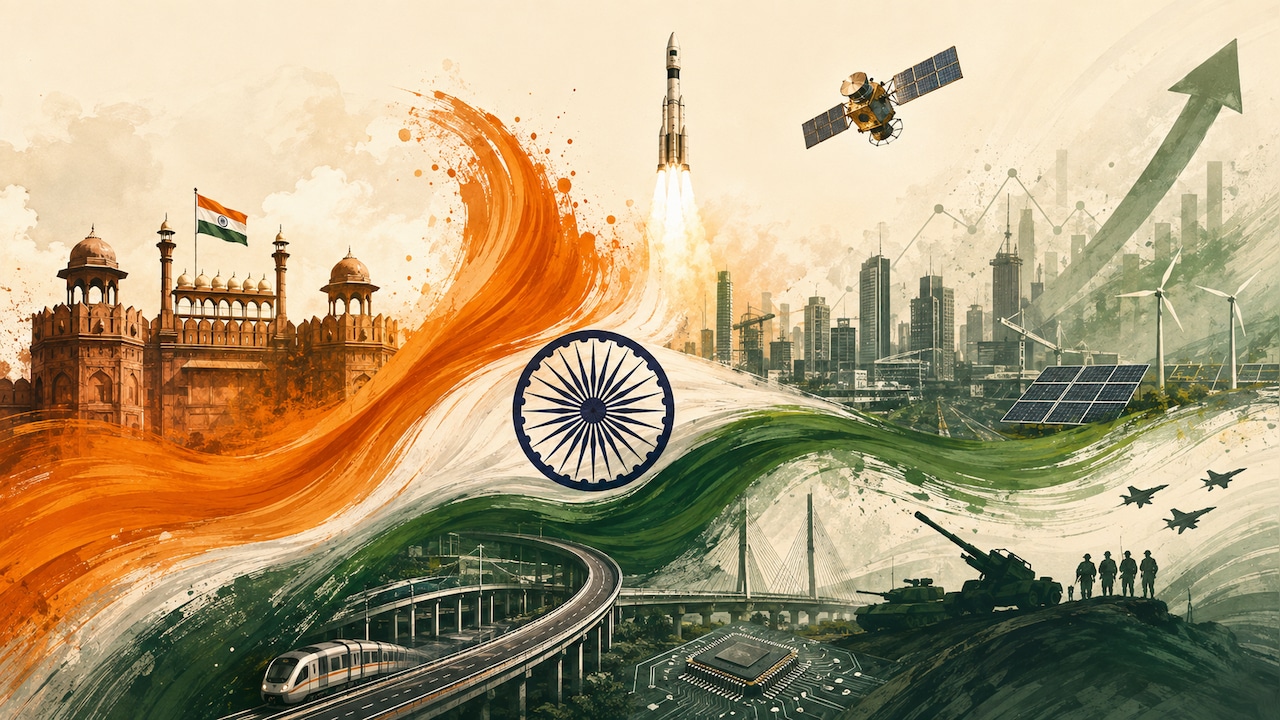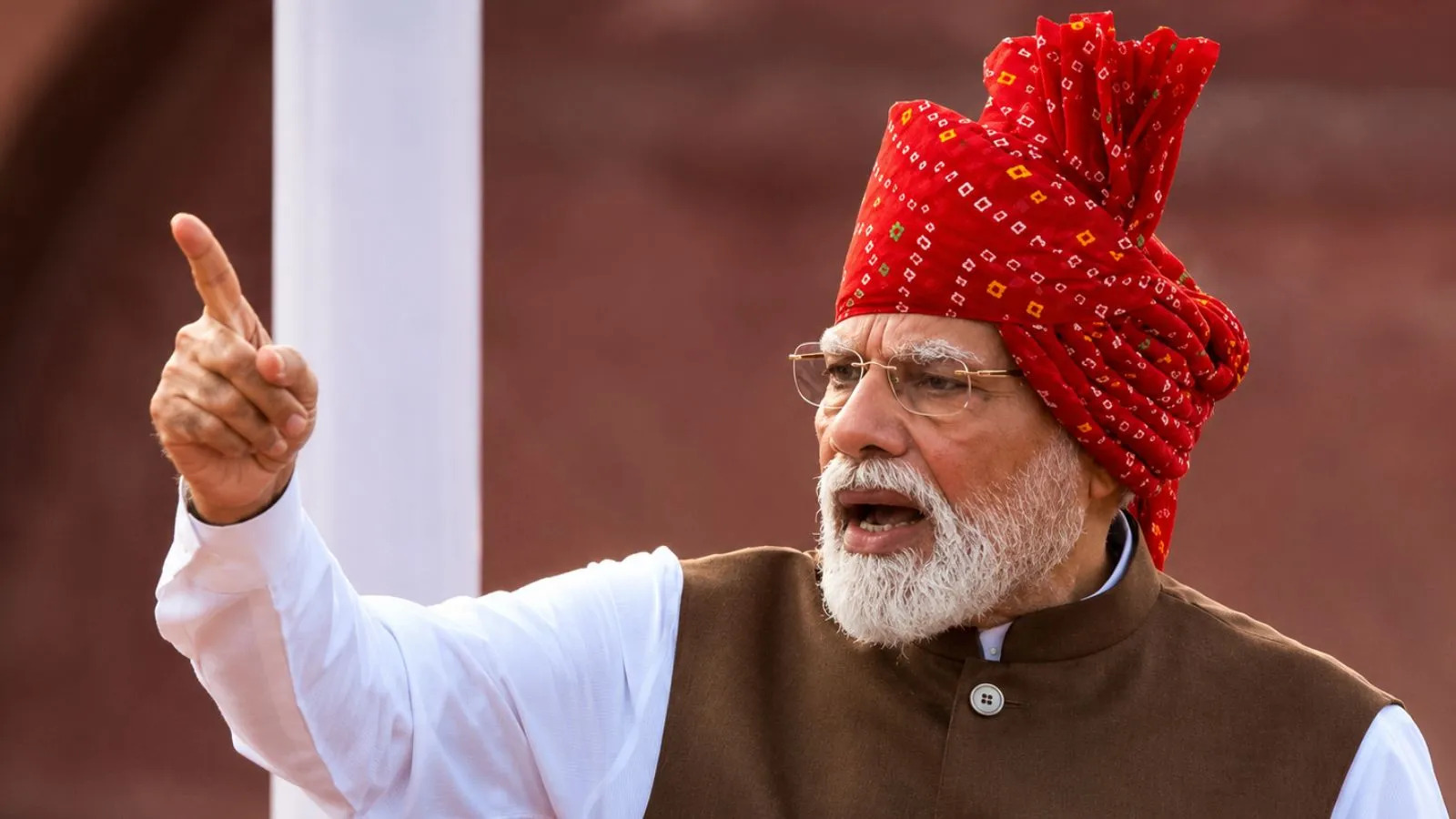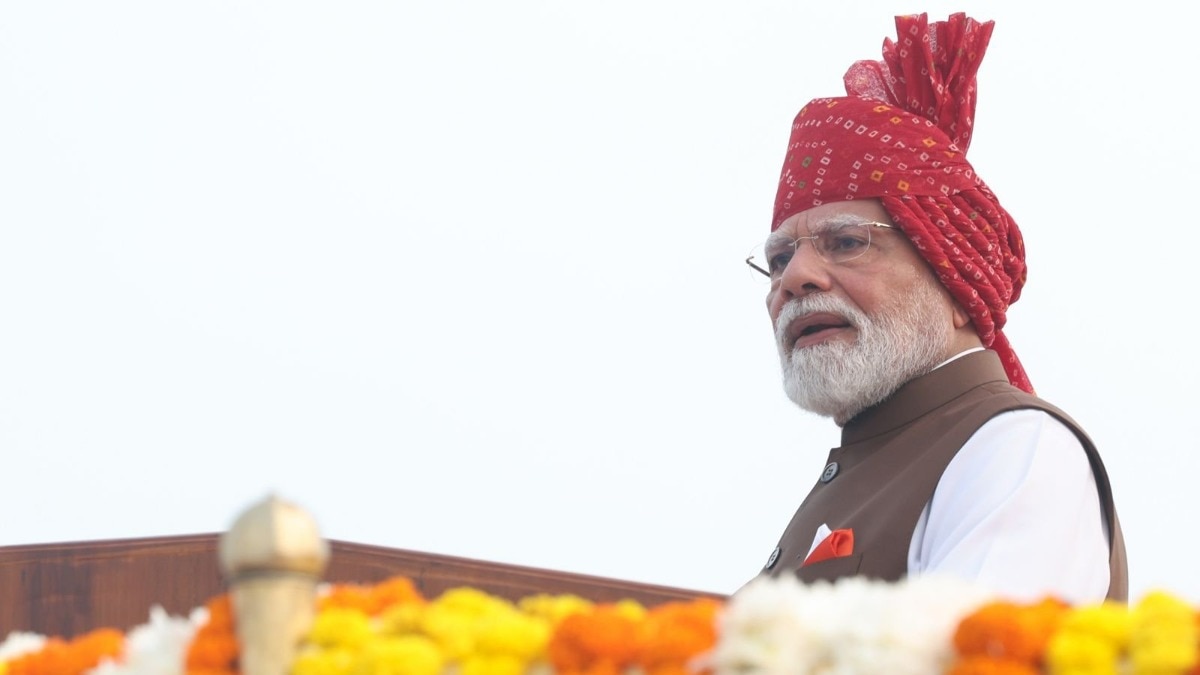
Delivering a powerful Independence Day speech, PM Modi signaled that India will no longer be just a consumer market for the world but will instead strive to dominate global markets through massive reforms and self-reliance.
Key Takeaways
- India is shifting from being a massive consumer market to a global manufacturing hub.
- The Prime Minister addressed the shift away from globalization toward nationalistic economic policies (referencing the US stance).
- A massive reform push is planned for the next 7 years in manufacturing, defense, and green energy.
- FTAs with nearly 40 countries are being leveraged to empower Indian MSMEs.
In a landmark address from the ramparts of the Red Fort, Prime Minister Narendra Modi sent a clear and strategic message to the global community. He signaled that India is no longer a nation that will succumb to foreign economic pressures. His remarks were widely interpreted as a subtle but firm response to nations like the United States, which have increasingly prioritized 'America First' policies over the principles of globalized trade.
A Subtle Rebuttal to Protectionism
With the US imposing arbitrary tariffs and threatening penalties on nations trading with Russia, the global economic order is shifting. BozokMedia analysis shows that PM Modi’s statement—"Nobody talks about globalization anymore; everyone is looking out for themselves"—is a direct critique of this rising protectionism. India has made it clear that it will prioritize its own national interests and economic sovereignty above all else.
India must move beyond being a destination for foreign products and instead become the provider that dominates global supply chains.
The 'Reform Express' and Manufacturing Ambitions
The Prime Minister emphasized that the work which remained unaccomplished over the last 70 years must be completed within the next 7 years. He introduced the concept of the 'Reform Express,' calling for a fundamental shift in the mindset of the government, industry, and farmers alike. A major focus will be placed on the manufacturing sector, where the goal is to produce everything from high-end finished goods to the smallest intricate components to ensure global reliability.
Expanding Global Footprint through FTAs
India's economic strategy is aggressively expanding. Since 2014, India has been working on Free Trade Agreements (FTAs) with approximately 40 countries. This move is designed to provide Indian MSMEs with unprecedented access to international markets. Furthermore, the government is pivoting toward future-ready sectors such as Green Hydrogen, Renewable Energy, and the Blue Economy to create sustainable 'Green Jobs.'
Frequently Asked Questions
1. What was the implication of PM Modi's speech regarding the US?
It was a signal that India will not allow its economic interests to be sidelined by the protectionist and tariff-heavy policies of Western powers.
2. What are the core pillars of India's new economic vision?
The vision rests on 'Atmanirbhar Bharat' (Self-reliant India), massive manufacturing reforms, defense indigenization, and dominance in the green economy.