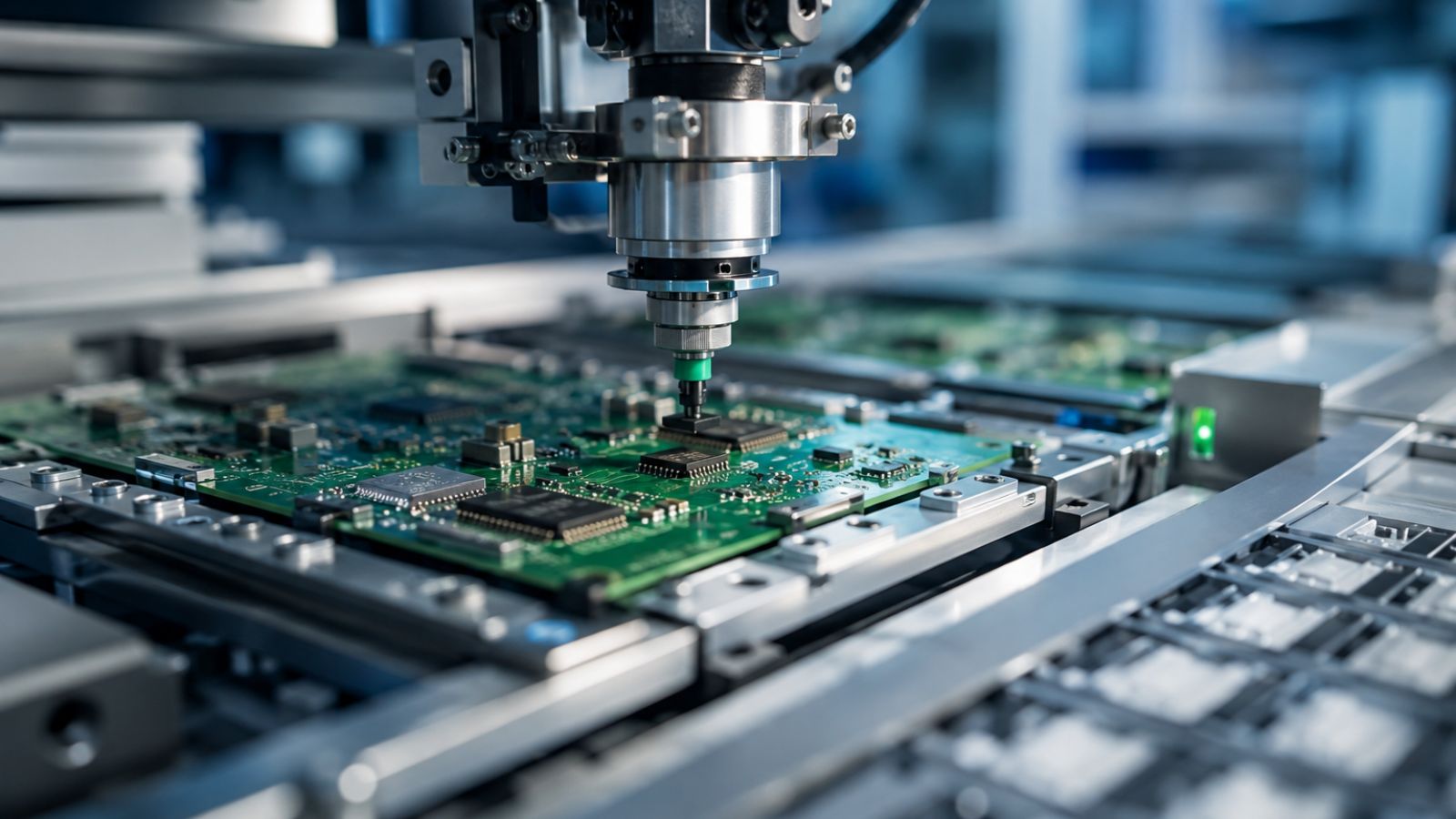
The Ministry of Electronics and IT has approved 31 new projects under the ECMS, driving an investment of ₹7,877 crore. This strategic move aims to shift India from a product assembly hub to a core component manufacturing powerhouse.
- 31 new applications approved with a proposed investment of ₹7,877 crore.
- Cumulative investment reaches ₹69,548 crore, surpassing the original target of ₹59,350 crore.
- Expected to generate 10,000 direct jobs and production worth ₹82,243 crore.
The Ministry of Electronics and Information Technology (MeitY) has greenlit 31 additional applications under the Electronics Components Manufacturing Scheme (ECMS). This initiative represents a critical pivot in India's industrial strategy, moving beyond the assembly of finished electronic goods toward the domestic production of high-value components and sub-assemblies.
IT Secretary S Krishnan announced on Monday that these projects, distributed across 10 states, are poised to generate production valued at ₹82,243 crore. The scope of the approvals is extensive, covering essential tech components such as camera and display modules, anode materials, rare-earth permanent magnets, optical transceivers, and capacitors.
Why This Matters
BozokMedia analysis shows that India has historically excelled at the 'final assembly' stage, while the most lucrative parts of the value chain—the components—were imported. By incentivizing the production of copper-clad laminates and PCBs, the government is effectively plugging a leak in the economic value chain. This transition is essential for India to insulate itself from global supply chain shocks.
"True technological sovereignty is not achieved by assembling foreign parts, but by mastering the science of component fabrication."
The scale of the scheme's success is evident in the numbers. To date, 106 applications across 15 states have been approved. The cumulative proposed investment of ₹69,548 crore has already eclipsed the initial government target of ₹59,350 crore. Furthermore, the expected production value of ₹5.34 lakh crore has surpassed the original goal of ₹4.56 lakh crore.
Operational progress is already visible. Facilities by ATL for lithium-ion cells and Tata Electronics for enclosures are already active. Other industry leaders like Kaynes Circuits, Motherson, and Wipro Global are expected to commission their plants within the next few months, while Dixon's facility in Noida is slated for a launch within four months.
| Metric | Original Target | Current Achievement/Projection |
|---|---|---|
| Total Investment | ₹59,350 Crore | ₹69,548 Crore |
| Expected Production | ₹4.56 Lakh Crore | ₹5.34 Lakh Crore |
| Job Creation | 91,600 Jobs | ~75,000 (Committed) |
Recognizing the overwhelming response from the industry, the Centre increased the scheme's financial outlay from ₹22,919 crore to ₹40,000 crore in the Union Budget for 2026-27. This financial backing coincides with a surge in electronics production, which hit ₹13.11 lakh crore in 2025-26, with exports reaching ₹4.24 lakh crore.
Frequently Asked Questions
1. What is the primary goal of the ECMS?
The ECMS aims to reduce India's reliance on imported electronic components by providing incentives for domestic manufacturing of sub-assemblies and raw materials.
2. Which companies are already operational under this scheme?
Companies like ATL (lithium-ion cells) and Tata Electronics (enclosures) have already started production under the scheme's framework.