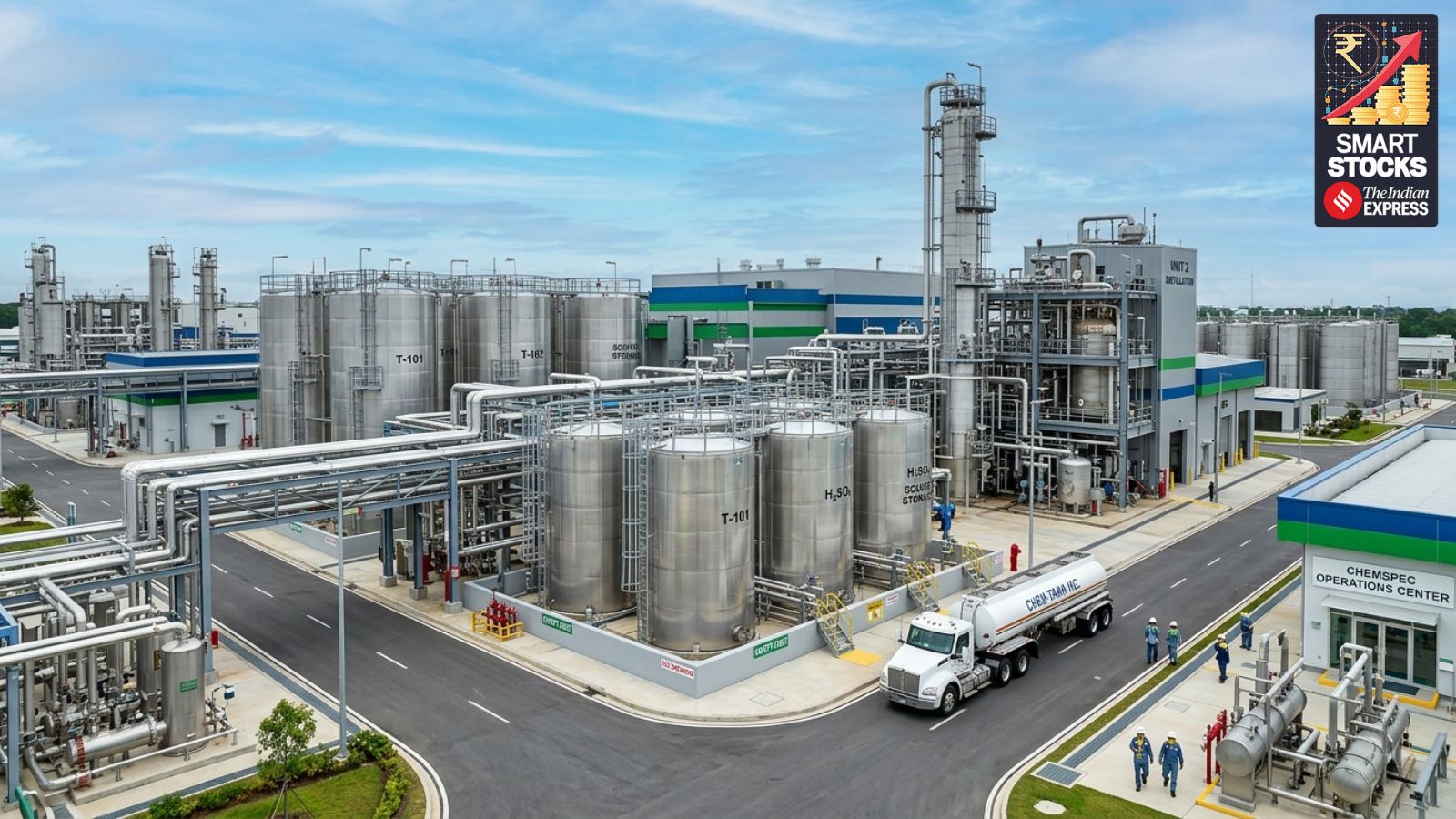
After enduring years of heavy capital expenditure, Yasho Industries has secured a landmark 15-year supply deal. The company is now positioned to leverage dedicated capacity and strategic partnerships to scale its global footprint.
- Secured a 15-year Long-Term Supply Agreement (LTSA) with a global multinational.
- Customer-funded dedicated production facility at the Pakhajan plant in Gujarat.
- Projected annual revenue increase of approximately ₹150 crore from the new facility.
- Significant export presence, serving 2,000+ customers across 50+ countries.
For years, Yasho Industries has operated in the shadows of the chemical industry, producing the essential but invisible molecules that power modern machinery. After a grueling period of capital expenditure (capex) that strained its balance sheet, the company appears to be hitting an inflection point. The catalyst is a transformative agreement signed in November 2025, which signals a shift from investment-heavy growth to an operating leverage phase.
The cornerstone of this new phase is a 15-year supply agreement with a global multinational. Unlike standard procurement contracts, this deal includes a financial commitment from the client to fund a dedicated production facility at Yasho's Pakhajan plant in Gujarat. This strategic move effectively offloads the financial risk of expansion onto the customer while guaranteeing a steady revenue stream of roughly ₹150 crore annually once production commences in Q4 FY27.
The Invisible Giant: Understanding the Business
Yasho specializes in specialty molecules, specifically aminic and phenolic antioxidants, friction modifiers, and anti-wear additives. These are critical components in engine oils and lubricants, preventing oxidation and reducing friction under extreme temperatures. While the company's market share in the $15 billion global lubricant additives market is less than 0.1%, its strategy is not to compete with giants like Lubrizol or Chevron Oronite, but to become an indispensable supplier within their complex supply chains.
| Segment | Revenue Contribution | Key Products |
|---|---|---|
| Industrial Chemicals | ~90% | Lubricant additives, Rubber chemicals |
| Consumer Products | ~10% | Food antioxidants, Aroma chemicals |
Why This Matters
BozokMedia analysis shows that Yasho is transitioning from a 'speculative' growth story to a 'predictable' earnings story. By securing advances (₹98.12 crore already received by Q1 FY27), the company has mitigated the primary risk of specialty chemical expansions: the demand-supply mismatch. This model allows Yasho to scale without the typical debt-heavy burden that plagues mid-cap chemical firms during capex cycles.
"The shift from self-funded expansion to customer-backed capacity is a masterstroke in risk management for specialty chemical players."
The company's global reach is already impressive, with nearly two-thirds of its revenue coming from exports, primarily to the United States and Europe. With a portfolio of 150 products, the scalability of the lubricant additive segment provides a clear runway for margin expansion as the new facility comes online.
Frequently Asked Questions
Q1: What is the financial impact of the new 15-year agreement?
The agreement is expected to add approximately ₹150 crore to the annual revenue, with a significant portion of the facility's cost already covered by customer advances.
Q2: Who are Yasho Industries' primary competitors?
While they operate in a market dominated by giants like Lubrizol and Infineum, Yasho positions itself as a specialist manufacturer for these larger formulators rather than a direct competitor.