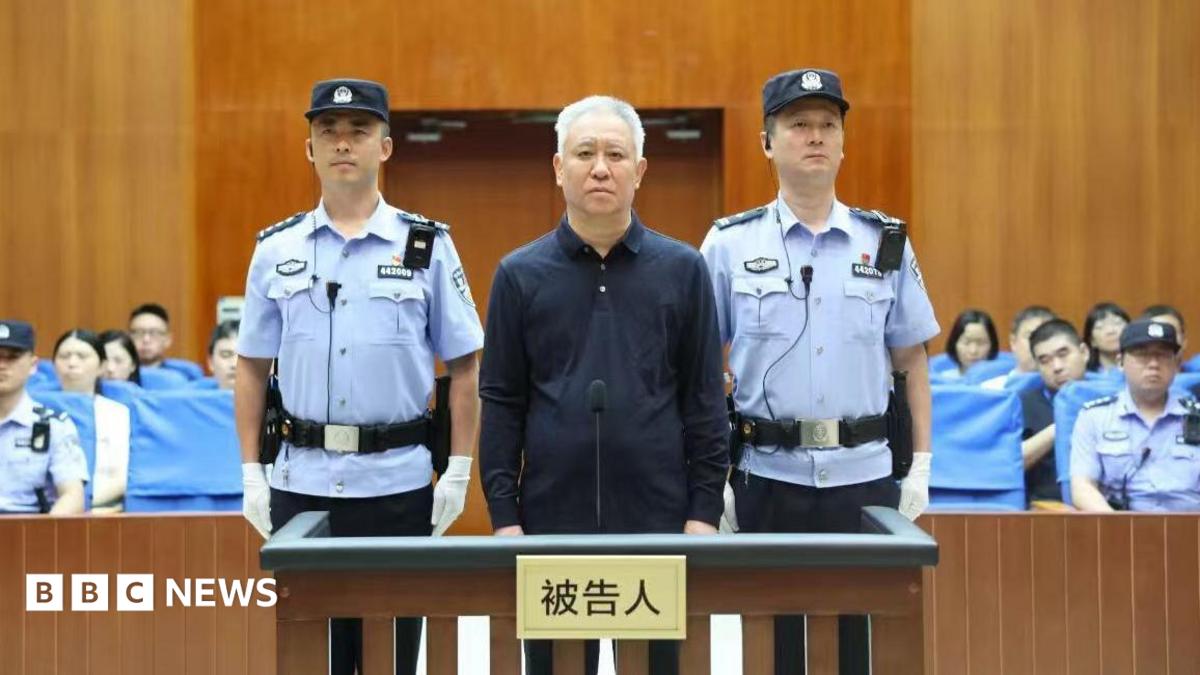
The architect of China's massive property crisis, Evergrande founder Hui Ka Yan, has been sentenced to life imprisonment and stripped of all personal assets.
- Evergrande founder Hui Ka Yan received a life sentence and total asset confiscation.
- Evergrande Group fined 8.82 billion yuan ($1.31bn).
- The collapse has fundamentally destabilized China's real estate sector.
In a landmark ruling that signals the final reckoning for China's property sector turmoil, the Shenzhen Intermediate People’s Court has sentenced Hui Ka Yan, the founder of the collapsed property giant Evergrande Group, to life in prison. In addition to the custodial sentence, the court ordered the total confiscation of his personal assets.
Hui Ka Yan, also known as Xu Jiayin, pleaded guilty in April to a series of criminal charges, including the embezzlement of corporate assets and widespread corporate bribery. The financial penalties extended beyond the individual; the court imposed a massive fine of 8.82 billion yuan (£960m; $1.31bn) on Evergrande Group, while its real estate arm was ordered to pay an additional 7 billion yuan.
Why This Matters
BozokMedia analysis shows that the implosion of Evergrande is not merely a corporate failure but a systemic shock that has reverberated through the global economy. Hui's aggressive expansion strategy, fueled by massive debt, turned Evergrande into a $50 billion behemoth, making him one of Asia's wealthiest individuals. However, his reliance on high-leverage models left the firm vulnerable when Beijing tightened debt regulations in 2020.
The sentencing of Hui Ka Yan marks the end of an era of unchecked debt-fueled expansion in the Chinese real estate market.
The court proceedings revealed a pattern of financial mismanagement where millions of dollars collected from homebuyers via pre-sales were diverted away from construction projects. This diversion resulted in hundreds of unfinished residential developments across China, leaving thousands of families in legal and financial limbo. The company's market valuation plummeted by 99% before its eventual delisting from the Hong Kong exchange in August 2025.
Historical Background
Founded in 1996, Evergrande rose from humble beginnings to become the largest real estate developer in China. Its rapid ascent was synonymous with China's urban boom. However, the 'Three Red Lines' policy introduced by the Chinese government to curb excessive corporate debt acted as the catalyst for its downfall, triggering a broader slump in the property market that continues to weigh on China's GDP growth today.
Frequently Asked Questions
1. What were the specific charges against Hui Ka Yan?
He was charged with embezzlement of assets and corporate bribery.
2. How did Evergrande's collapse affect homebuyers?
Many homebuyers lost money as funds intended for construction were diverted to other developments, leaving many homes unfinished.