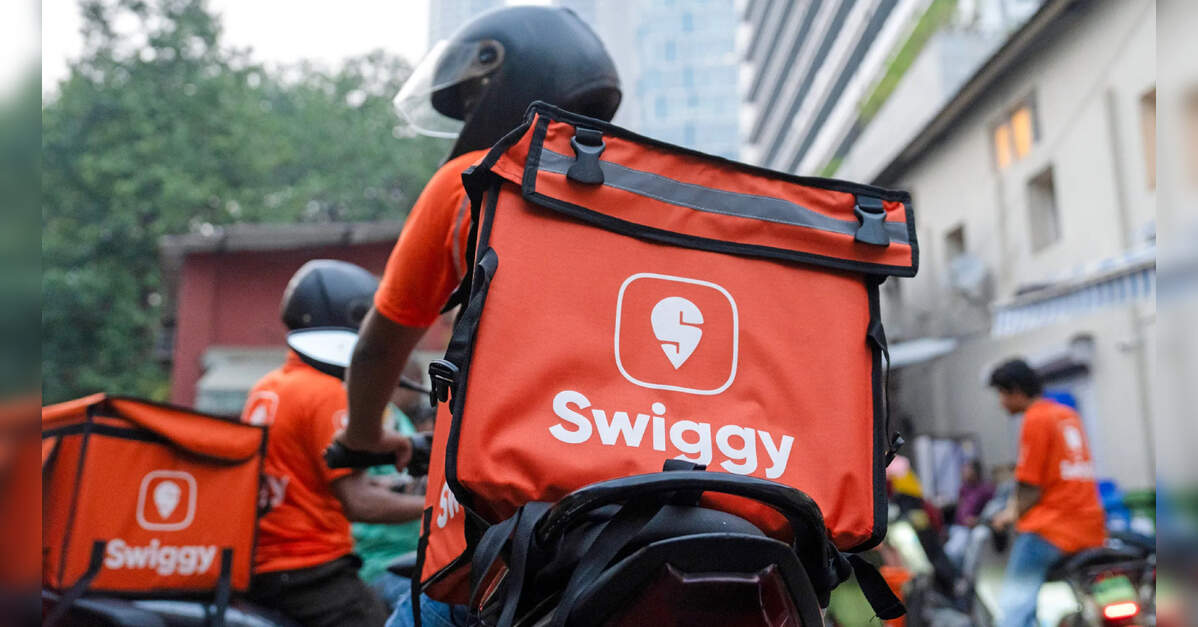
As Swiggy transitions toward becoming an Indian-owned and controlled company (IOCC), Jefferies warns of a potential $400 million passive outflow due to its expected exclusion from global indices like MSCI and FTSE.
- Swiggy shareholders approved capping foreign shareholding at 49.5%.
- Potential $400 million passive outflow expected from MSCI and FTSE indices.
- IOCC status enables an inventory-led model for Instamart, boosting margins.
- Jefferies maintains a 'Buy' call with a target price of ₹435.
Food delivery and quick-commerce powerhouse Swiggy is making a decisive move toward becoming an Indian-owned and controlled company (IOCC). While this strategic shift aims to bolster operational autonomy, international brokerage Jefferies has highlighted a significant financial side effect: a potential $400 million in passive outflows. This is primarily due to the company's anticipated exclusion from major global benchmarks such as the MSCI and FTSE indices.
This week, Swiggy's shareholders officially approved proposals to cap foreign shareholding at 49.5 percent. With this mandate, the company is now positioned to approach the Reserve Bank of India (RBI) to formalize the ceiling on foreign ownership. This structural change is a critical component of Swiggy's broader strategy to transition its quick-commerce arm, Instamart, to an inventory-led (1P) model.
Why This Matters
BozokMedia analysis shows that this transition represents a calculated trade-off between global capital accessibility and domestic operational efficiency. Under current regulations, if a stock's Foreign Portfolio Investor (FPI) holding comes within 3 percentage points of its maximum permissible limit, it triggers a 'red-flag' status. For Swiggy, breaching this threshold would force foreign investors to divest excess holdings within five trading days, selling only to domestic investors. This sudden shift in ownership structure is what triggers the massive index-driven outflows.
The shift to an IOCC model is a strategic pivot toward margin expansion via the inventory model, despite the immediate volatility of index rebalancing.
According to Jefferies, once the reduction in foreign ownership is updated with the depositories, the exclusion from global benchmarks could happen within just 2-3 business days. However, the operational benefits are substantial. Moving to an inventory-led model for Instamart is expected to drive an 80 basis points (bps) upside in margins, providing a more robust foundation for long-term profitability.
Historical Background
In the evolving landscape of Indian tech unicorns, the move toward 'Indian-owned' status has become a trend for companies looking to navigate complex regulatory environments. By controlling more of its equity domestically, a company can more easily comply with sector-specific regulations, such as those governing quick-commerce inventory, which are often more stringent for foreign-controlled entities.
Frequently Asked Questions
1. What is the benefit of the IOCC status for Swiggy?
It allows Swiggy to operate Instamart using an inventory model, which is expected to increase profit margins.
2. Why would investors pull out $400 million?
Passive investors who track MSCI and FTSE indices will be forced to sell Swiggy shares once the company is removed from those indices due to its ownership structure.