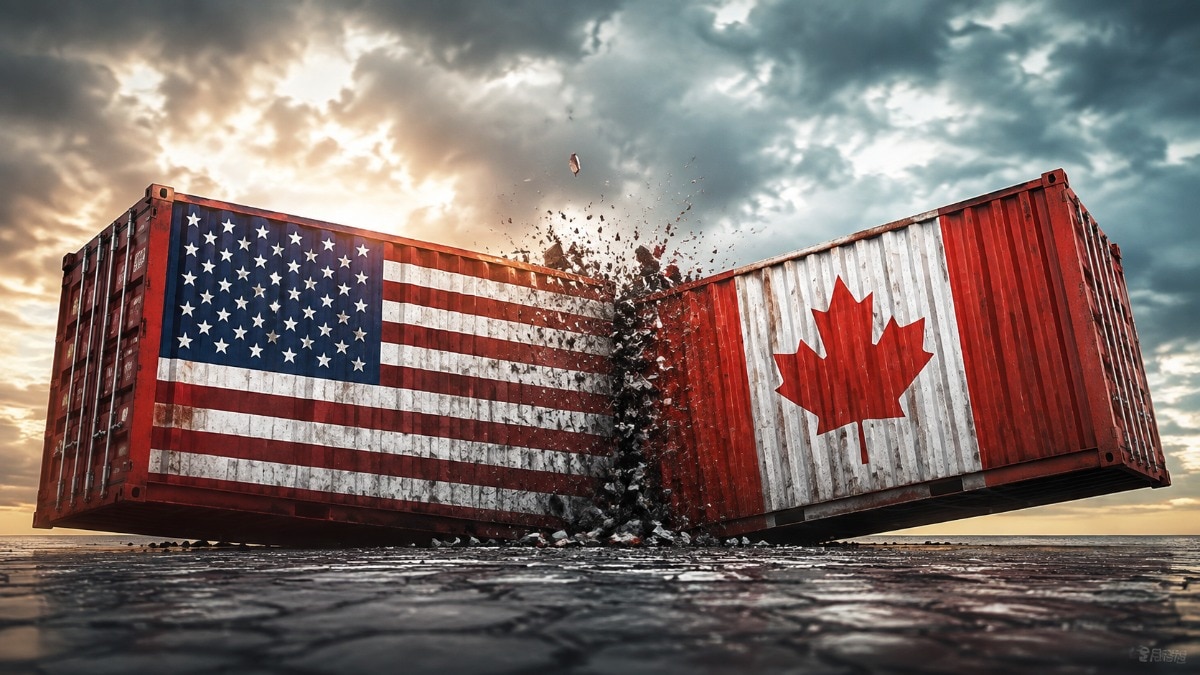
The trade deal between the US and Canada has collapsed, prompting the US to impose a massive 50% tariff on over $20 billion of Canadian goods. Canadian PM Mark Carney has responded by vowing reciprocal tariffs.
- The US has imposed a 50% tariff on more than $20 billion worth of Canadian imports.
- Canadian PM Mark Carney has pledged a 'dollar-for-dollar' retaliatory tariff response.
- The collapse follows disagreements over trade terms in steel, aluminum, and automobile sectors.
- Canada aims to reduce its 70% export dependency on the United States.
A major diplomatic and economic rift has opened between Washington and Ottawa. Following the collapse of long-standing trade negotiations, the United States has officially imposed a 50% tariff on over $20 billion worth of Canadian goods. This sudden escalation marks a significant breakdown in the economic partnership between the two North American giants.
Canadian Prime Minister Mark Carney has struck a defiant tone in response to the move. Expressing disappointment, Carney stated that the terms proposed by the US were "unfair and disadvantageous," undermining the credibility of any potential agreement. In a stern warning to Washington, the PM vowed that Canada would respond to these tariffs on a "dollar-for-dollar" basis, ensuring that American goods face equal pressure.
Why This Matters
BozokMedia analysis shows that this trade escalation threatens to disrupt the entire North American supply chain. With bilateral trade totaling $880 billion last year, a full-scale trade war could lead to skyrocketing costs in the automobile, steel, and aluminum industries, ultimately hurting consumers and manufacturers in both nations.
"The collapse of these negotiations signals a fundamental shift in North American economic diplomacy, moving from cooperation to confrontation."
According to US Trade Representative Jamison Greer, Canada refused to finalize the agreement despite US proposals to lower tariffs on specific sectors like steel and aluminum. PM Carney emphasized that this crisis necessitates a strategic pivot for Canada, highlighting the urgent need to diversify trade partners to reduce the country's heavy reliance on the US, which currently absorbs nearly 70% of Canadian exports.
Historical Background
Historically, the US-Canada trade relationship has been one of the most integrated in the world. However, the recent rise in protectionist policies and domestic manufacturing pressures in the US has strained this bond. The tension over critical commodities like metals and automotive parts has become a flashpoint for modern economic nationalism.
Frequently Asked Questions
1. Why did the US impose these tariffs?
The US imposed the tariffs after trade negotiations between the US and Canada failed to reach a consensus on key terms.
2. How will Canada respond?
Prime Minister Mark Carney has promised reciprocal tariffs on US goods to match the scale of the American imposition.
