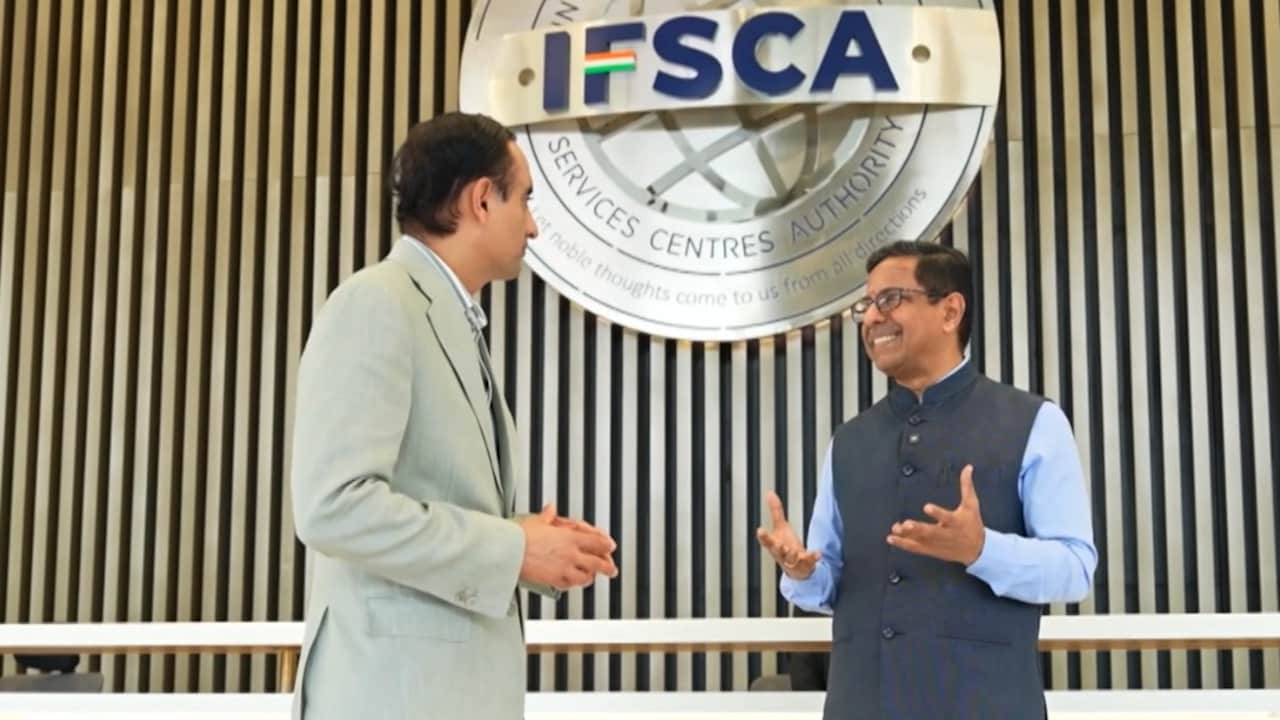
K Rajaraman, chief of the International Financial Services Centres Authority (IFSCA), highlighted GIFT City's transition from repatriating offshore financial businesses to becoming a cornerstone of the Indian growth story, with plans to attract global listings.
- GIFT City was initially designed to bring back offshore financial services like fund management and aircraft leasing to Indian soil.
- The focus is now shifting toward leveraging the broader "India Growth Story" and facilitating domestic/international equity listings.
- IFSCA is actively working to create a seamless regulatory environment to compete directly with hubs like Singapore and Dubai.
The Gujarat International Finance Tec-City (GIFT City) is rapidly transitioning from a regional financial experiment into a formidable global financial powerhouse. K Rajaraman, the Chairperson of the International Financial Services Centres Authority (IFSCA), recently detailed how the hub's core mission has evolved. While its inception was focused on defensive repatriation, its current trajectory is aggressively aligned with showcasing and capitalising on the robust India Growth Story.
Conceived as India's first operational smart city and international financial services centre, GIFT City's early objective was to reverse the migration of financial transactions. Historically, Indian fund management, investment banking, and lucrative aircraft leasing deals were routed through international hubs such as Singapore, Dubai, and London. By establishing a world-class financial enclave on domestic soil, India sought to bring these high-value services back home.
According to Rajaraman, having successfully laid the groundwork for this reverse migration, GIFT City is now stepping into its next phase of growth. The immediate frontier involves preparing the infrastructure and regulatory pathways to attract global and domestic companies looking to list their shares directly on the IFSC exchanges. This move is expected to unlock unprecedented access to international capital for Indian enterprises while offering foreign investors a direct, transparent route into India's economic expansion.
Why This Matters
BozokMedia analysis shows that the success of GIFT City is central to India's broader macroeconomic strategy, particularly its goal of capital account liberalization and becoming a $5 trillion economy. By offering an integrated, single-window regulatory environment under the IFSCA, alongside highly competitive tax incentives, India is successfully challenging traditional offshore tax havens and positioning itself as a secure, regulated alternative for global institutional capital.
One of the most significant triumphs of this initiative has been in the domain of aircraft leasing. Previously, Indian airlines—among the largest buyers of commercial aircraft globally—had to rely entirely on offshore entities in jurisdictions like Ireland for leasing arrangements. GIFT City has successfully created a competitive domestic leasing framework, keeping billions of dollars in leasing fees within the Indian ecosystem and generating high-skilled employment.
"GIFT City is transitioning from a defensive strategy of retaining Indian capital to an offensive strategy of capturing global capital flows." - K Rajaraman, Chairperson, IFSCA
Furthermore, the asset management sector within GIFT City has experienced exponential growth. With over a hundred Alternative Investment Funds (AIFs) and mutual funds registering in the zone, the hub is fast becoming a preferred destination for wealth management. The ease of doing business, combined with the ability to transact in foreign currencies, has made it an attractive proposition for global fund managers.
| Feature | GIFT City (IFSCA) | Traditional Offshore Hubs (Singapore/Dubai) |
|---|---|---|
| Regulatory Authority | Unified Regulator (IFSCA) | Multiple Regulatory Bodies |
| Tax Incentives | 100% tax holiday for 10 consecutive years | Varies by jurisdiction and activity |
| Primary Target Market | Indian growth ecosystem & global capital | Global offshore transactions |
As GIFT City looks to the future, it is also positioning itself as a hub for emerging financial technologies, green finance, and sustainable development. The continuous backing from the federal government ensures that the regulatory framework remains agile, modern, and highly responsive to the needs of the global financial community, paving the way for India to become a central pillar of global finance by 2047.
Frequently Asked Questions
1. What was the original objective behind establishing GIFT City?
The original goal was to repatriate financial services and transactions—such as fund management and aircraft leasing—that had migrated from India to offshore financial hubs like Singapore and Dubai.
2. How does GIFT City benefit foreign investors?
It offers a virtually tax-free environment for 10 years, operating under a single unified regulator (IFSCA) with relaxed foreign exchange controls, allowing investors to trade in foreign currencies while accessing the Indian market.