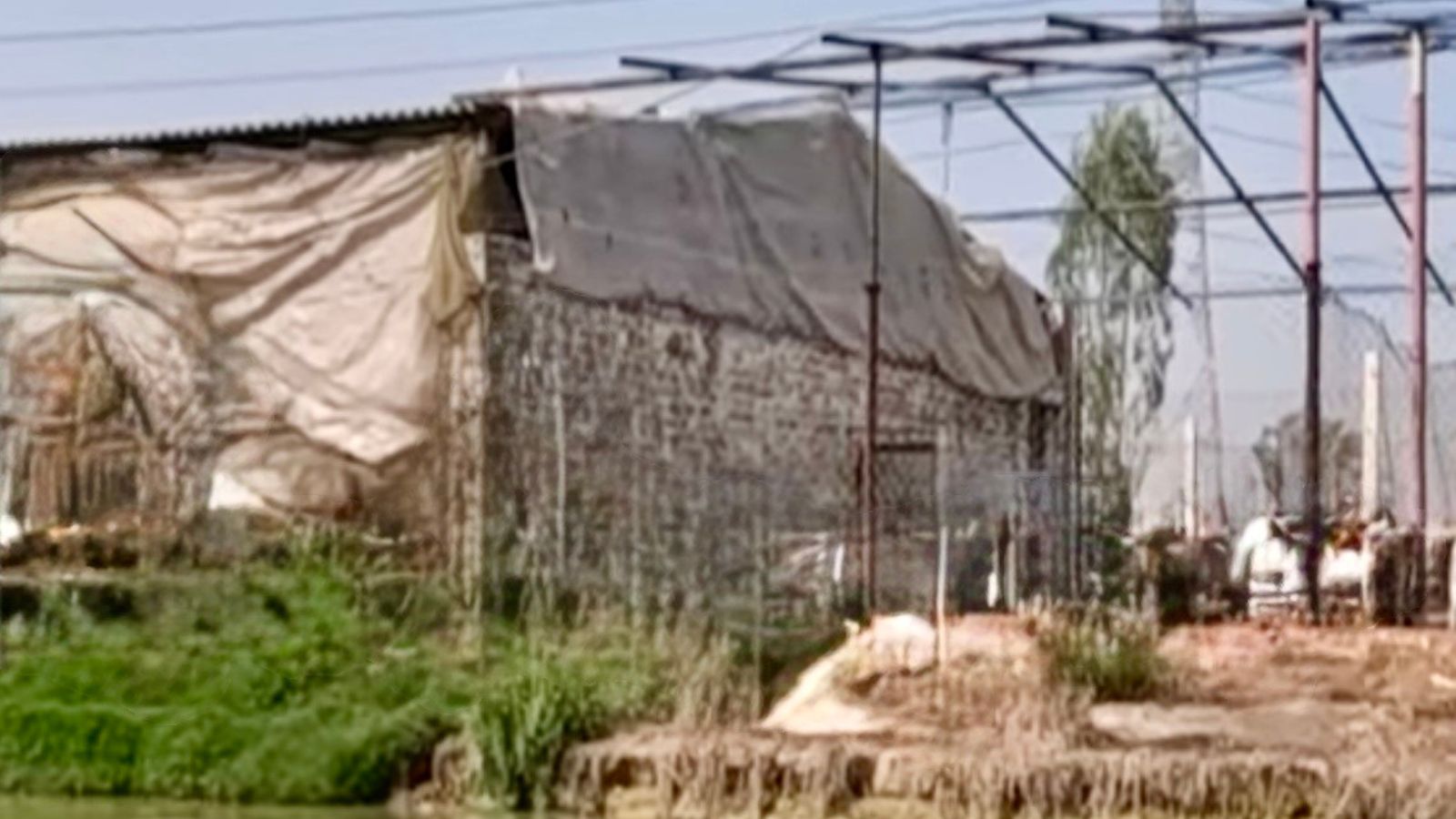
Harbhajan Singh Taggar of Mansa, Punjab, has transformed village ponds into a highly profitable integrated farm. By combining aquaculture, livestock, and food processing, he has built a sustainable business model that generates massive annual returns.
- Harbhajan Singh Taggar expanded from 9 acres to a massive 19-acre integrated farm.
- He utilizes 40 acres of leased village ponds for commercial fish farming.
- His 'Zero Waste' model integrates fish, pigs, goats, poultry, and crops.
- The enterprise generates annual savings of approximately ₹50-60 lakh from fish farming alone.
In the 1980s, following his graduation, Harbhajan Singh Taggar, 60, chose a path less traveled. While many sought traditional jobs, he opened a tractor repair workshop and continued farming his family's land in Malakpur Khiala village, Mansa. However, his vision shifted when he identified a massive opportunity in the local village ponds, or chhappars.
What began as a small-scale experiment in the early 1990s has evolved into a sophisticated agricultural empire. Today, Taggar manages 19 acres of owned land and an additional 40 acres of leased village ponds. His expertise in aquaculture has turned these water bodies into goldmines, producing six varieties of fish including rohu, catla, and grass carp.
Why This Matters
BozokMedia analysis shows that Taggar's integrated approach addresses the two biggest challenges in modern agriculture: waste management and income volatility. By creating a circular economy within his farm, he mitigates the risks associated with single-crop dependency.
"Nothing should go to waste" — This philosophy is the cornerstone of Taggar's sustainable enterprise.
The farm operates on a brilliant recycling loop. Pig waste is used to stimulate the growth of plankton, which serves as natural fish feed. Similarly, the nutrient-rich water from the fish ponds is used to irrigate wheat and paddy fields, significantly reducing the need for expensive chemical fertilizers. This synergy between livestock and crops ensures maximum efficiency.
Farm Diversification Overview
| Sector | Scale/Details | Economic Benefit |
|---|---|---|
| Aquaculture | 11 acres owned + 40 acres leased | ₹25-30 lakh annual sales |
| Livestock | 100 pigs and 100 goats | Manure and natural fish feed |
| Food Processing | 'Khiala' Brand products | High-margin value addition |
Beyond farming, Taggar has ventured into value-added food processing. Under his brand 'Khiala', his family produces pickles and various meat products from fish, pork, and poultry. This move into processing ensures that the profit stays within the family enterprise rather than going to middlemen.
Taggar’s success is backed by continuous learning. He sought professional training in fisheries from institutions in Andhra Pradesh, Odisha, and Ludhiana. Today, his sons, Sukhdeep Singh Taggar (an MBA) and Man-deep Singh, are helping modernize and manage the growing business.
Frequently Asked Questions
1. How does the 'Zero Waste' model work on his farm?
It uses animal waste as fertilizer or fish feed and uses pond water to irrigate crops, creating a closed-loop system.
2. Is fish farming more profitable than traditional crops?
According to Taggar, his 11-acre fish pond generates revenue comparable to 50 acres of wheat and paddy farming.